Canada just crossed a major line in how big energy assets get built. Seven First Nations in Ontario are stepping into the nuclear sector not as bystanders or token consultation partners, but as outright owners.
The federal and Ontario provincial governments have put together a $700 million loan guarantee package. This cash backing allows the seven Williams Treaties First Nations east of Toronto to buy a minority equity stake in one of the new small modular reactors (SMRs) under construction at the Darlington New Nuclear Project in Bowmanville, Ontario. If you found value in this post, you might want to read: this related article.
It is the first time in Canadian history that First Nations will hold an equity stake in a nuclear power facility.
For a long time, resource extraction and major infrastructure projects on Indigenous lands followed a predictable, frustrating script. Companies built the project, governments collected the royalties, and local communities got some entry-level jobs and a lot of environmental risk. This arrangement fundamentally breaks that cycle. For another angle on this event, check out the latest coverage from Business Insider.
Inside the $21 Billion Darlington SMR Build
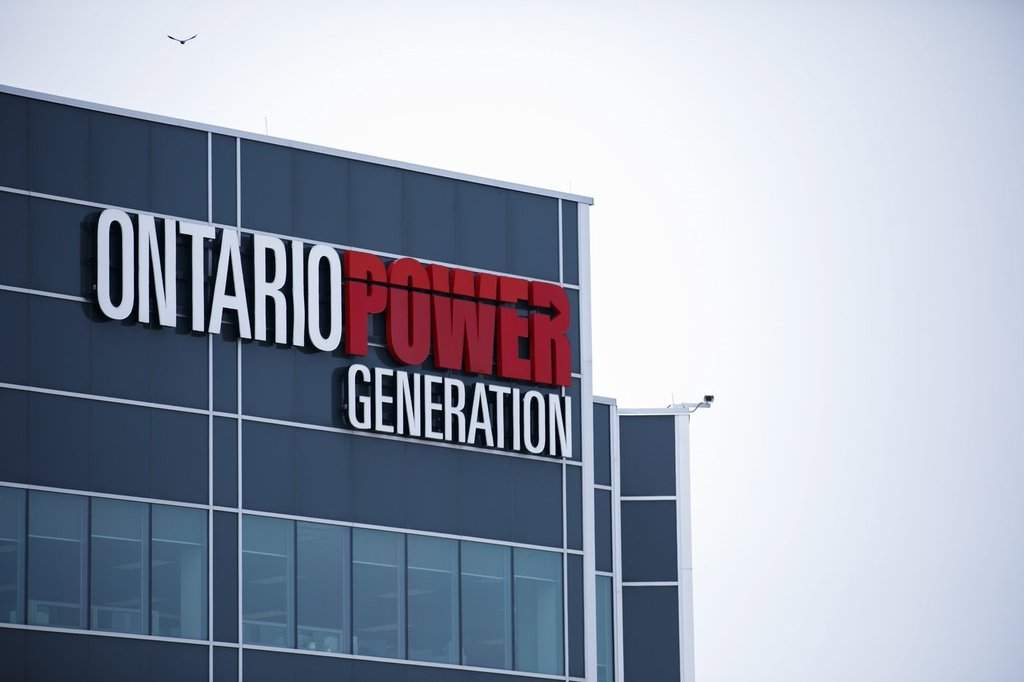
The project at the center of this deal is a massive undertaking. Ontario Power Generation is constructing four BWRX-300 small modular reactors at the Darlington site. These aren't the sprawling, decades-long megaprojects of the mid-20th century. SMRs are designed to be smaller, modular, and quicker to deploy.
They still carry a staggering price tag. The total budget for all four units sits at roughly $21 billion, with the first unit alone tracking at $7.7 billion including shared site infrastructure.
Darlington SMR Project Specs:
- Total Cost: $21 billion (all four units)
- First Reactor Completion: Target 2030
- Total Capacity: 1,200 Megawatts
- Household Power Equivalent: 1.2 million homes
The $700 million in government-backed financing allows the participating nations—Alderville, Curve Lake, Hiawatha, Scugog Island, Chippewas of Beausoleil, Chippewas of Georgina Island, and the Chippewas of Rama—to secure a steady stream of long-term revenue once the turbines start turning.
Moving Beyond Simple Accommodation
The chiefs of the Williams Treaties First Nations are explicitly framing this as a model for how future clean energy projects must operate. In a joint statement, the leadership noted that the investment proves what happens when communities participate as actual investors and partners rather than just legal rights-holders to be managed through regulatory loops.
This approach addresses a fundamental flaw in the old economic model. First Nations communities have historically struggled to access large-scale capital. Commercial banks rarely lend hundreds of millions of dollars to community trusts without massive, liquid collateral. By providing a sovereign loan guarantee, Ottawa and Ontario are essentially acting as the co-signer, matching the financial muscle of the state against the project's long-term power generation revenue.
The deal isn't without its critics. Public pushback on online forums and community boards highlights a growing tension among some taxpayers who view government-backed equity loans as an unnecessary public expense. Others raise concerns about tying community wealth to nuclear infrastructure, given the long-term questions surrounding nuclear waste management.
But from a purely economic standpoint, the strategy is highly practical. It creates stability. Projects that include genuine equity ownership face fewer legal challenges, fewer blockades, and fewer regulatory delays. It turns what used to be a primary project risk—local opposition—into shared operational success.
The Operational Reality of SMR Technology
The power output from these four reactors will eventually hit 1,200 megawatts. That's enough base-load, carbon-free power to supply more than a million homes. Ontario's grid is facing massive demand spikes from electric vehicle manufacturing, population growth, and power-hungry artificial intelligence data centers.
The first reactor is scheduled to come online by 2030. It will serve as a live test case for whether SMR technology can actually be delivered on time and within budget, a historical weak spot for the broader nuclear industry.
For the participating First Nations, the immediate next steps involve establishing the corporate governance structures needed to manage an asset of this scale. Voyageur Services, an economic arm of the Mississaugas of Scugog Island, has already been handling site preparation contracts at Darlington, demonstrating that the operational capacity exists locally to scale up.
Communities looking to replicate this model need to focus heavily on structural capacity. Securing the loan guarantee is just the first hurdle; building out the financial management infrastructure to handle decades of utility-scale distributions is where the real long-term work begins.