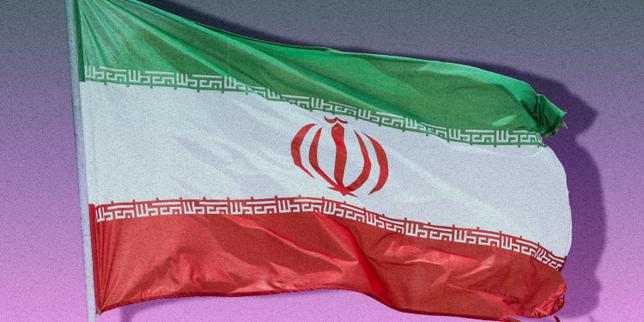
International sports federations are not sovereign states. They do not possess armies, they do not control diplomatic channels, and they cannot enforce international law. Yet, every time a tragedy occurs within the borders of a repressive regime, the commentariat lines up to demand that bodies like the International Olympic Committee (IOC) act as global judges, juries, and executioners.
The recent condemnation of the silence surrounding the execution of Iranian athletes is a textbook example of this misplaced moral outrage. The conventional wisdom argues that the silence of sports organizations is deafening, cowardly, and a betrayal of human rights. This argument is emotionally satisfying, but it relies on a fundamental misunderstanding of how international law and global sports governance actually operate.
Demanding that sports federations solve deeply entrenched geopolitical crises does not help athletes. It breaks the only mechanism that allows international sports to exist at all.
The Sovereignty Trap: What Activists Get Wrong About Power
The core flaw in the mainstream argument is the assumption that organizations like the IOC or FIFA hold genuine leverage over authoritarian regimes. They do not.
When a state decides to execute a citizen, it is exercising its ultimate domestic sovereignty. A letter of protest from a sports committee in Lausanne, Switzerland, is not going to alter the trajectory of a regime fighting for its survival.
Consider the mechanics of international relations. Dictatorships do not back down because they are threatened with a ban from the World Championships. In fact, external pressure from Western-dominated sports bodies frequently serves as a propaganda victory for these regimes. It allows them to frame the situation domestically as foreign interference in their judicial system.
[International Sports Body Demands]
       │
       ▼
[Authoritarian Regime] ───► Frames as "Foreign Interference" ───► Strengthens Domestic Grip
       │
       ▼
[Athletes Isolated] (No access to international competition, zero leverage remaining)
I have spent years analyzing governance structures and watching organizations navigate these exact high-stakes standoffs. The reality is brutal: weaponizing sports neutrality achieves nothing but the isolation of the very athletes you claim to protect.
The Cost of Neutrality vs. The Price of Posturing
Human rights advocates frequently point to the exclusion of South Africa during the apartheid era as proof that sports boycotts work. This is a historical misreading. The sports boycott of South Africa was effective only because it was backed by comprehensive United Nations sanctions, deep economic isolation, and a global consensus. It was the tail of the dog, not the dog itself.
Applying that same blueprint to modern geopolitical flashpoints is a strategic failure. If the IOC bans every nation that violates international human rights standards, the Olympic movement collapses overnight.
Let us look at the data. According to Amnesty International, dozens of countries carry out judicial executions or engage in systematic human rights abuses. If sports federations begin enforcing moral purity tests, who qualifies to stay?
- Do you ban countries involved in proxy wars?
- Do you exclude nations with flawed democratic processes or those that suppress internal dissent?
- Where is the objective line drawn, and who draws it?
The moment a sports organization sets aside its commitment to political neutrality, it ceases to be a universal platform. It becomes a geopolitical tool. Once that line is crossed, invitation lists will be determined by shifting geopolitical alliances rather than athletic merit.
Dismantling the Fallacy of Moral Leadership
People frequently ask: Shouldn't sports organizations take a stand to protect the safety of athletes worldwide?
The answer is no, because they cannot. A sports federation cannot guarantee the physical safety of an individual inside a sovereign nation's borders. To pretend otherwise is dangerous posturing.
The true function of international sports bodies is to manage the rules of play, organize competitions, and maintain a functional arena where athletes from competing nations can meet. That is their entire mandate. Expecting them to act as a global human rights court is an abdication of responsibility by the political entities that actually possess diplomatic power.
When governments fail to act through sanctions, diplomacy, or international courts, they pass the buck to sports organizations. It is highly convenient for politicians to demand a sports boycott because it costs them nothing, allows them to look virtuous, and avoids the messy realities of real economic or military diplomacy.
The Real Consequence: Punishing the Innocent
The ultimate irony of the activist position is that the proposed solution—banning the nation's sports federation—invariably harms the victims rather than the oppressors.
Imagine a scenario where a young Iranian wrestler has trained their entire life for the Olympic Games. The regime executes an activist athlete. In response, the IOC bans Iran from competition. Who pays the price? Not the judges who signed the execution warrant. Not the politicians in Tehran. The price is paid entirely by the blameless athlete whose life's work is wiped out by a decision made in a boardroom in Switzerland.
Banning a nation completely cuts off its athletes from the international community. It removes their platform, strips away their visibility, and leaves them entirely at the mercy of their domestic regime with zero external scrutiny.
How to Apply Real Leverage
If the goal is to actually support athletes operating under repressive regimes, the strategy must shift away from empty public statements and blanket bans.
1. Separate the Athlete from the State
The creation of refugee and independent athlete teams is the most effective tool developed in modern sports governance. Instead of banning a nation and trapping its athletes, sports bodies should expand pathways for dissidents and endangered competitors to compete under a neutral flag, bypassing their national federations entirely.
2. Quiet Diplomacy Over Public Performance
Public denouncements force authoritarian governments into a corner where compromise looks like weakness. History shows that quiet, back-channel negotiations—where sports bodies condition event hosting or technical funding on specific internal concessions—achieve far more tangible results than a press release designed to appease Western media.
3. Protect the Event, Not the Regime
Sports organizations must strictly enforce rules against political interference inside the stadium. If a regime attempts to use a sporting event for political propaganda, pull the broadcasting rights or strip the country of hosting privileges. Focus on what happens within the venue, which is the only jurisdiction these organizations actually control.
Stop asking sports federations to fix a broken world. They cannot do it, and the attempt will destroy the fragile global consensus that allows international competition to happen at all. Demand action from the entities that actually hold power—sovereign governments and international courts—and let sports bodies focus on the one thing they are actually built to do: keeping the game alive.