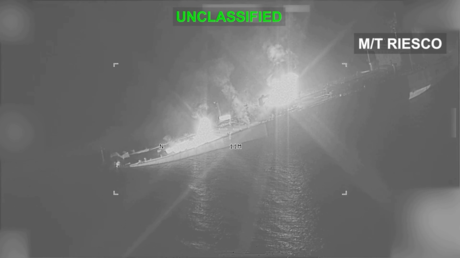
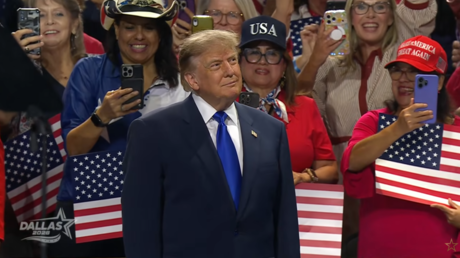
Every pundit in Dallas last week missed the plot. Walk through the convention center corridors during the Republican midterm gathering, and you heard the standard drumbeat: Donald Trump is standing at the podium, foreign policy hawks are whispering about Tehran, and the media treats every saber-rattle as a direct ignition switch for a full-scale desert quagmire. The consensus narrative is lazy, predictable, and fundamentally wrong.
The lazy consensus says that a looming conflict with Iran dictates domestic electoral fortunes, forcing Republicans to either embrace hawkish intervention or run from foreign entanglements. It is a false binary designed for cable news segments. The real story happening beneath the surface has nothing to do with conventional warfare or sudden missile exchanges. It has everything to do with how foreign policy posturing is being weaponized as a domestic distraction from structural economic realities that neither party wants to touch.
I have spent years watching political apparatuses manufacture urgency to crowd out inconvenient truths. When campaigns pivot hard toward distant theaters of war, look at what balance sheets are hiding at home.
The Mirage of the October Surprise
For decades, the political playbook relied on the classic October surprise. A foreign crisis erupts, flags wave, voters rally around the incumbent or the challenger depending on the wind, and policy details vanish behind a wall of security briefings. But the Dallas convention proved that this playbook is broken.
Voters do not care about the Strait of Hormuz when their grocery bills remain stubbornly elevated and commercial real estate defaults are quietly ticking upward in secondary markets. Yet, the political class clings to the Iran threat narrative because fighting a ghost is infinitely easier than balancing a budget or confronting structural inflation.
Consider the mechanics of how this crisis narrative is built. Analysts point to regional proxy groups, maritime chokepoints, and nuclear threshold timelines as immediate catalysts. They treat these factors as independent variables. They are not. They are dependent variables of domestic distraction. Whenever political momentum stalls on tax policy or regulatory overreach, a sudden surge in militant rhetoric provides a convenient grease for the media machine.
[Domestic Distraction Loop]
Political Stalemate ──> Escalated Foreign Rhetoric ──> Media Saturation ──> Diverted Public Focus
When you look closely at the rhetoric coming out of these conventions, you notice a glaring omission. Nobody talks about the secondary economic shockwaves of prolonged posturing. Sanctions regimes against Tehran have long since hit diminishing returns. The financial plumbing of the Middle East has adapted. China buys the discounted barrels, alternative payment rails clear the transactions, and Western sanctions end up serving as little more than bureaucratic theater that drives up compliance costs for domestic firms while doing zero damage to the target regime's core operations.
Dismantling the Defense Industrial Complex Narrative
The conventional view claims that a looming war with Iran guarantees a windfall for defense contractors, driving Republican donor enthusiasm in Texas and beyond. This is surface-level analysis.
The modern defense economy does not run on protracted infantry deployments or carrier group blockades in the Persian Gulf. It runs on software, autonomous systems, and electronic warfare architecture. Pushing a narrative about a traditional Iran war is a 2003 solution being marketed to a 2026 electorate. The real capital is flowing into cyber defense, resilient supply chains for rare earth minerals, and domestic semiconductor fabrication.
When politicians in Dallas stand at the microphone and frame national security purely through the lens of traditional Middle Eastern deterrence, they are fighting the last war. They are playing to an audience that still visualizes conflict as columns of armor moving across sand, completely ignoring the invisible infrastructure wars being fought daily across fiber-optic cables and satellite constellations.
I have watched venture capital firms pour billions into defense tech startups over the past twenty-four months, and not a single serious investor is pricing in a traditional boots-on-the-ground invasion of Iran. They know the math does not work. The fiscal cost would break the Treasury, and the political appetite for another multi-trillion-dollar excursion is non-existent.
What the Media Gets Wrong About the Base
The media narrative assumes that the Republican base is foaming at the mouth for intervention. Spend an afternoon talking to precinct chairs and local organizers away from the main stage, and you find a starkly different reality.
Isolationism and economic nationalism have thoroughly replaced neoconservatism among the grassroots. When speakers try to pivot back to traditional hawk talking points about foreign regime change, the applause lines fall flat compared to mentions of border security, energy independence, and deregulation.
The disconnect between the podium and the floor is widening. The leadership class uses Iran as a familiar rhetorical crutch because it signals strength without requiring them to articulate a complex domestic industrial policy. The base sees through it. They understand that true national strength begins with domestic economic sovereignty, not another carrier strike group parked off the coast of a country that has learned to route around Western financial systems entirely.
The Uncomfortable Truth About Energy Markets
Let us address the elephant in the room that every convention speech glosses over: oil.
The lazy consensus warns that an escalation with Iran will send crude prices skyrocketing to historic highs, derailing the domestic economy just in time for the midterms. This fear ignores how global energy flows have reconfigured themselves.
The United States is the world's leading petroleum producer. The Shale Revolution fundamentally altered our vulnerability to Middle Eastern supply shocks. While a significant disruption in the Persian Gulf would cause localized price volatility, the structural insulation of the American economy is lightyears ahead of where it was during the oil crises of the 1970s or even the Gulf War.
[Global Energy Realities]
Legacy Shock Vulnerability (High) ──> US Shale Dominance (Insulated) ──> Navigational Workarounds (Adapted)
Furthermore, Tehran knows that closing the Strait of Hormuz is a double-edged sword. Their primary customer is Beijing. Shutting off the taps chokes off their own lifeblood far faster than it starves the West. Rational actors do not commit economic suicide to make a political point, regardless of how fiery their state television broadcasts sound.
The Real Battleground
If you want to understand where the actual fight is happening, stop looking at Tehran and start looking at Washington and Austin.
The real struggle is over who controls the narrative of American decline. One side wants to convince you that we are one miscalculated drone strike away from total catastrophe, justifying endless emergency powers and bloated defense budgets for legacy systems. The other side is slowly waking up to the reality that our vulnerabilities are internal—debt-to-GDP ratios, educational stagnation, and regulatory paralysis that chokes domestic energy production.
The Dallas convention was a snapshot of this ideological civil war. The old guard is desperately trying to keep the focus outward, clinging to foreign bugaboos to unify a fractured coalition. The new guard is looking inward, recognizing that foreign policy must serve domestic prosperity, not the other way around.
Stop buying the panic. The threat from Iran is managed, contained, and largely performative on both sides of the diplomatic ledger. The real danger is letting manufactured foreign crises distract us from the structural reforms we need to make at home before our own balance sheet collapses under the weight of political theater.