In the dust-caked streets of Ratodero, a small town in Pakistan’s Sindh province, the air usually carries the scent of diesel and fried bread. But in the spring of 2019, a different kind of atmosphere took hold. It was a thick, suffocating blanket of panic. Parents were carrying listless children through the heat, their small bodies burning with fevers that refused to break.
Among them was a mother who noticed her toddler wasn't playing. The boy, barely out of diapers, had stopped eating. He just stared at the ceiling with hollow eyes. When she finally reached a clinic, the diagnosis didn't just break her heart; it defied logic. Her son was HIV positive.
He wasn't the only one. He was one of hundreds.
The Ghost in the Clinic
HIV is often discussed in whispers, associated with adult choices and darkened rooms. But in Ratodero, the victims were innocent. They were children who had barely begun to speak. The "why" behind this nightmare wasn't a mystery of biology, but a tragedy of poverty and systemic negligence.
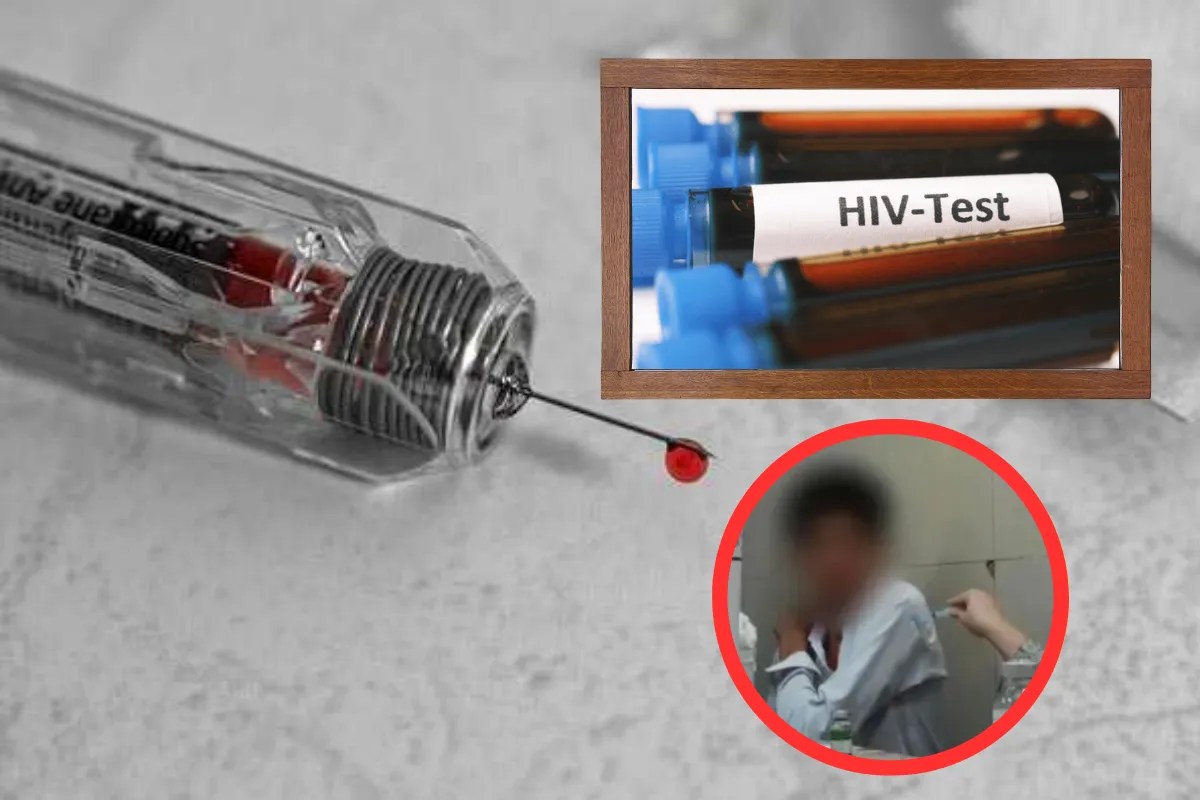
The culprit was a single plastic tool. A syringe.
In many parts of the developing world, medical supplies are treated like gold, not because they are precious, but because they are scarce. To save a few rupees, some practitioners—many of them unlicensed "quacks" operating out of storefronts—did the unthinkable. They used the same needle on child after child.
Imagine a line of fifty children. The first child has a cough. The second has a fever. The third unknowingly carries a virus. By the time the tenth child is injected with that same, dulling needle, the virus has been handed a high-speed rail pass into a new generation.
[Image of medical syringe and vial]
The Math of a Massacre
The numbers are staggering. Over 900 people tested positive in that initial wave. Out of those, more than 700 were children. Specifically, 331 infants and toddlers were caught in the first dragnet of testing.
Think about the physical reality of a reused needle. After the first puncture, the razor-sharp tip hooks slightly. It becomes a jagged microscopic barb. Each subsequent use causes more tissue damage, more bleeding, and provides more surface area for blood-borne pathogens to cling to.
It is a slow-motion execution.
The local doctor at the center of the scandal was Muzaffar Ghanghro. He was a pediatrician, a man parents trusted with their most precious lives. When he was arrested, reports surfaced of him digging through his trash for old syringes to use on patients because he was too cheap or too hurried to reach for a fresh one. He denied the charges, but the trail of broken immune systems led directly to his doorstep.
A System Built on Sand
The problem isn't just one "bad apple" doctor. That’s too easy an explanation. The real issue is a healthcare architecture that allows shadows to grow.
Pakistan has a massive shortage of qualified medical professionals. This vacuum is filled by roughly 600,000 "fake" doctors who operate without licenses. They are cheaper. They are closer. They don't ask for paperwork. For a laborer earning three dollars a day, a quack is the only option when their baby is shaking with a chill.
These clinics operate in the open. They hang signs. They hand out pills. But they lack the fundamental understanding of sterilization. They see a syringe as a delivery vehicle for medicine, ignoring the fact that it is also a bridge for death.
The invisible stakes here aren't just about a virus. They are about the total collapse of trust. When a mother fears the very person meant to heal her child, the social contract is void.
The Weight of the Stigma
In a village where information travels by word of mouth, the word "HIV" carries a heavy, jagged edge.
Families in Ratodero didn't just lose their children's health; they lost their place in the world. Neighbors stopped visiting. Shopkeepers refused to take money from the hands of the "infected." Some parents were so ashamed they didn't want to get their other children tested, fearing the scarlet letter that would be pinned to their front door.
Consider the life of a three-year-old on antiretroviral therapy (ART) in a place where electricity is a luxury and clean water is a miracle. The drugs are harsh. They require a strict schedule. They require nutrition that many of these families simply cannot afford.
The child survives the initial infection only to face a life of biological and social imprisonment.
Beyond the Border
It is tempting to look at Ratodero as a distant tragedy, a fluke of geography and bad luck. That is a dangerous delusion.
The World Health Organization has long warned that the reuse of medical devices is a global crisis. Millions of injections are given every year using syringes that have been used before. We live in an interconnected world where a pathogen in a small Pakistani town is only a flight away from a major metropolis.
The tragedy is that the solution is incredibly cheap. An "auto-disable" syringe, which locks and breaks after a single use, costs only a few cents more than a standard one.
A few cents.
That is the price of a child's life in the eyes of a broken system. The difference between a healthy kindergarten graduation and a lifetime of medication is the cost of a piece of candy.
The Silence After the Scream
The cameras eventually left Ratodero. The news cycle moved on to politics and sports. But for the families left behind, the quiet is the loudest part.
The "quack" doctors still operate in the neighboring towns. The supply chains for fresh needles are still fragile. And the children—those who survived—are growing up in a world that looks at them with a mixture of pity and fear.
They are the living reminders of what happens when we prioritize convenience over humanity. They are the evidence that a needle, designed to save, can become a weapon when held by hands that have forgotten the weight of a life.
The dust in the streets of Sindh eventually settles, covering the footprints of the parents who ran to the clinics. But the virus doesn't settle. It waits, silent and microscopic, for the next time someone decides that a few rupees are worth more than the blood of the innocent.