A young woman sits in a cramped office in Bengaluru, her face illuminated by the harsh blue light of a dual-monitor setup. Her fingers fly across the keyboard, optimizing cloud infrastructure for a mid-sized American retail brand. Thousands of miles away, an auto worker in Ohio shifts his weight on a concrete factory floor, wondering if the digital shift that swallowed his town's old economy will ever stop expanding.
They do not know each other. They will never meet. Yet, they are locked in a silent, invisible tug-of-war over an abstract concept that is about to hit the real world with the force of a tidal wave. You might also find this related story insightful: The Anatomy of Maritime Chokepoint Monetization: A Brutal Breakdown of Iran's Insurance Gambit.
The battleground is not a physical border. It is the invisible architecture of the internet, and the weapon of choice is a 100% tariff.
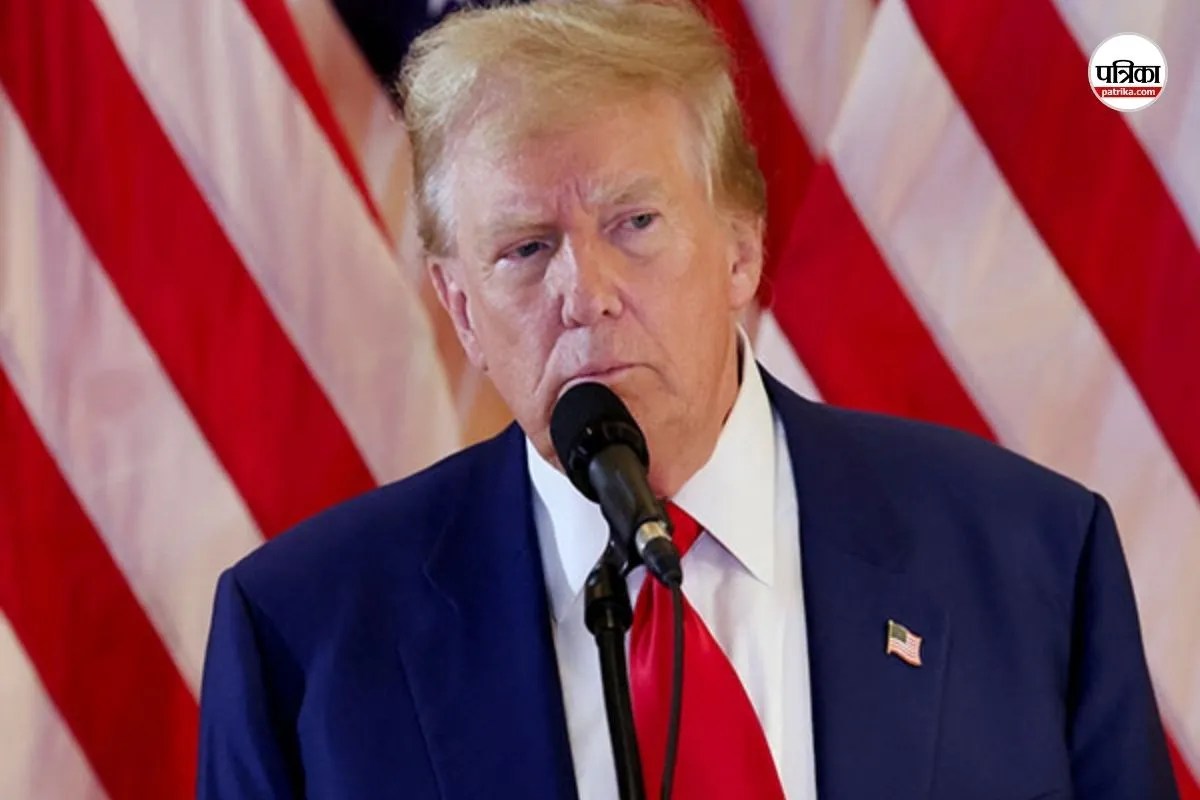
When the headlines broke announcing Donald Trump’s threat to levy massive tariffs on countries charging a Digital Services Tax (DST), the financial markets reacted with the usual flurry of graphs and percentages. But look past the sterile economic jargon. This is not a story about percentages. It is a story about a fundamental, tectonic shift in how nations value the air we breathe online, and India is standing directly in the crosshairs. As highlighted in recent reports by Bloomberg, the results are significant.
The Invisible Tollbooth
To understand why a global trade war is brewing over a Google ad or a Netflix subscription, we have to look at how wealth is created today.
For a century, if an American company wanted to sell cars or shoes in India, they built factories, hired local workers, and paid local corporate taxes. There was a physical footprint. Taxes were easy to calculate because you could see the brick-and-mortar stores.
Then came the silicon revolution.
Suddenly, a tech giant based in California could beam services directly into the smartphones of 1.4 billion people in India. They didn't need factories. They didn't need a massive local corporate headquarters. They harvested data, sold targeted advertisements, and channeled billions of dollars back across the ocean.
To the Indian government, this looked like a digital loophole. Local brick-and-mortar businesses were paying heavy taxes, while foreign digital empires were extracting massive wealth with minimal local tax liability.
India’s response was a 2% equalization levy, colloquially known as the digital services tax. It was a digital tollbooth. If an American tech giant wanted to profit from the data and attention of Indian citizens, they had to leave a small piece of that wealth behind.
But Washington saw it differently. To American policymakers, this tax felt like a targeted attack on their crown jewel companies—a penalty on innovation.
Now, the threat of a 100% tariff looms large. It is the economic equivalent of a nuclear option. If you tax our data, we will double the price of your physical goods.
The Ripple in the Supply Chain
Let us step away from Washington and New Delhi and look at a hypothetical exporter named Anand.
Anand runs a textile business in Surat. For generations, his family has spun fine cotton, transforming raw threads into intricate garments shipped to boutiques across New York and California. He does not build apps. He does not understand algorithms. He operates entirely in the physical realm of fabric, sweat, and shipping containers.
If the threatened 100% tariff becomes reality, Anand’s business dies overnight.
A shipping container of garments that used to cost $50,000 to clear customs in Los Angeles suddenly costs $100,000. The boutique owners in Manhattan cannot absorb that cost. They cancel their orders. Anand is forced to lay off half his weavers.
This is the terrifying reality of modern trade disputes. A disagreement over how a Silicon Valley search engine is taxed can instantly bankrupt a textile weaver on the banks of the Tapi River. The digital world and the physical world are no longer separate. They are wired together in a complex, fragile circuit. When a fuse blows in Silicon Valley, the lights go out in Surat.
The Ghost in the Machine
The underlying tension here is deeply human: it is about sovereignty versus globalism.
India believes its citizens' data is a national resource, akin to oil or minerals. If foreign companies want to mine that resource, they must pay for the privilege. The United States believes in the borderless freedom of the internet, arguing that excessive regulation stifles progress and harms consumers everywhere.
Both arguments hold a mirror to a deep anxiety.
Consider what happens next if India refuses to back down. The country has a massive digital economy, with hundreds of millions of new internet users coming online every few years. The government cannot easily abandon a tax policy that ensures its own domestic tech ecosystem can compete on a level playing field. If local startups are bound by strict domestic tax laws while foreign giants skate by untaxed, the local ecosystem suffocates.
But the stakes for India’s IT sector are staggering.
India’s IT service giants rely heavily on the North American market. If the trade war escalates from tariffs on physical goods to restrictions on digital visas or retaliatory taxes on tech services, the Bengaluru office worker we met earlier faces an uncertain future. The contracts that fund her salary could evaporate if American clients decide it is too legally risky or expensive to outsource their digital operations to India.
The Price We All Pay
It is easy to watch this unfold and feel detached. We assume these titanic clashes are reserved for billionaires, prime ministers, and CEOs.
They are not.
If a 100% tariff is enacted, the cost is never absorbed by the giant corporations. It is passed down. The American tech firms will simply raise the prices of their cloud services, advertising slots, and digital subscriptions in India to offset the DST. The Indian exporters will have to cut wages to keep their products competitive under the weight of American tariffs.
The consumer is the ultimate shock absorber.
We are left navigating a world where the simple act of clicking an ad or streaming a video is tethered to global geopolitics. The internet was promised to us as a global commons—a seamless, borderless sky where information could fly free. Instead, we are watching nations build invisible digital fences, guarded by economic artillery.
The blue light from the monitor in Bengaluru continues to flicker. The loom in Surat continues to hum, at least for now. The tension hangs in the air, a quiet reminder that in the modern world, peace is fragile, and the true cost of our digital lives is always paid in human currency.