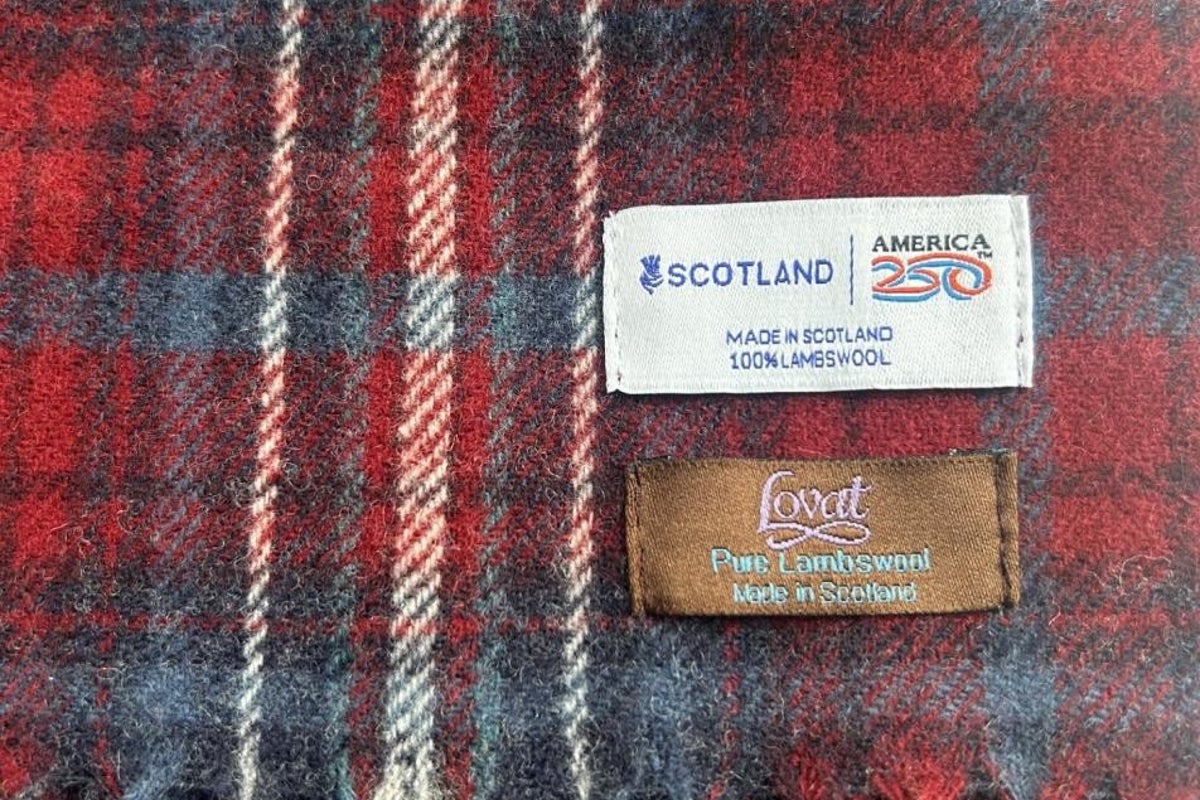
The Scottish Government recently unveiled an official new tartan designed by textile student Kaci McEwan to commemorate 250 years of American independence and celebrate the national football team’s return to the World Cup. Bureaucrats and diplomats have framed the fabric as a symbol of the historic, enduring friendship between Edinburgh and Washington.
The reality behind this sudden burst of textile diplomacy is far more transactional.
As Steve Clarke’s squad ends a 28-year World Cup drought by arriving in New England to play Haiti, Morocco, and Brazil, they are accompanied by an estimated 10,000 traveling supporters. But behind the scenes, the Scottish Government is using the tournament as a wedge to access lucrative American markets. The ceremonial unveiling of a new weave is a calculated branding exercise masked as historical nostalgia, designed to soften the ground for trade talks while the host nation is distracted by soccer.
The Trade Mission Behind the Plaid
Governments rarely commission official state symbols purely out of the goodness of their hearts. The timing of this release, mere days before the Tartan Army descends upon the Gillette Stadium in Foxborough, reveals a coordinated push by Scotland’s external affairs apparatus to maximize economic visibility.
External Affairs Minister Stephen Gethins made the underlying strategy clear when he noted that the World Cup would serve to showcase Scottish skills and expertise to the US and the wider world. The statement strips away the romantic poetry of diaspora bonds and replaces it with the cold prose of foreign direct investment.
The United States remains Scotland’s top international export market, accounting for billions of pounds annually in food, drink, technology, and engineering services. By leveraging the intense global media spotlight of a North American World Cup, the Scottish administration is attempting to elevate the nation's corporate profile.
The strategy uses cultural heritage to solve a modern economic problem.
- The Soft Power Play: Traditional iconography like kilts and bagpipes creates instant brand recognition, lowering the barrier to entry for trade delegations.
- The Diaspora Network: Targeting regions with deep ancestral ties ensures an organic, receptive audience for Scottish business interests.
- The Tourism Spike: Converting football fans into future high-spending tourists by projecting an image of premium craftsmanship and cultural prestige.
This method is not without risk. Relying heavily on romanticized, historical imagery can backfire by pigeonholing a country as a living museum rather than a hub for modern industry. While the government touts a creative drive, foreign investors are looking for tech infrastructure and favorable tax frameworks, not numbered threads symbolizing early American history.
Logistical Chaos and the Price of Fan Loyalty
While politicians sip champagne at promotional launches, the actual citizens funding this cultural excursion are facing a harsher reality on the ground. The romantic narrative of a seamless cross-Atlantic celebration ignores the steep financial and logistical hurdles confronting the Tartan Army.
Accommodation costs in Boston have spiked to extortionate levels, forcing thousands of fans to set up their unofficial tournament headquarters 20 miles south in Providence, Rhode Island. The logistical workaround involves chartering fleets of yellow school buses to ferry boisterous supporters across state lines to the match venues.
+-------------------+-----------------------------------------+
| World Cup Hurdle  | The Grim Reality For Traveling Fans     |
+-------------------+-----------------------------------------+
| Ticket Pricing    | Category-one tickets hitting $700+      |
| Security Delays   | One-hour queues with National Guard     |
| Border Control    | Approved travel permits being rejected  |
+-------------------+-----------------------------------------+
National team manager Steve Clarke took the unusual step of publicly urging fans not to rack up massive, life-altering debts just to attend the group stages. This warning reflects a growing disconnect between the elite tier of international sports marketing and the working-class fan base that provides the atmosphere.
Furthermore, the threat of administrative failure looms over the entire operation. Just days before kickoff, reports emerged of Scottish supporters being turned away at airports because previously approved US travel permits were summarily rejected by border authorities. For these fans, the enduring connection between the two nations feels remarkably one-sided.
Moving Beyond the Cliché of No Scotland No Party
The narrative surrounding Scottish football abroad usually defaults to a predictable script. Media outlets focus on the drinking, the singing, and the colorful pageantry of a fan base happy to simply be included.
That indulgent perspective patronizes the sport and undermines the competitive reality facing the team.
Scotland is no longer content with being the tournament's colorful opening act. The squad enters Group C with a genuine, calculated chance to reach the knockout rounds of a major tournament for the first time in history. A victory against Haiti is vital, especially with the daunting prospect of facing Brazil later in the schedule.
The obsession with aesthetic diplomacy, such as launching commemorative textiles, threatens to overshadow the actual athletic stakes. If the team suffers an early, embarrassing exit, the government’s expensive branding exercise will look foolishly premature. The Tartan Army's reputation for bringing the party means nothing if the football team cannot perform on the pitch.
Authentic international relationships are forged through reciprocal economic partnership and competitive parity, not manufactured design projects. As the school buses roll into Foxborough amid heightened security and National Guard checkpoints, the true value of Scotland’s presence will be measured in goals and trade signatures, not the pattern of a newly woven cloth.