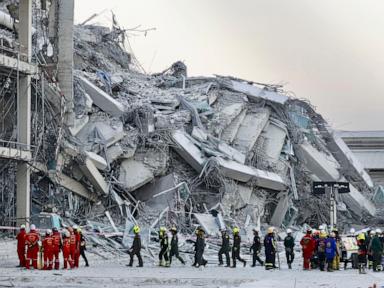
A gavel drops in a Thai courtroom. A Chinese executive takes the fall for a deadly Bangkok building collapse. Headlines celebrate justice served, regulators pat themselves on the back, and the construction sector breathes a collective sigh of relief.
They are all celebrating a lie.
Focusing public rage on a single convicted executive is the oldest trick in the infrastructure playbook. It satisfies the public demand for a villain while leaving the machinery that crushed those workers completely intact. When concrete fails and steel shears in Southeast Asia, the person sitting in the defendant’s chair is rarely the architect of the failure. They are the designated shock absorber for a broken procurement model.
The Scapegoat Economy in Cross-Border Construction
Mainstream reporting treats structural collapses like true-crime dramas. Find the greedy contractor, prove negligence, lock them up, close the file. That narrative sells newspapers, but it gets construction physics and corporate liability completely backward.
In large-scale urban development across Bangkok and the wider ASEAN region, foreign contractors rarely operate in a vacuum. They enter markets through intricate joint ventures, layered subcontracting tiers, and local licensing arrangements designed to insulate domestic capital from operational risk. When a project goes sideways, the legal architecture guarantees that liability flows downhill—away from the local land-holding conglomerates and toward the foreign operational partner holding the technical stamp.
I have sat in post-mortem audit rooms across Southeast Asia after major structural failures. The pattern never changes. By the time investigators sift through the rubble, the paper trail has been split across four shell entities, three labor brokers, and two local engineering consultancies. Prosecutors go after the highest-ranking foreign national whose signature sits on the joint-venture operational agreement because that person is visible, politically expendable, and easy to frame as an outside corner-cutter.
Meanwhile, the project owners who demanded a 20% schedule compression without adjusting the structural curing timeline walk out of the courthouse untouched.
Why Lowest-Bid Procurement Guarantees Structural Failure
If you want to understand why buildings fall down in rapidly developing skylines, stop reading court transcripts and start reading tender documents.
The real killer in modern commercial construction is not one rogue executive deciding to use cheap rebar. It is the lowest-bidder tender model paired with punitive liquidated damages.
Here is how the trap snaps shut:
- Unrealistic Baseline Pricing: Developers issue tenders where margins are shaved to razor-thin single digits before a single shovel hits dirt. To win the contract, builders bid below actual cost, banking on change orders and value engineering to claw back profit later.
- Weaponized Timelines: Contracts impose massive daily financial penalties—liquidated damages—for every day a project runs behind schedule. In Bangkok’s monsoon climate, weather delays are a mathematical certainty, yet contracts routinely price them as contractor anomalies.
- Forced Value Engineering: Mid-project, when material inflation hits or soil conditions prove worse than the developer’s preliminary geotechnical survey claimed, the contractor asks for a budget adjustment. The developer refuses, pointing to the fixed-price contract, and instead approves "value engineering"—industry code for stripping redundancy out of the structural design.
When an executive signs off on substituting a specified concrete mix or accelerating formwork stripping before concrete reaches design strength, they are not acting like a cartoon villain twirling a mustache. They are reacting rationally to a contractual gun pointed at their company’s solvency.
Convicting the executive who pulled the trigger does nothing to disarm the developer who loaded the weapon.
What Everyone Gets Wrong About Foreign Contractors and Local Oversight
Whenever a Chinese-backed firm is implicated in an overseas infrastructure failure, Western and regional commentators immediately reach for geopolitical clichés. They blame "Belt and Road corner-cutting" or imported low standards.
That lazy framing ignores how municipal building control actually functions on the ground.
A foreign contractor cannot pour a single cubic meter of foundation concrete in Bangkok without local regulatory sign-off. Every major structural milestone—piling load tests, rebar cage inspections, concrete slump tests, and temporary shoring installations—requires statutory approval from locally licensed engineers and municipal inspectors under Thailand’s Building Control Act.
Let’s look at the actual failure points in a typical urban collapse:
- Geotechnical Blindness: Bangkok sits on soft marine clay. Deep foundation piling requires strict adherence to skin-friction and end-bearing calculations. When developers rush pre-construction soil boring to save money, contractors drive piles into unmapped soft pockets.
- Third-Party Inspection Theater: Independent inspection firms are frequently hired and paid directly by the developer or the main contractor—a blatant conflict of interest. An inspector who halts a pour over high water-cement ratios loses their next three contracts. So they sign the logbook and look away.
- Shores and Formwork Shortcuts: Most mid-construction collapses happen during concrete placement, not after occupancy. Temporary shoring systems fail because crews strip supports from lower floors too early to reuse the aluminum formwork on upper floors.
Blaming the nationality of the convicted executive obscures a much more uncomfortable truth: local regulatory enforcement is structurally compromised. If municipal oversight worked, a corner-cutting contractor would be shut down at the foundation stage, years before a superstructure could ever collapse.
The Structural Engineering Reality Behind Formwork and Curing Failures
To grasp why a conviction misses the mark, you have to understand the basic mechanics of reinforced concrete construction. Concrete does not dry; it cures through a chemical reaction called hydration.
Standard structural concrete requires 28 days to reach its full specified compressive strength, measured in megapascals (MPa). During the first 7 days, it gains roughly 65% to 70% of that strength. In high-rise construction, builders use flying table forms or jump-form systems to pour a new floor every four to seven days.
That cycle works only if two conditions hold:
- Reshoring: Temporary vertical steel props must remain installed across at least two to three floors below the active pour to transfer the wet concrete load down to older, fully cured slabs.
- Batch Consistency: Every ready-mix truck arriving at the gate must match the exact water-to-cement ratio specified by the structural engineer of record. Adding water on-site to make stiff concrete easier to pump destroys its compressive strength.
Imagine a scenario where a site superintendent faces a monsoon storm forecast in four hours and a developer threatening $50,000 a day in delay penalties. The concrete arrives slightly dry. The crew adds water to speed up pumping, then pulls the reshoring props from three levels down to prepare tomorrow's slab. The slab above cures to 18 MPa instead of the required 32 MPa, while carrying double its intended dead load.
Who caused that collapse? The site foreman who turned on the water hose? The executive in an air-conditioned office three miles away who signed the progress billing? Or the developer who wrote a contract that made compliance financially impossible?
Under criminal negligence statutes, courts look for a human chain of command. They trace authority up to a corporate officer and call it accountability. In engineering reality, the failure was baked into the project schedule twelve months earlier.
Dismantling the Myths Around Construction Liability
Does convicting a senior executive deter future safety violations?
No. Corporate executives rarely manage day-to-day site tolerances, and prison sentences for individual managers are priced in as personal career hazards rather than systemic deterrents. When a company faces bankruptcy from liquidated damages versus a 5% probability of criminal prosecution if a structure fails, financial survival wins every single time. Deterrence only works when penalties hit the corporate balance sheet and personal wealth of the beneficial owners—the people who profit from the completed building—not the salaried managers hired to build it.
Are foreign construction standards inherently lower than local codes?
Quite the opposite on paper. China’s national building codes (GB standards) for seismic resistance and concrete strength are among the strictest in the world, forged in the aftermath of the 2008 Sichuan earthquake. Failures happen when companies operate in jurisdictions with weak enforcement mechanisms and adapt downward to match the local tolerance for corner-cutting. A contractor will build to whatever standard the local inspector actually enforces.
How can commercial property buyers verify a building is actually safe?
Stop trusting municipal occupancy permits and developer marketing brochures. Before leasing or buying commercial floor space in rapid-growth markets, institutional investors hire independent forensic structural engineers to audit three specific records: original concrete cylinder break test logs, third-party ultrasonic pulse velocity scans of load-bearing columns, and the actual qualifications of the geotechnical firm that signed the foundation report. If the developer refuses to release raw batch-plant tickets, walk away from the deal.
Why Joint-Venture Shields Protect the Real Decision Makers
Look closely at the corporate structure behind almost every major foreign-led build in Southeast Asia. Foreign firms face strict ownership caps and licensing hurdles, forcing them into consortiums with domestic partners.
In theory, these partnerships combine foreign capital and engineering scale with local regulatory navigation. In practice, they create a hall of mirrors.
When profits flow, they move through management fees, land leases, and procurement markups controlled by the majority local stakeholders. When a building collapses, the operational contract conveniently designates the foreign technical partner as the sole party responsible for "site safety and construction methodology."
Prosecutors love this setup because it prevents politically sensitive domestic conglomerates from being dragged into criminal court. The foreign executive becomes a diplomatic and legal sacrificial lamb. Everybody gets to pretend the system works: the government looks tough on foreign negligence, the local conglomerate preserves its credit lines, and the industry avoids any painful reform of how buildings are financed and inspected.
The Honest Downside of Systemic Accountability
Holding developers and beneficial owners criminally and financially liable for contractor failures is not a clean fix. If you shift strict structural liability onto project owners and financiers, construction costs in cities like Bangkok will jump by 15% to 25% overnight.
Banks will demand massive completion bonds. Developers will slow down land acquisition. Mid-tier builders will be priced out of the market entirely, concentrating urban development in the hands of a few mega-corporations. Housing and commercial lease rates will climb, squeezing the exact middle class that rapid urban growth is supposed to serve.
You do not get cheap, fast skyscrapers and ironclad structural safety at the same time. Every emerging skyline makes an implicit trade-off between speed, cost, and risk. Right now, Southeast Asian real estate pretends it can have all three, and pays the difference in worker casualties and courtroom scapegoats.
How Real Construction Reform Actually Happens
If regulators wanted to stop the next collapse instead of staging the next trial, they would tear up the current enforcement playbook and implement four non-negotiable rules:
- Sever the Inspector Paycheck: Ban developers and contractors from hiring their own quality-control inspectors. Force project owners to pay an inspection levy into a municipal escrow fund, and let the state assign rotating, independent structural auditors who cannot be fired by the builder.
- Criminalize Schedule Coercion: Make any contract clause that penalizes weather delays or forces concrete stripping ahead of verified cylinder-break results void and criminally actionable against the developer’s board of directors.
- Mandate Digital Batch Tracking: Require automated, tamper-proof telemetry on every concrete mixer truck and batch plant feeding commercial sites, linking slump, water ratio, and mix design directly to a public municipal server before the chute opens.
- Pierce the Joint-Venture Veil: Hold every equity holder with more than a 10% stake in a development project jointly and severally liable for structural fatalities, stripping away the shell-company insulation that protects financiers.
Until those rules exist, putting one executive behind bars is pure theater. The concrete trucks are still rolling, the schedules are still impossible, and the next collapse is already curing on someone’s skyline.