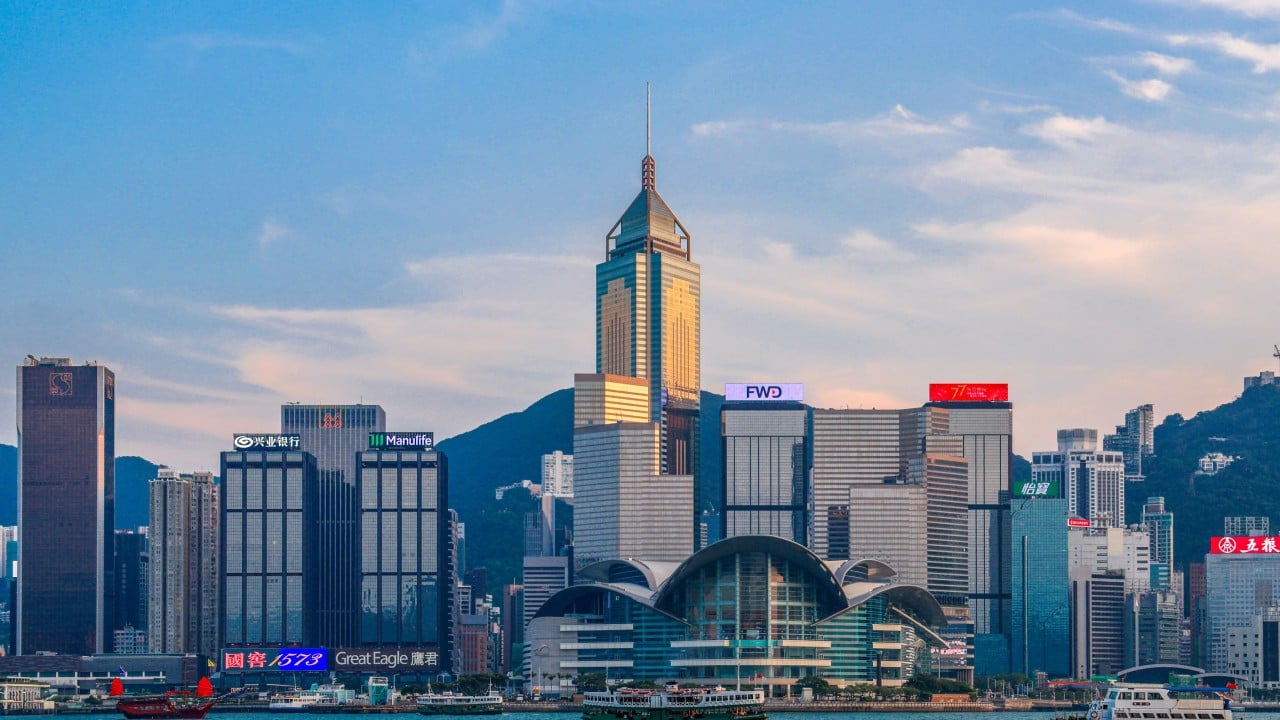
The coffee in the Sheung Wan café was cold before anyone remembered to drink it. Across the zinc-topped table, a veteran logistics director pushed a stack of customs clearance forms aside with the back of his hand, rubbing his eyes against the blue light of a terminal. For thirty years, his playbook had been simple: move containers from Shenzhen terminals to Kwai Chung berths, fill out triplicate paperwork, stamp the manifest, and repeat. It was a rhythm carved into granite by generations of colonial trade routes and Cantonese hustle.
That rhythm died somewhere around midnight on a Tuesday, replaced by the silent hum of an automated warehouse management system running on a cloud server in Singapore. You might also find this similar story interesting: Paramount Skydance Capital Migration and The Mechanics of Index Arbitrage.
We do not talk enough about the grief of traditional commerce. When corporate evolution is discussed in quarterly earnings reports, it sounds clean. It reads like a bulleted list of cloud migrations, digital transformation metrics, and agile workflow adoptions. But on the ground, inside the narrow, high-ceilinged offices of Central or the bustling industrial bays of Kwun Tong, evolution looks a lot like panic followed by quiet reinvention.
Consider a hypothetical family-run textile exporter, let us call them Wing Fat Garments, operating out of a cramped industrial unit in Lai Chi Kok. For decades, their competitive advantage was personal relationships. The grandfather knew the dyers in Foshan by name; the father shook hands with the buyers from London showrooms over dim sum. Trust was currency. Paper was law. As highlighted in detailed articles by CNBC, the results are significant.
Then came the contraction of traditional supply chains, soaring commercial rents, and a post-pandemic economic landscape that stopped caring about how long you had been in business. The buyers in London did not want to wait three days for a faxed quote or a scanned PDF. They wanted an API integration that spat out real-time inventory levels, fabric certifications, and carbon-emission trackings before their morning tea went cold.
Wing Fat Garments faced a brutal choice. They could stay comfortable and slowly bleed out, or they could tear up the floorboards of their operational model and wire it for electricity.
They chose electricity.
This is the hidden narrative of modern commerce in the Special Administrative Region. Hong Kong companies are not evolving because they read a management textbook or because a consultant told them to. They are evolving because the old floorboards were burning beneath their feet.
The pressure points are everywhere. High operational costs act as a permanent tax on inefficiency. If a mid-sized trading firm in Tsim Sha Tsui employs ten people to manually reconcile invoices, those ten salaries represent a margin that evaporates against competitors in Shenzhen or Seoul who automated the reconciliation process five years ago. To survive in one of the most expensive cities on earth, a business has to be light on its feet.
Autonomy became the new survival metric.
Look at how local enterprises are shifting their approach to talent. The traditional Hong Kong corporate hierarchy—rigid, seniority-driven, heavily dependent on face time—is collapsing under its own weight. Younger professionals, educated abroad or steeped in digital-first startup culture, simply refuse to work in systems that treat computers like glorified typewriters. They are demanding hybrid structures, data-driven decision-making, and psychological safety to make mistakes.
When a heritage jewelry brand in Causeway Bay decides to scrap its legacy point-of-sale software for a unified omnichannel platform, the technical challenge is minor compared to the human challenge. You have to convince a seventy-year-old store manager who has used the same green-screen cash register since 1988 that an iPad isn't a toy, but a lifeline.
You have to sit with them. You have to listen to their fear of obsolescence. You have to translate abstract software updates into the language of daily dignity.
This is where true enterprise resilience lives. It is not found in a balanced balance sheet alone. It is found in the willingness of a workforce to unlearn what made them successful yesterday so they can master what will keep them alive tomorrow.
Hong Kong businesses have always lived on a knife-edge. Geopolitically, economically, and socially, the city is a masterclass in adaptation. In the 1950s, it was plastics and textiles. In the 1980s, financial services and real estate. In the 2000s, the super-connector bridge between mainland manufacturing and Western consumerism.
Every single one of those shifts looked impossible from the inside. Every single one of them created casualties—businesses that clung to the past with white knuckles, convinced that their history was an armor plating against the future.
The current pivot toward advanced enterprise tech, artificial intelligence integration in supply chains, and green compliance is just the latest incarnation of this existential dance. Companies that are winning right now share a distinct psychological trait: they have stopped looking for the old normal.
Walk through Cyberport on a rainy Thursday afternoon. The energy is different from the trading floors of twenty years ago. There are fewer pinstripes, more hoodies, and a staggering amount of Mandarin and Cantonese mixing with accented English over whiteboards covered in flowcharts. A logistics startup founded by three local university graduates is using machine learning to predict container congestion at Kwai Chung before it happens, saving shipping lines millions in demurrage fees.
They did not invent this technology in a vacuum. They watched their parents struggle with erratic shipping schedules and decided they never wanted to feel that powerlessness again.
That is the emotional core of this transition. It is driven by a profound, generational desire for control in an uncontrollable world.
When a century-old shipping conglomerate or a local restaurant chain rebuilds its backend infrastructure, it is an act of defiance. It says: we are not a relic. We are still here.
Yet, the friction points remain real. Access to specialized technical talent in Hong Kong remains a persistent bottleneck. While universities churn out brilliant engineers, the competition for top-tier software architects and data scientists against global tech hubs is fierce. Immigration policies have loosened to attract talent from across the border and beyond, but integrating diverse engineering cultures into traditional Cantonese corporate environments takes time and emotional labor.
Furthermore, cybersecurity has transformed from an IT checkbox into a board-level existential threat. As local companies digitize their operations, opening up their data lakes to cloud providers and automated partners, the attack surface expands. A single ransomware attack can shutter a mid-sized trading house faster than a market crash.
These are not clean, neat victories. They are messy, expensive, and fraught with missteps.
I remember talking to the chief operating officer of a mid-sized manufacturing firm in Kwun Tong who spent six months and a small fortune implementing an enterprise resource planning system, only to watch it completely fail during its first week live because the warehouse staff didn't understand the barcode scanners. He told me he sat in his car outside the warehouse and cried.
He didn't quit. He went back inside, threw out the user manuals, brought in a twenty-four-year-old intern to run daily training workshops, and rewrote the workflow from the ground up. Six months later, their error rate dropped by eighty percent.
That is what evolution looks like when you scrape away the corporate jargon. It looks like a grown man sitting in a car, feeling utterly defeated, before walking back through the doors to try again.
The companies that are thriving in Hong Kong today share this quiet stubbornness. They have accepted that the ground beneath them will never stop shifting. They have stopped bracing for the impact and learned how to build wings on the way down.
The harbor outside the window of that Sheung Wan café keeps moving. Ferries trace their white wakes across the dark water, just as they did fifty years ago. But beneath the surface, the cables hum, the servers blink in cold containment rooms, and a new generation of operators is quietly rewriting the code of survival.