Throwing $600 million at an open-air museum to teach kids the Constitution is like buying a fleet of horse-drawn carriages to solve modern traffic.
The mainstream press loves a shiny press release. They read about the Colonial Williamsburg Foundation’s massive capital campaign—timed conveniently around the 100th anniversary of John D. Rockefeller Jr.’s original restoration—and immediately start applauding. More brick-and-mortar buildings. New digital classrooms. A shiny visitor center to usher tourists through the gates. It sounds noble. It sounds civic-minded.
It is also a colossal misallocation of capital that fundamentally misunderstands why history education is failing in America.
I have watched major cultural institutions and non-profits burn through nine-figure endowments for two decades. The pattern is always the same. Attendance plateaus, younger demographics stop caring about passive sightseeing, and the board of directors panics. Instead of questioning their core product, they default to the Edifice Complex—pouring concrete and erecting expensive monuments to convince themselves they are still relevant.
The Rockefeller Illusion and the Trap of Physical Scale
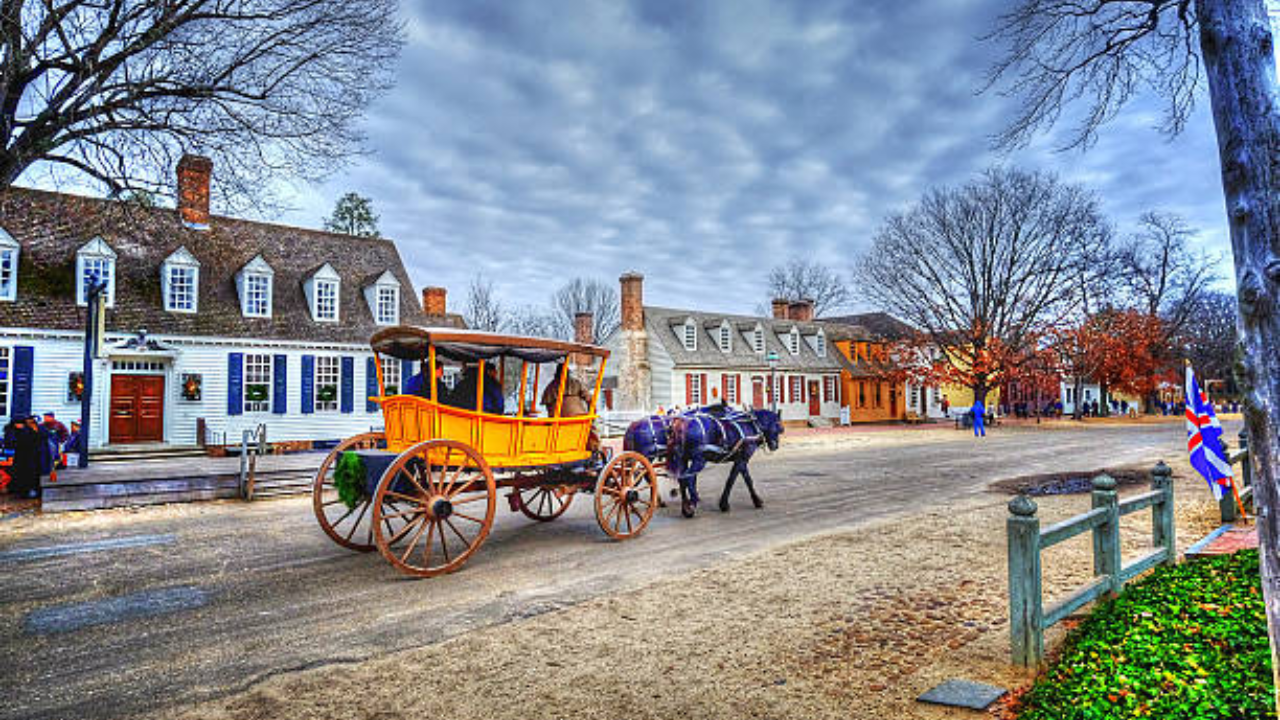
When John D. Rockefeller Jr. began bankrolling the restoration of Williamsburg, Virginia, in 1926, he was inventing a category. At the time, historic preservation in the United States was largely an amateur hobby run by local societies. Rockefeller brought industrial-scale philanthropy to the table, purchasing hundreds of properties, tearing down modern intrusions, and reconstructing an entire 18th-century town from the ground up.
It worked brilliantly for the twentieth century. Families piled into station wagons, drove to Virginia, watched a guy in knee breeches hammer a horseshoe, and felt connected to the founding of the republic.
That model is dead.
Today’s institutional leaders are trying to solve a 21st-century engagement crisis using a 1920s real estate playbook. Expanding a physical footprint in rural Virginia does nothing to democratize access to American history. If anything, it doubles down on geographic and financial gatekeeping. Taking a family of four to Colonial Williamsburg for a weekend—factoring in flights, hotels, meals, and admission tickets—easily clears two thousand dollars.
Building a bigger gift shop and a flashier orientation theater doesn't fix the economics of heritage tourism. It just increases the overhead costs that future generations of donors will have to subsidize.
Why Classroom Curricula Built by Museums Fail
The second pillar of this $600 million campaign—exporting Constitution lessons directly into classrooms—sounds like the digital salvation that offsets the real estate bloat. It isn't.
Having advised educational content producers on distribution strategy, I can tell you a hard truth that foundation executives hate hearing: teachers do not want pre-packaged corporate or institutional curricula.
Public school teachers are drowning in state-mandated testing metrics, rigid district pacing guides, and administrative red tape. When a prestigious museum drops a glossy, multi-million-dollar "Constitution toolkit" onto a teacher's desk, it rarely gets integrated into the core syllabus. It gets used as Friday afternoon filler when a substitute teacher needs to kill forty-five minutes.
Furthermore, museum-produced educational materials suffer from a fatal structural flaw: institutional cowardice.
To raise $600 million from corporate sponsors, conservative donors, progressive foundations, and state legislators, an organization has to sand off every sharp edge of the story. You cannot offend the people writing seven-figure checks. As a result, the "Constitution lessons" that survive committee review end up sanitized, homogenized, and stripped of the visceral, dangerous political friction that actually defined 1776 and 1787.
The Founding Fathers weren't polite consensus-builders posing for oil paintings. They were treasonous radicals, slaveholders, fierce partisan knife-fighters, and ruthless pragmatists who argued violently over debt, executive power, and the limits of democracy. Students tune out civics because institutions feed them boiled-down, risk-averse gruel instead of the raw, contradictory reality.
Dismantling the Civic Literacy Myth
If you search online for why Americans don't understand their own government, you will find endless hand-wringing about funding gaps and declining museum attendance. The conventional wisdom assumes that civic ignorance is a supply problem—that if we just build better exhibits and distribute prettier lesson plans, young people will suddenly memorize the Federalist Papers.
This gets the diagnosis completely backward. Civic literacy is a demand problem, not a supply problem.
Information about the U.S. Constitution is already free, instant, and infinitely accessible. Every Supreme Court opinion, every primary source letter from Thomas Jefferson, and every constitutional debate is sitting in the pocket of every teenager in America. They aren't ignoring the Constitution because Williamsburg lacks a new education wing. They are ignoring it because they don't see how an 18th-century parchment governs their lives right now.
Let’s look at how actual historical scholarship works versus how living-history parks operate. Real historians—figures like Gordon Wood or Annette Gordon-Reed—move the needle not by building theme parks, but by reframing arguments, uncovering uncomfortable primary documents, and forcing society to confront its own contradictions. They challenge the narrative.
Living-history museums, by design, freeze the narrative in amber. They prioritize aesthetic immersion over intellectual friction. Knowing what kind of tallow candles Patrick Henry burned in his parlor does zero to help a high school senior understand the Fourth Amendment's application to digital surveillance or the Commerce Clause's impact on modern business regulation.
The Uncomfortable Downside of Rejecting the Brick-and-Mortar Model
To be completely fair, abandoning physical preservation carries a real risk. Artifacts decay. Historic landscapes get swallowed by strip malls and highways if nobody buys the land and maintains the structures. You cannot digitize the physical sensation of standing inside the room where Patrick Henry delivered his "Give me liberty" speech, or walking the cobblestone streets where the Virginia Declaration of Rights was debated.
There is genuine value in physical stewardship. Keep the roofs from leaking. Pay the master carpenters and historians who keep traditional trades alive. Maintain the existing 301-acre historic area so future generations can walk through it.
The mistake isn't preserving the past. The mistake is confusing maintenance with growth, and assuming that a $600 million expansion is the only way to prove vitality.
How to Actually Fix History Education (Without Spending $600 Million)
Imagine a scenario where a philanthropic board actually wanted to maximize civic comprehension per dollar spent, rather than naming buildings after mega-donors. If you took even a fraction of that $600 million—say, $50 million—and deployed it with surgical precision, you wouldn't lay a single brick in Virginia.
Here is what works instead:
- Fund adversarial debate, not passive consumption. Stop paying for one-way video lectures and interactive touchscreens. Fund national, live-streamed constitutional debate leagues in underserved high schools where students are forced to argue both sides of live Supreme Court cases. You learn the Constitution by weaponizing it in an argument, not by clicking through a timeline.
- Eliminate admission fees entirely. If the mission is truly public education, tear down the ticket booths. Use endowment interest to make the historic town completely free to walk through, monetizing only food, lodging, and specialty tours. Turning a public town into a gated attraction destroys its civic utility.
- Buy distribution where students actually live. Stop trying to force-feed PDFs to overworked teachers. Poach the top independent history creators, documentary filmmakers, and investigative journalists off YouTube and TikTok, hand them unrestricted access to Williamsburg’s archives, and let them make raw, unvarnished content without a PR committee approving the scripts.
- Shift from 18th-century cosplay to modern legal literacy. Connect every historical artifact directly to a contemporary legal battle. Don't just show a colonial printing press; put it next to a breakdown of modern First Amendment defamation law and algorithmic censorship. Force visitors to grapple with the tension, not admire the antiques.
The Real Price of Institutional Nostalgia
The tragedy of the $600 million campaign isn't that the money will be stolen or wasted on pure vanity. Most of it will go toward well-intentioned salaries, genuine archaeological research, and high-end architectural construction.
The tragedy is the opportunity cost.
Every dollar locked into concrete foundations, climate-controlled galleries, and bloated administrative bureaucracies is a dollar unavailable to fight the actual crisis of civic illiteracy happening outside the museum gates. Foundations love buildings because buildings don't talk back, buildings don't spark partisan boycotts, and buildings let donors put their names on bronze plaques.
Real history is messy, unscripted, and deeply uncomfortable. Until cultural institutions stop hiding behind nine-figure construction projects and start trusting students with the raw, unfiltered truth of how power actually works, they aren't saving the republic. They’re just running an expensive costume party.