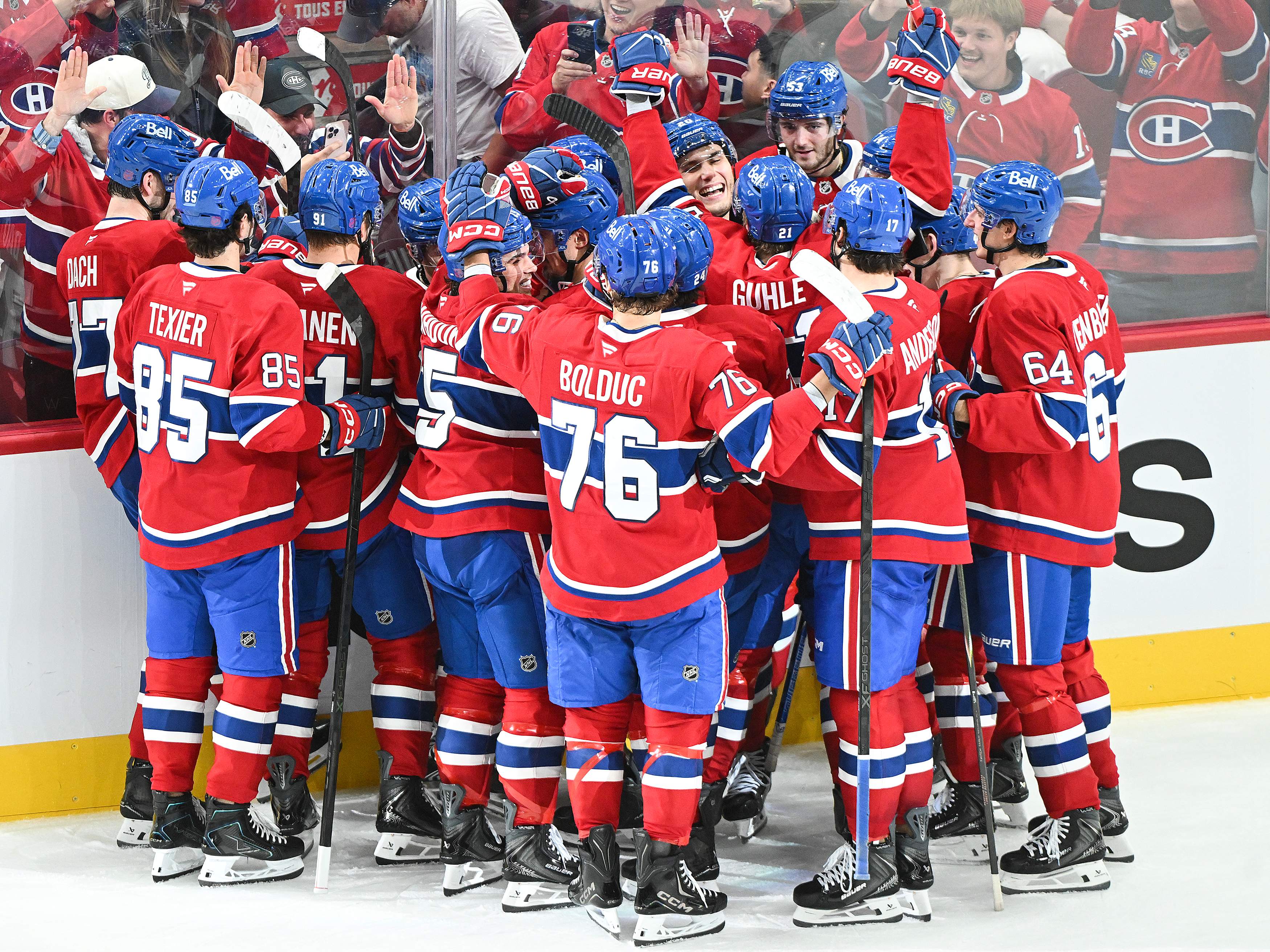
Two goals in a game. Overtime survival against Buffalo. Cue the parades.
Every time the Montreal Canadiens grind out a tight victory with Cole Caufield on the scoresheet, the standard hockey recap writes itself. Snipers snipe. Heart wins out. The rebuild has teeth.
Lazy. Lazy thinking.
That kind of post-game sugar rush mistakes a snapshot of shot selection and three-on-three chaos for a blueprint of sustainable NHL dominance. When Montreal outlasts the Buffalo Sabres in overtime behind a two-goal night from Caufield, you are watching a very specific set of hockey mechanics collide—some encouraging, some fragile, and plenty that get glossed over because the red light flashed twice.
I have watched front offices and fanbases alike pour emotional equity—and real cap money—into misreading nights just like this. You see a winger rip two pucks past a goalie in a hard-fought game and assume the scoring problem is solved, the top six is set, and overtime grit equals playoff readiness. None of that follows automatically.
Let's strip away the box-score fog and look at what actually happens when Caufield scores twice in an overtime win over Buffalo.
The Myth of the Two-Goal "Statement" Game
Walk into any press box or scroll through any post-game feed after a two-goal performance, and you will hear some version of he took over the game.
Usually, he didn't. He finished two plays.
In hockey, goal scoring is lumpy, noisy, and heavily dependent on shooting percentage over small samples. An elite shooter can generate steady high-danger looks for three straight losses, hit iron twice, run into a hot backup, and walk away with zero goals. Then, on a Thursday against a division rival, a quick release from the slot goes off a defender's shin pad and a second one beats a slightly late screen—and suddenly the narrative flips from cold streak to dominant night.
That does not mean Caufield's shot isn't a genuine weapon. It is. His release mechanics—getting the puck off his blade with minimal wind-up while shifting weight—force goalies to commit early or respect the clean look even when he is slightly off-angle. When Montreal's forecheck and puck support give him time and space in the offensive zone, his shot changes how defending teams set their coverage.
Still, two goals in a single game tells you almost nothing about repeatability unless you look at how those chances were created. Did Montreal earn controlled zone entries and sustain cycle pressure, or did they capitalize on transition mistakes and broken plays? Against an opponent like the Sabres—a roster notorious for swinging wildly between high-octane rush offense and defensive zone confusion—high-event sequences happen constantly. Capitalizing on them is good. Mistaking a high-event slugfest for airtight structure is how teams get fooled.
Expected Goals vs. Finishing Variance
Hockey analytics exist largely to separate process from luck, yet fans and pundits still treat final tallies as gospel. If a player puts four shots on net and scores twice on a 50% shooting night, that is a heater, not a new baseline.
Over an 82-game schedule, sustainable offense comes from shot quality, controlled entries, and second-chance volume, not one-off finishing bursts. Caufield's value in the Montreal Canadiens lineup is real because he consistently threatens dangerous ice, which pulls defenders toward him and opens lanes for teammates. Treating every two-goal night as proof of unstoppable momentum ignores the math of variance.
Overtime Against Buffalo Is Its Own Weird Sport
Outlasting the Buffalo Sabres in overtime is a fun night at the rink. It is not a stress test of five-on-five playoff hockey.
Three-on-three overtime in the NHL looks less like traditional hockey and more like pond hockey played at sprint speed. Open ice stretches sixty feet in every direction. One missed pass or tired change turns a harmless possession into a two-on-one the other way.
In that environment, skill and pace explode in value, while structured five-on-five defensive systems take a back seat. A team that struggles to exit its own zone cleanly under heavy playoff forechecking can still look electric in open-ice three-on-three. Conversely, a disciplined, heavy five-on-five team can look clunky when forced to chase puck carriers across the entire sheet with two fewer skaters on the ice.
Buffalo makes that dynamic even stranger. The Sabres regularly play fast, loose, and volatile hockey—capable of trading chances with anyone and equally capable of handing over free rush opportunities when coverage breaks down. Surviving an overtime battle against them proves you handled the chaos slightly better on that night. It does not prove you have solved your defensive zone exits, penalty kill discipline, or five-on-five depth.
Overtime wins pad the standings nicely in November and January. Come April, nobody hands out a point for surviving three-on-three.
The Question Everyone Asks—and Why It's Half-Baked
After a game like this, the predictable "People Also Ask" questions start popping up everywhere:
- Is Cole Caufield finally a true superstar?
- Are the Montreal Canadiens turning the corner?
- Can Buffalo figure out how to close out tight games?
Every single one of those questions is framed a little too lazily.
"Is Cole Caufield finally a true superstar?"
First, define your terms. In NHL parlance, "star" and "superstar" get tossed around like confetti. A true superstar usually drives play across all situations, tilts the ice through sheer volume and playmaking gravity, and carries offense even when linemates or matchups are unfavorable.
Caufield is an elite goal-scoring threat and a vital piece of Montreal's top six. His ability to find soft ice and snap off lethal wrist shots makes him dangerous every time the puck touches his stick in the offensive zone. Whether he crosses the threshold into true superstar territory depends on his broader impact—creating off the rush, surviving hard matchups, and producing consistently across stretches where his shooting percentage regresses toward career norms. Calling him a superstar because of a two-goal game is premature; writing him off because he isn't a power forward is equally blind.
"Are the Montreal Canadiens turning the corner?"
A rebuild doesn't turn a corner in a single overtime win. It turns a corner when young core pieces drive positive five-on-five goal share over twenty- and thirty-game blocks, when special teams stop bleeding momentum, and when the roster's floor rises enough that off-nights don't turn into blowouts.
Montreal has plenty of intriguing pieces and moments that show what the ceiling can look like. That is different from arrival. Watch how the Canadiens look on the second half of a back-to-back on the road against a structured, veteran contender—not just in a high-wire finish against Buffalo.
"Why can't the Buffalo Sabres close out tight games?"
Closing out tight games isn't a curse; it's usually a symptom of game management and situational execution. When a young or high-skill team relies heavily on rush offense and individual skill, late-game hockey—where neutral-zone space shrinks and simple chip-and-chase or clean rim-outs matter most—exposes habits that worked earlier in the night.
If you don't manage the puck cleanly under pressure in the final five minutes or extra time, you invite odd-man rushes and extended defensive shifts. That is a tactical and execution issue, not a mystical inability to handle pressure.
Imagine a Different Night
Imagine a scenario where the Montreal Canadiens play that exact same game against Buffalo, generate the same quality scoring chances, and control territorial play for two periods—except Caufield's two best shots hit the post and the Sabres win in a shootout.
In the standard media cycle, the tone after that game would be sour. Missed opportunities. Another frustrating loss. Couldn't finish.
Yet the underlying hockey process—how Montreal generated looks, how Caufield attacked soft coverage, how the game played out—would be nearly identical. If you judge a team's trajectory solely by whether the puck bounced in during overtime, you are letting random puck luck dictate your evaluation.
Where My Contrarian Take Can Burn Me
Being contrarian in sports is easy when you just sneer at everything. Being honest means admitting where skepticism goes too far.
Winning tight games does build confidence in a locker room, especially for younger players learning how to stay composed when momentum swings. Seeing a finisher like Caufield cash in twice when the game is on the line reminds everyone on the bench that one play can flip a night. Momentum isn't a magical force field, but belief in your top shooters and your late-game poise has real psychological weight over a long season.
There is also a real risk in over-analyzing fun nights to death. Hockey is supposed to be thrilling. Watching a clutch overtime finish with big goals is why people watch the sport in the first place. If you dismiss every exciting win as "just variance," you sound less like a sharp evaluator and more like a joyless spreadsheet.
What Actually Matters Next
If you care about what a game like this really means for Montreal—and for evaluating any NHL team—stop chasing headline box scores and start tracking habits that travel.
- Watch possession after the whistle and on zone exits. Notice how often Montreal's defensemen move the puck cleanly out of trouble under forechecking pressure without icing it or turning it over at the blue line. Clean exits fuel everything Caufield does offensively.
- Track Caufield's off-puck routes, not just his shots. Watch how he times his entry into the high slot or backdoor lane while linemates hold possession along the wall. That timing is what creates repeatable looks.
- Separate regulation structure from three-on-three fireworks. Enjoy the overtime winner for what it is, then look right back at five-on-five shot share and penalty kill execution over the next ten games.
- Judge Buffalo by puck management under late pressure. Look at whether the Sabres force low-percentage plays in tight spaces when the game slows down, rather than blaming bad luck in overtime.
Two goals in an overtime win against the Sabres makes for a great highlight reel. It makes for a terrible thesis.