Cold.
It is the first thing that hits you, long before the panic sets in, long before the mind can process the impossible geometry of a dining room floor tilting at forty-five degrees. When a ship goes down, the ocean does not wait for you to finish your drink or grab your passport from the cabin safe. It simply enters, heavy and black and indifferent, turning a floating palace of teak and velvet into a tilted labyrinth of steel.
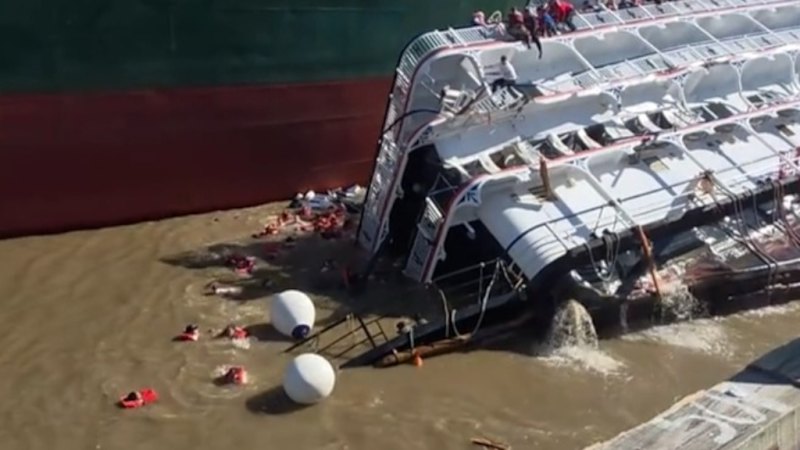
We read the headlines over morning coffee and scroll past them before the toast pops up. Dozens rescued from water after cruise ship sinks. Eight words. A tidy little box of tragedy, packaged and sanitized so it doesn't ruin our commute. Those eight words tell you what happened, in the broadest, most clinical sense possible. They tell you that people fell in, and other people pulled them out.
They do not tell you about the sound of hull plates groaning under pressure they were never meant to bear. They do not tell you about the smell of diesel fuel mixing with salt spray, or the strange, sudden quiet that falls over a crowd when everyone realizes the engines have stopped. Most of all, they do not tell you what happens in the dark water during the agonizing minutes between the abandon-ship horn and the beam of a rescue spotlight.
To understand why maritime rescues remain one of the most precarious, miraculous feats of human coordination, you have to step away from the press releases and look at the invisible clock ticking against every soul in the water.
The Myth of the Unsinkable Vacation
We step onto modern cruise ships with the same casual confidence we bring to checking into a downtown hotel. Why wouldn't we? Today’s vessels are engineering marvels, equipped with satellite navigation, double hulls, and automated ballast systems that can detect a shift in weight before a passenger even spills their Chardonnay.
Statistically, cruising is remarkably safe. According to data compiled by the Cruise Lines International Association, the global cruise industry carries more than thirty million passengers a year with an operational incident rate that makes air travel look turbulent. Over the last two decades, the number of passenger fatalities on large commercial cruise ships averages out to fewer than a handful per year globally—a fraction of a percent so small it barely registers on an actuarial table.
Yet statistics offer zero insulation when water starts pouring into the engine room.
Consider a hypothetical passenger—let’s call her Elena, a retired schoolteacher from Pune who spent three years saving for a coastal voyage, packing her best linen trousers and a paperback she had been meaning to read since last monsoon. Elena is not thinking about metacentric height or watertight bulkhead integrity when she boards. She is thinking about the sunset from the promenade deck.
When the ship strikes an uncharted submerged object or suffers a catastrophic mechanical failure, Elena’s reality fractures in seconds. The transition from tourist to survivor requires a violent mental rewiring. The very things that make a cruise ship comforting—the winding corridors, the plush carpeting, the maze of identical cabin doors—suddenly become obstacles. When the power fails and the emergency lighting flickers on, casting long, erratic shadows across tilting hallways, human instinct often freezes.
I have spent years reporting on maritime safety and speaking with survivors of commercial vessel sinkings, and the one detail that surfaces in nearly every account is the surreal delay in belief. People stand on listing decks holding their phones, filming the angle of the horizon, unable to accept that a structure larger than an apartment complex can actually vanish beneath the waves. That hesitation—those ninety seconds of cognitive dissonance—can be the difference between stepping dry-shod into a lifeboat and jumping into open water.
The Four Stages of Cold Water Shock
Once a passenger enters the water, the narrative stops being about maritime engineering and becomes a brutal lesson in human physiology.
When headlines report that dozens were rescued from the water, they rarely mention the invisible enemy waiting below the surface. Even in waters that feel pleasant for an afternoon swim—say, around 15°C to 20°C—the human body loses heat roughly twenty-five times faster in water than it does in air of the same temperature.
Maritime survival experts break cold-water immersion down into four distinct, unforgiving phases, each governed by a ruthless stopwatch:
- Cold Shock (Minutes 0 to 3): The sudden drop in skin temperature triggers an involuntary gasp reflex. If a survivor’s head goes under during those first sixty seconds, they inhale water immediately. Heart rate and blood pressure spike violently, putting immense strain on anyone with an underlying cardiac condition.
- Swim Failure (Minutes 3 to 30): As the body restricts blood flow to the extremities to protect the core organs, fingers, hands, and forearms rapidly lose dexterity. Within ten or fifteen minutes, a person wearing a life jacket may be physically unable to grasp a rescue rope, pull a flare tab, or even keep their own chin lifted above the chop.
- Hypothermia (After 30+ Minutes): Only now does true core hypothermia begin to set in, dulling consciousness, slurring speech, and eventually causing the heart to slow until it stops.
- Post-Rescue Collapse: Even after a survivor is pulled onto a rescue boat, the sudden drop in blood pressure as cold blood from the limbs rushes back toward the heart can prove fatal if they are not handled horizontally and warmed carefully.
Think about what this means for Elena, floating in the dark. Her orange foam life jacket keeps her buoyant, yes, but buoyancy is not survival. The waves slap against her face. The spray stings her eyes. Within twenty minutes, her hands feel like blocks of wood. She cannot reach the whistle clipped to her vest. Her survival no longer depends on her own strength; it depends entirely on a chain of human decisions happening miles away in the dark.
The Invisible Web of Maritime Rescue
When a distress call—a Mayday over VHF Channel 16 or an automated signal from an Emergency Position Indicating Radio Beacon—crackles across the airwaves, an ancient, unwritten law of the sea snaps into action. Under the International Convention for the Safety of Life at Sea, known as SOLAS, any vessel within range is legally and morally obligated to divert course and render assistance, regardless of nationality, cargo, or schedule.
This is where the cold math of logistics turns into something deeply human.
A massive container ship, carrying thousands of tons of electronics and burning tens of thousands of dollars in fuel per day, will haul its rudder hard over, churning the sea into foam as it turns toward a blinking coordinate on a radar screen. Nearby fishing trawlers, whose crews know those local currents better than any satellite map ever could, will drop their nets and push their engines past the redline. Coast Guard cutters and search-and-rescue helicopters scramble into the night, their crews running through checklists they have practiced a hundred times in simulators, praying the weather holds.
But finding dozens of people scattered across open water is like trying to spot stray ping-pong balls thrown onto a darkened football pitch during a rainstorm.
Search coordinators use complex drift models, calculating wind speed, surface currents, and the leeway of life rafts to draw an expanding box on a digital chart. Pilots scan the black water through night-vision goggles, looking for the tiny, pulsing strobes attached to life jackets—lights no brighter than a birthday candle, easily swallowed by a six-foot swell.
Down in the water, the psychology of survival shifts from individual endurance to collective anchoring. Survivors who drift alone lose hope faster; they lose track of time, hallucinate lights on the horizon, and succumb to exhaustion. Those who manage to link arms, forming a tight circle—what survival instructors call the "huddle position"—conserve body heat and, more importantly, preserve sanity.
In almost every major rescue involving dozens of survivors, the people pulled from the water describe the exact same phenomenon: someone took charge. It is rarely the person you would expect. Sometimes it is a twenty-two-year-old cabin steward who knows how to tie a bowline knot in the dark; sometimes it is a quiet passenger who starts singing old songs just to keep everyone’s voices audible above the wind, letting each person know they are not alone in the dark.
Why We Always Need the Rescue Boat
Critics and regulators will spend the coming months dissecting this sinking. They will examine the ship’s maintenance logs, question the captain’s decision-making timeline, scrutinize the crew’s evacuation drills, and audit the local maritime authority’s inspection records. Those investigations are necessary. Every safety regulation etched into international maritime law—from the mandatory number of lifeboats to the placement of illuminated floor strips—was written in the ink of past tragedies.
After the Titanic sank in 1912, the world mandated enough lifeboats for every soul aboard and twenty-four-hour radio watches. After the Costa Concordia grounded off Italy a century later, cruise lines overhauled muster drill protocols, requiring passengers to complete safety briefings before the ship ever leaves the pier, rather than within twenty-four hours of sailing.
Yet no regulation can eliminate the fundamental vulnerability of stepping onto the ocean. The sea remains the one environment on Earth that refuses to be fully domesticated. We can build hulls out of high-tensile steel, map the seabed with sonar, and track storms from orbit, but the moment water breaches the hull, technology steps back and human character steps forward.
When dozens of people are pulled alive from a sinking ship, it is never a routine outcome. It is a triumph of preparation colliding with sheer grit—a fisherman’s sharp eyes spotting a reflection on a wave, a deckhand’s bruised arms hauling a stranger over a gunwale, a group of terrified strangers refusing to let go of each other’s wrists until the spotlight finally finds them.
Imagine Elena wrapped in a silver foil thermal blanket on the deck of a rescue vessel, shivering uncontrollably, her fingers too stiff to hold the warm mug of tea pressed into her palms. Her luggage is at the bottom of the sea. Her itinerary is ruined. Yet as she looks across the crowded cabin at the faces of the strangers who held her afloat in the dark, she realizes she has witnessed something no luxury cruise brochure could ever promise.
The ship went down, and the water took everything it was built to carry—except the people who refused to let each other sink.