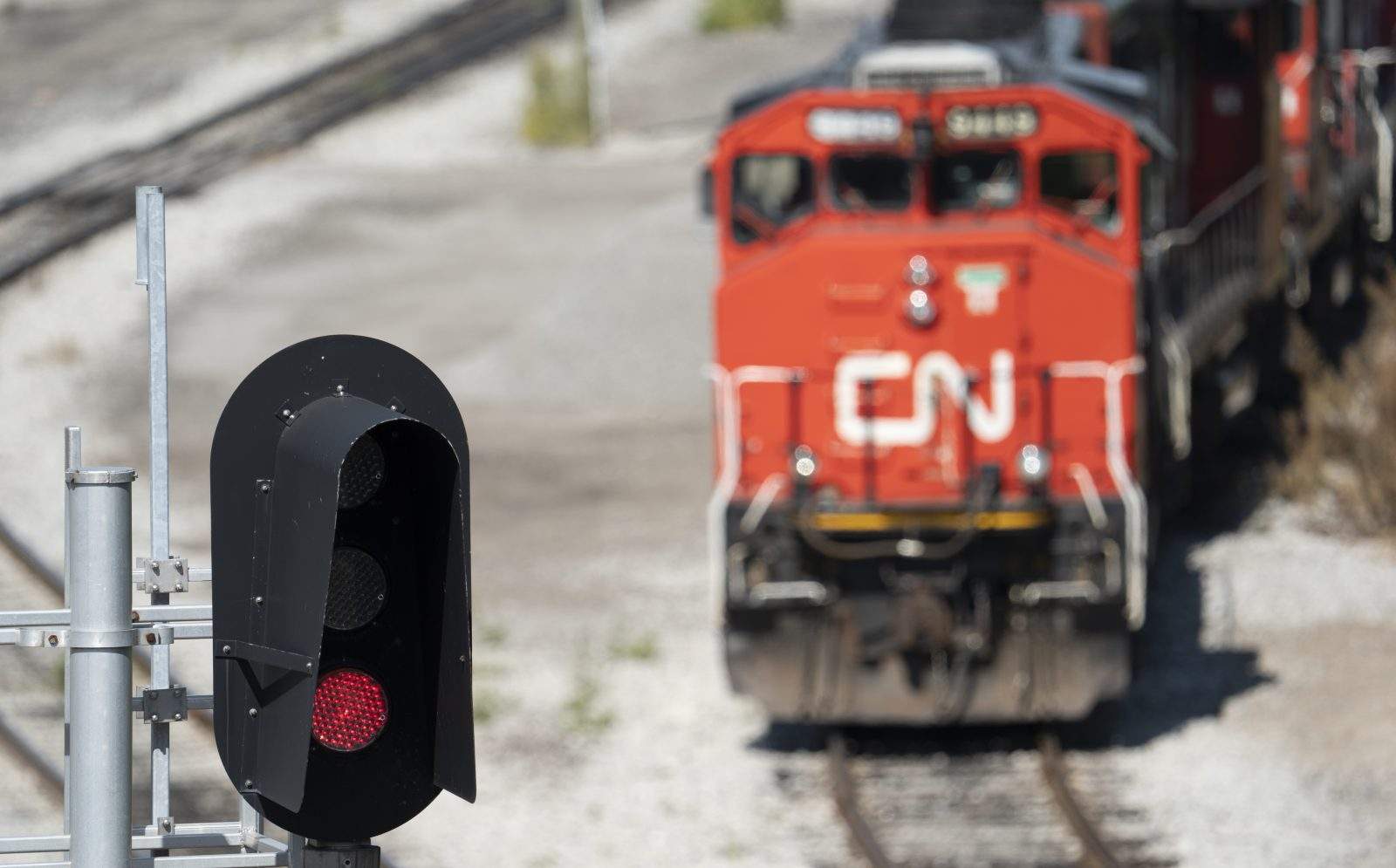
You don't expect a train cab to turn into a literal furnace, but that's exactly what happened to a Canadian National Railway crew in northwestern Ontario. A terrifying video circulating on social media shows a freight train trapped on a siding near Armstrong, entirely engulfed by raging orange flames as trees incinerate on both sides of the tracks. "We're encased in flames now," a frantic crew member says in the footage. The situation got so desperate that the workers eventually had to abandon the locomotives and run roughly a mile on foot through toxic smoke to escape the blaze.
Now, the federal government is stepping in to find out why this train was sent into a known danger zone in the first place. Transport Canada confirmed it launched an oversight investigation into whether CN Rail violated the Railway Safety Act. Meanwhile, Employment and Social Development Canada is looking at potential workplace health and safety violations. It's a massive wake-up call for how North American supply chains operate during extreme weather.
The Night a Freight Train Became a Fire Trap
The incident went down on July 13, 2026, amid an out-of-control wildfire crisis in Northern Ontario. The crew was stuck while another train passed them in the opposite direction right through the heavy smoke. According to Teamsters Canada, the union representing the workers, the train's monitoring systems and safety protocols failed to protect them from the rapidly advancing fire.
Left with no other choice, the employees fled the scene on foot. They were later rescued and taken to a hospital for observation and treatment for smoke inhalation, but miraculously suffered no permanent physical injuries.
CN Rail later released a statement praising the crew's professionalism and courage. But the union isn't buying the corporate applause. Leaders point out that the underlying fire had been burning for weeks. Sending a crew down those tracks wasn't a freak accident; it was a severe operational failure.
Why the Union Says Supply Chain Pressure Trumps Safety
The Teamsters Canada Rail Conference is furious, calling on CN to stop running trains through active wildfire areas immediately. Union officials note that politicians and shipping companies constantly obsess over supply chain delays, which puts immense pressure on rail companies to keep the cargo moving at all costs.
When global logistics networks get clogged, railroads lose money by the minute. However, as Teamsters Canada President François Laporte rightly stated, no shipment is worth a human life.
The tracks north of Lake Superior have since been shut down, forcing freight to reroute and prompting Via Rail to cancel passenger service between Toronto and Winnipeg. The economic ripple effects are hitting regional hubs like the Port of Thunder Bay, proving that wildfires are no longer just an environmental issue—they're a systemic risk to the continental economy.
What the Federal Investigation Means for Rail Safety
Transport Canada holds the power to slap CN with massive fines or impose strict operational restrictions if they find the company neglected basic safety laws. This investigation will likely center on two critical points.
- Real-time monitoring failures: Did CN ignore provincial fire updates, or did their internal hazard-detection software fail to flag the danger?
- Dispatch decision-making: Who signed off on sending that train into Armstrong when local communities were already being evacuated?
If you operate or rely on heavy transit networks, you need to treat changing climate risks as immediate operational threats. Check your emergency evacuation procedures, verify that your field teams have redundant communication channels that work when towers burn down, and establish hard stop thresholds for hazardous conditions. Relying on a crew's ability to run a mile through a forest fire is not a safety plan.