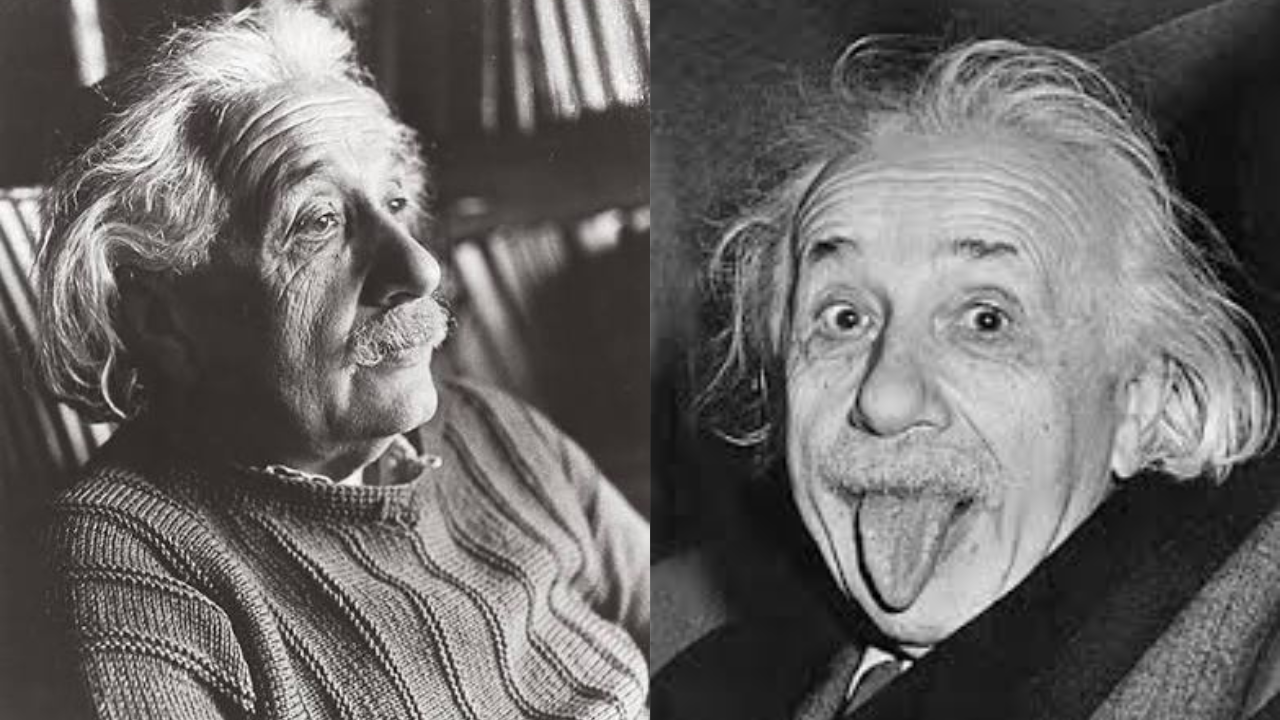
Albert Einstein kept a notoriously chaotic workstation. Stacks of unread papers, overflowing envelopes, and random notes covered every square inch of his Princeton office. For decades, lazy thinkers have pointed to this famous quirk as definitive proof that disorganization breeds genius. If a messy desk was good enough for the architect of modern physics, surely it should work for everyone else.
Except that premise is entirely backward.
People love to weaponize historical anomalies to justify their own bad habits. Einstein worked across vast theoretical physics problems that required holding multi-dimensional equations in his head for days, and his office filing system was a product of a mind processing complex spatial physics, not an endorsement of general office squalor. For the average knowledge worker, executive, or remote professional, a messy desk does not signal a brilliant mind. It usually signals cognitive fatigue, poor workflow management, and hidden productivity drains.
We need to dismantle the romanticized notion of the creative mess. The physical environment directly influences executive function, stress hormones, and sustained focus. Ignoring desk organization under the guise of being a creative visionary is a cop-out.
The Cognitive Toll of Visual Noise
Human brains evolved to scan natural environments for threats and resources. When sitting at a desk surrounded by clutter, the visual cortex must process an overwhelming amount of irrelevant stimuli. Every stray coffee mug, random sticky note, and pile of unpaid invoices sends micro-signals to the brain demanding attention.
This creates continuous, low-grade distraction. Attention is a finite resource. Every time a wandering eye catches a stack of old reports, the working memory drains a small fraction of its capacity to suppress that visual input.
Studies in environmental psychology consistently show that disorganized environments elevate cortisol levels. Chronic elevation of this stress hormone impairs decision-making and reduces problem-solving capacity.
- The brain treats physical clutter as unfinished tasks.
- Unfinished tasks consume cognitive bandwidth in the background.
- Mental fatigue sets in hours earlier than it would in a clean environment.
Working in a mess feels normal because humans adapt to sensory overload through habituation. Just because someone stops noticing the mess does not mean the brain stops processing it. The tax is paid in hidden cognitive fatigue.
Where the Creative Mess Argument Falls Apart
Proponents of messy desks love to cite a famous University of Minnesota study claiming that messy rooms encourage creative thinking. The researchers found that participants in disordered spaces generated more novel ideas than those in tidy rooms.
The interpretation of that research went off the rails. Popular culture turned a specific, short-term psychological observation into a permanent lifestyle mandate.
The study looked at momentary idea generation, not sustained execution. Creativity requires two distinct phases. Phase one involves divergent thinking, which is brainstorming and generating unconventional ideas. Phase two involves convergent thinking, which is filtering, refining, and executing those ideas into concrete deliverables.
A messy room might offer a brief spark during early-stage brainstorming. Sustained execution requires structure. A chaotic environment destroys focus during the grind of writing code, building financial models, or editing copy.
Trying to execute complex operational tasks in a physical disaster zone is like trying to perform surgery in a hurricane. Ideas are cheap. Execution is where value is created, and execution demands environmental control.
The Anatomy of Workflow Friction
Physical clutter is almost always a symptom of broken internal processes. A messy desk is a physical manifestation of a messy workflow.
When incoming documents lack a dedicated home, they form horizontal piles. When digital files lack folder hierarchies, the desktop fills with screenshots. The friction of organization feels high in the moment, so people default to avoidance.
Avoidance compounds over time. What starts as a single misplaced contract turns into a forty-minute search for a tax document during audit season.
[Inflow of Work] ---> [No Defined System] ---> [Horizontal Piling] ---> [Workflow Friction]
This friction costs time and money. The average desk worker spends roughly four hours every week searching for misplaced items or lost digital files. Multiply that across a career, and months of productive life evaporate into piles of paper and forgotten folders.
Redefining Workspace Architecture
Fixing a workspace requires moving past superficial minimalism. Organizing a desk is not about buying expensive aesthetic storage containers or matching pens. It is about engineering a physical space that matches cognitive workflows.
A functional workspace minimizes transition friction between tasks. If switching from administrative paperwork to deep creative writing requires clearing a desk for ten minutes, the friction prevents starting the work.
Effective workspace design follows three strict rules.
First, everything must have a designated home. If an item does not have a permanent location, it becomes clutter by default.
Second, items used daily belong within arm's reach. Items used monthly belong in drawers or off the desk entirely.
Third, clear the surface at the end of every single day.
Closing the workday with a two-minute reset creates a psychological boundary between labor and rest. Walking up to a clean desk the following morning eliminates the initial friction of starting the day.
The Real Cost of Workspace Denial
Refusing to address physical disorganization is an expensive form of self-sabotage. It lowers output, increases anxiety, and degrades the quality of work.
Einstein built relativity because of mathematical genius, not because his desk was a disaster area. Conflating his habits with effective professional practice is an excuse to avoid building better operational habits.
Control the physical environment, or the physical environment will control attention.