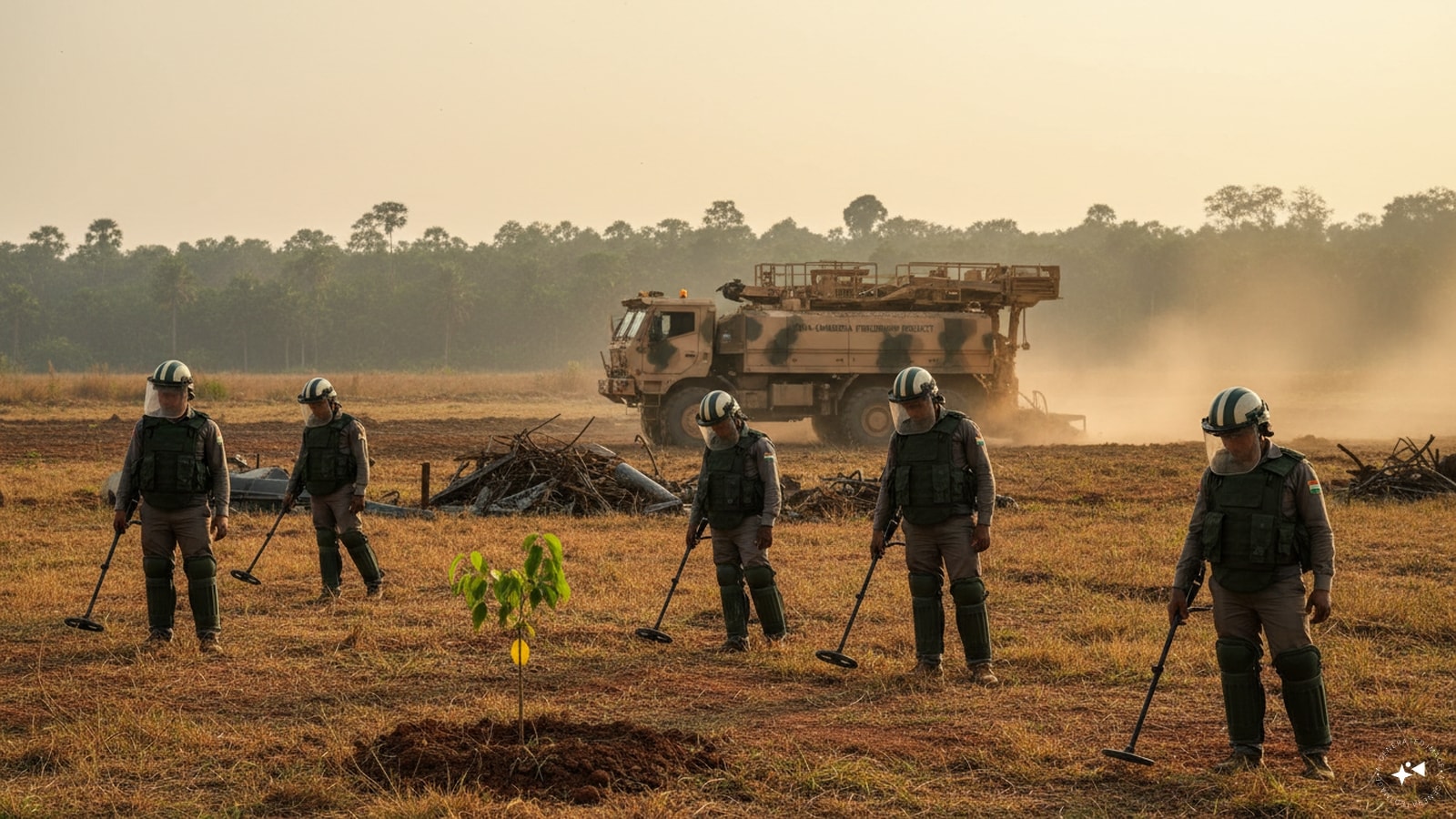
Everybody loves a good clearance story. A headline flashes across the screen: nearly 200,000 square meters of mine-contaminated dirt cleared with backing from a regional partner, tractors rolling over scrubland, flags waving, local farmers smiling for the camera as they eye their newly reclaimed paddies. It makes for fantastic press releases. It checks every box on the corporate social responsibility scorecard. It lets bureaucrats sleep soundly at night.
There is just one small problem. It is a massive distraction from reality.
I have spent enough time on the ground in Southeast Asia to know what happens after the ribbons are cut and the de-miners pack up their metal detectors. I have watched organizations celebrate acreage numbers while ignoring the structural trap waiting for the people who actually have to farm that soil. Clearing explosives from the dirt does not automatically create prosperity. More often than not, it creates a holding pen for rural debt.
Let us dismantle the lazy consensus.
The Mirage of the Cleared Hectare
The conventional narrative goes like this: explosives in the ground equal poverty. Remove the explosives, and wealth naturally rushes in to fill the vacuum. Governments and international donors buy into this linear equation because it has a clean metric. Square meters cleared. Shovels in the earth. Detonations neutralized.
It is a comforting engineering mindset applied to a complex socio-economic failure.
When you hand a subsistence farmer two acres of cleared land without addressing access to credit, supply chains, or predatory land-grabbing, you have not solved a crisis. You have merely relocated their vulnerability. I have seen families receive pristine plots cleared by well-funded operations only to lease the land out for pennies to large agribusiness conglomerates within six months because they could not afford the seed, fertilizer, or boreholes required to make the dirt productive.
The mine was never their primary obstacle to wealth. It was just the most visible one.
The Real Economics of Post-Conflict Soil
Let us look at the mechanics of land restitution in regions recovering from decades of civil conflict. The standard approach treats contamination as an isolated technical glitch. You send in teams with Ground Penetrating Radar and manual prods, sweep the zone, and declare victory.
Real experts in rural development know that post-conflict zones suffer from institutional atrophy, not just ordinance. The soil in many parts of rural Cambodia is heavily leached, lacking nitrogen and organic matter. Decades of neglect mean irrigation infrastructure is nonexistent. When you drop a poor farmer onto a cleared minefield with zero capital, zero market access, and an informal local loan shark charging forty percent monthly interest, the explosives are practically irrelevant compared to the financial executioner waiting at the farm gate.
Yet, press releases never mention debt ratios. They talk about square meters. Because measuring square meters keeps donors writing checks.
The Contrarian Playbook
If we want to actually help rural communities rather than curate good photo ops, we have to stop treating mine clearance as an end in itself. It is a prerequisite, nothing more. Like paving a road into the middle of a desert where nobody lives.
Here is what needs to change immediately:
First, clearance operations must be tied contractually to cooperative land-titling and micro-equity programs. If you clear the land, the local farmers must receive legal title that protects them from predatory speculators who swoop in the moment the area is declared safe.
Second, capital must follow the plow. Every dollar spent on heavy clearance equipment should be matched with a dollar for cooperative agricultural infrastructure—deep wells, solar pumps, and direct-to-market logistics corridors that bypass local middlemen.
Admitting this flaw in our current approach is uncomfortable. It means telling donors that their favorite feel-good metric is a vanity statistic. It means shifting from quick, quantifiable PR wins to messy, long-term institutional reform.
Stop counting the square meters. Start counting who actually owns the harvest three years after the last mine is pulled from the earth.