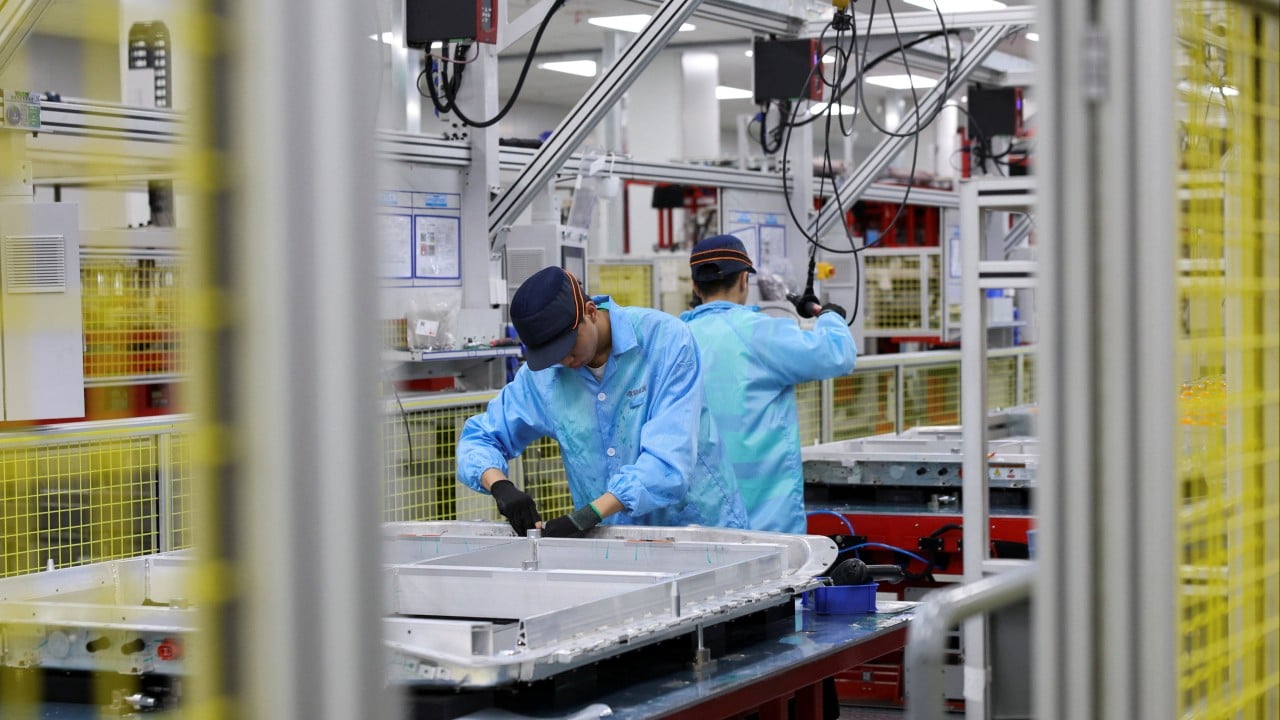
Western analysts are obsessed with the "China threat" narrative. They look at the massive subsidies, the state-backed credit, and the hyper-efficient factory clusters in Shenzhen and Suzhou, and they scream "foul play." They call it an expansionist industrial strategy designed to hollow out the West.
They are wrong. Not because China isn’t aggressive—it is—but because they misunderstand the fundamental motivation. This isn't a grand plan for global domination. It is a desperate, high-stakes survival tactic for a country trapped in a demographic and economic cul-de-sac.
The "lazy consensus" says China is winning. The reality? China is over-leveraged and over-producing because it has no other choice. If you want to understand the next decade of global trade, stop looking at China's strength. Start looking at its fragility.
The Subsidy Myth: Why Capital Isn't Free
The loudest complaint from Washington and Brussels is that Chinese companies benefit from "unfair" state subsidies. The implication is that if we just leveled the playing field, Western firms would dominate.
This is a fantasy.
Subsidies in China aren't a gift; they are a tax on the future. When the People’s Bank of China (PBOC) directs credit toward "New Three" industries—electric vehicles (EVs), lithium-ion batteries, and solar products—it isn't creating wealth out of thin air. It is misallocating capital at a scale never before seen in human history.
In any functioning market, capital flows toward the most efficient use. In China, capital flows toward the most politically expedient use. I’ve watched Western venture capitalists lose sleep over NIO or BYD’s war chests. They shouldn't. They should be thankful they aren't the ones carrying that debt.
China’s industrial strategy has created a massive internal "zombie" economy. For every world-beater like CATL, there are five state-owned enterprises (SOEs) that exist only to keep employment numbers stable. They produce goods that nobody wants, at prices that don't cover the cost of debt, fueled by local government financing vehicles (LGFVs) that are currently $9 trillion in the red.
Overcapacity Is a Bug, Not a Feature
The world is currently terrified of Chinese "overcapacity." We see docks full of EVs and warehouses overflowing with solar panels. The narrative is that China is "dumping" these goods to kill off Western competitors.
Dumping implies a choice. For China, this isn't a choice; it's an evacuation.
China’s internal consumption is cratering. The real estate market, which once accounted for 25% to 30% of their GDP, is in a controlled demolition. The Chinese consumer is terrified, saving every yuan because the social safety net is a sieve.
When you can't sell homes and your people won't buy cars, what do you do? You export your deflation. China is forcing the rest of the world to pay for its internal stability. This isn't a strategy of "expansion." It is a strategy of "export or explode."
The nuance the competitor articles miss is that this overcapacity is actually destroying Chinese margins. Huawei, Xiaomi, and BYD are locked in a "hunger games" style price war domestically that is bleeding them dry. The global market isn't their target for profit; it’s their vent for pressure.
The Middle Income Trap Is the Real Engine
Everyone talks about the "Rise of China." Nobody talks about the "Stagnation of China."
To understand their industrial strategy, you have to understand the Middle Income Trap. Most developing nations hit a ceiling where they are too expensive for low-end manufacturing but not skilled enough for high-end innovation. China isn't just hitting that ceiling; they are trying to headbutt their way through it.
Their "Made in China 2025" and subsequent iterations aren't about being "mean" to the US. They are about avoiding the fate of Brazil or Mexico. They are trying to automate their way out of a shrinking workforce.
Imagine a scenario where a country loses 5 million workers a year due to aging. That is China's reality. Their industrial strategy—robotics, AI-driven logistics, and automated ports—isn't about replacing Western workers. It's about replacing the Chinese workers who no longer exist.
If they fail to capture the high ground in semiconductors and green tech, the CCP loses its mandate. The "Social Contract" in China is simple: we provide growth, you provide silence. Without the industrial strategy, the growth dies. Then the silence ends.
The West’s Real Problem Is Not China’s Subsidies
Here is the bitter pill: The West is using China’s industrial strategy as an excuse for its own stagnation.
We complain about Chinese EVs being too cheap because we have failed to innovate on the factory floor for thirty years. We protected legacy automakers who spent their billions on stock buybacks instead of battery chemistry. Now, we want to use tariffs to shield them from the consequences of their own laziness.
Tariffs are a morphine drip. They dull the pain, but they don't cure the disease.
If we want to compete, we don't need to copy China’s state-led model. That model is failing under the weight of its own debt. We need to rediscover the "Creative Destruction" that made the West the engine of the world.
Instead of banning TikTok or slapping 100% tariffs on BYD, we should be asking why it takes ten years to permit a lithium mine in Nevada while China builds a battery plant in eighteen months. The "China threat" is 20% their strategy and 80% our bureaucracy.
The Semiconductor War Is a Strategic Blunder
The current obsession with "de-risking" and cutting China off from high-end chips (Nvidia’s H100s, ASML’s EUV lithography) is a double-edged sword that is currently cutting the West.
By restricting access, we have done what thirty years of Chinese industrial policy couldn't: we forced their fragmented tech sector to unify.
I’ve spoken with engineers in Shanghai who, five years ago, wouldn't touch a domestic chip. Now, they have no choice. The result? A massive, forced-march R&D cycle. They are finding workarounds. They are mastering "legacy" nodes (28nm and 14nm) that actually run 90% of the world’s appliances, cars, and weapons.
While we fight over the 3nm "bleeding edge," China is cornering the market on the "foundational" chips the world actually runs on. We are winning the battle for the iPhone's brain and losing the battle for the power grid’s nervous system.
The Actionable Truth for Western Business
If you are a CEO or an investor, ignore the headlines about "decoupling." It’s a political buzzword, not a business reality.
- Stop Competing on Price: You will lose. China’s state-backed machinery can stay irrational longer than you can stay solvent.
- Vertical Integration is the Only Shield: The reason Tesla survived and thrived is because they didn't just outsource to China; they owned the tech. If your value-add is just "assembly" or "branding," you are already dead.
- Bet on Chinese Fragility: The current surge in Chinese exports is a "blow-off top." It is unsustainable. Their internal debt crisis will eventually force a massive contraction. Position yourself to catch the talent and the tech that will flee when the bubble finally pops.
- Demand Regulatory Reform, Not Tariffs: If your industry is being "disrupted" by China, the solution isn't a wall. It's the removal of the internal shackles that make it impossible for you to build at speed.
China isn't playing a different game; they are playing the same game with a much higher tolerance for pain and a much shorter fuse. They are flooding the zone because their house is on fire and they are trying to drown the flames with production.
The real danger isn't that China will succeed in its industrial strategy. The real danger is what happens to the global economy when this debt-fueled, over-capacitized engine finally throws a rod.
Stop looking for a "fair" fight. In the history of global trade, there has never been one. China is a cornered animal, and its "expanding industrial strategy" is the sound of it baring its teeth. If you think that's a sign of strength, you haven't been paying attention.
Build faster. Cut the red tape. Stop whining about the subsidies and start out-engineering the competition. Or get out of the way.