Renewable energy gets a bad reputation for being unreliable. Solar panels sit on roofs, generate power when the sun shines, and leave grids scrambling when clouds roll in or night falls. But massive industrial engineering projects are quietly rewriting that script.
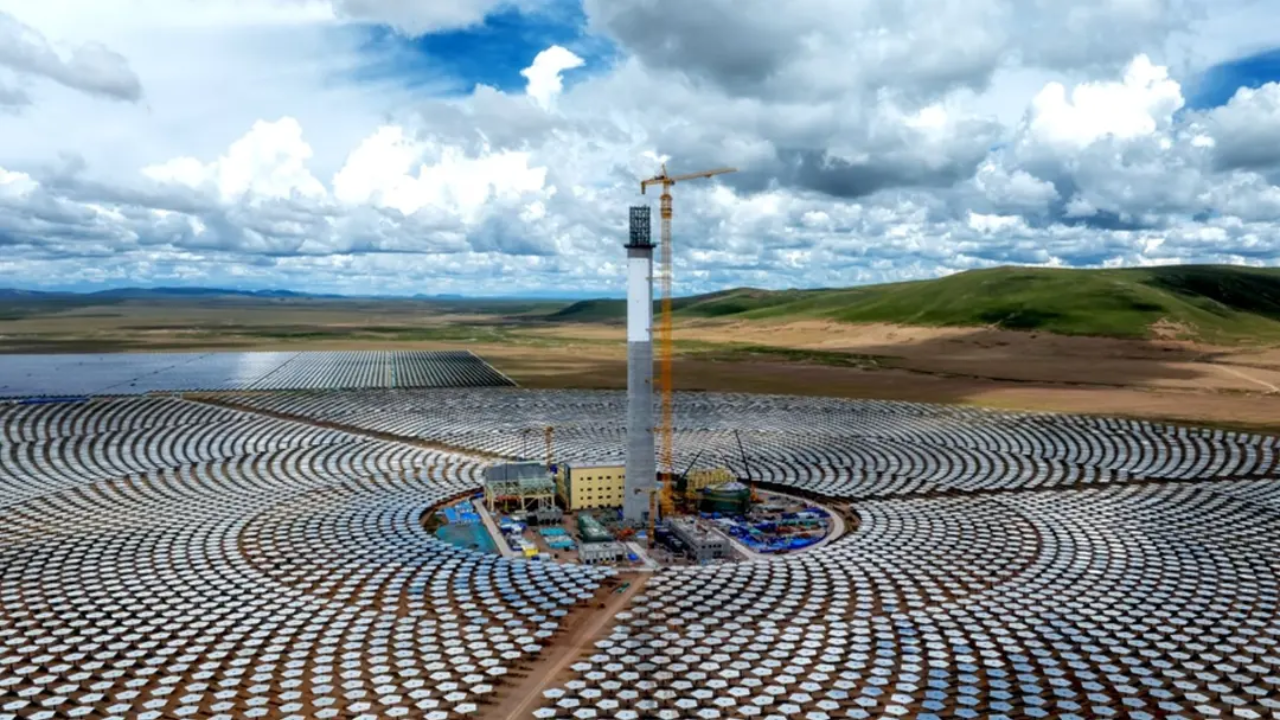
Take China's massive concentrated solar power plant equipped with 15,927 mirrors. It does something standard photovoltaic panels can't manage easily. It stores heat, keeps generating electricity long after sunset, and outputs power around the clock. It feeds electricity to 50,000 homes while slashing coal consumption by 60,000 tons annually.
You're probably wondering how thousands of mirrors can outsmart the setting sun. Let's break down how this installation works, why concentrated solar power is making a quiet comeback, and what it means for the global energy grid.
The Problem With Standard Rooftop Solar
Rooftop panels are great. They lower electricity bills and decentralize power generation. But they have a fatal flaw. They lack inertia and storage on their own. When a cloud passes over a neighborhood, output drops instantly. When the sun goes down, production stops completely.
Grids hate this unpredictability. Operators must ramp up fossil fuel plants instantly to compensate for sudden drops in solar generation. That dance creates massive inefficiencies.
Thermal solar setups handle things differently. Instead of converting sunlight directly into electricity via silicon cells, these installations use a vast field of mirrors to track the sun and concentrate thermal energy onto a single receiver tower.
Inside the Mirror Field
The numbers behind this installation are staggering. We aren't talking about a few dozen panels on a commercial roof. We are talking about 15,927 heliostats—computer-controlled mirrors—spread out across acres of desert landscape.
Each mirror tracks the sun on two axes. They tilt and pan continuously, keeping the sunlight focused precisely on the top of a central receiver tower. Inside that tower, a specialized heat transfer fluid absorbs the intense thermal energy.
That fluid gets blistering hot. Hot enough to melt specialized salts.
Molten salt storage is the secret sauce here. Traditional solar farms waste excess midday energy because grids simply can't absorb it all at once. This plant channels extra heat into giant insulated tanks filled with molten salt.
Salt holds thermal energy incredibly well. When night arrives, operators pump the hot salt through heat exchangers to generate high-pressure steam. That steam spins traditional turbines, creating electricity hours after dark.
Real Numbers and Heavy Impact
Let's look at the actual scale. Powering 50,000 homes sounds modest compared to massive hydro dams, but you have to look at the displacement metrics. Saving 60,000 tons of coal every year removes a serious chunk of regional carbon emissions without leaning on imported fossil fuels.
Coal plants are notoriously dirty, expensive to maintain, and slow to adjust. Replacing thousands of tons of coal burned in traditional furnaces with captured sunlight changes regional air quality immediately.
China isn't building these facilities in crowded urban centers. They are utilizing vast, empty stretches of the Gobi Desert. These regions get relentless sunshine and have little agricultural or residential value. Turning empty dust bowls into power plants makes strategic sense.
Engineering Headaches Nobody Talks About
Building a desert mirror farm isn't easy. If you've ever left a car parked outside for a week, you know dust ruins visibility. Multiply that by 15,927 massive glass mirrors sitting in a dusty desert.
Dust accumulation degrades energy capture efficiency fast. Cleaning thousands of precision mirrors manually is impossible. Facilities rely on automated, water-free cleaning robots that crawl across the glass overnight to sweep away grime.
Wind loading is another massive hurdle. Desert storms create high shear forces across wide fields of flat glass. Mirrors must rotate into safe flat positions when wind speeds cross specific thresholds to prevent structural tearing.
Material degradation under extreme thermal cycling tests engineering limits. The metal components, fluid pipes, and receiver towers expand and contract drastically every single day as temperatures swing from scorching daytime highs to chilly desert nights.
What This Means for Global Grids
We hear constant noise about battery storage. Lithium-ion batteries get all the headlines for grid backup. But chemical batteries degrade over time, require rare earth minerals, and face severe supply chain bottlenecks.
Thermal storage using molten salt scales differently. Salt is cheap, abundant, and lasts for decades without losing capacity.
Countries with high sun exposure and vast arid landmasses are watching these projects closely. If you can pair daytime solar collection with baseline thermal generation, you eliminate the biggest argument against renewable transitions. You get clean energy that acts like a traditional coal or gas plant. It provides steady, predictable power when the grid demands it.
The transition away from fossil fuels won't happen overnight. But engineering marvels built out of thousands of tracking mirrors show that clean energy technology is maturing past simple rooftop panels into heavy industrial power generation.
Grab a blueprint, secure some desert land, and start rethinking how to store the sun.