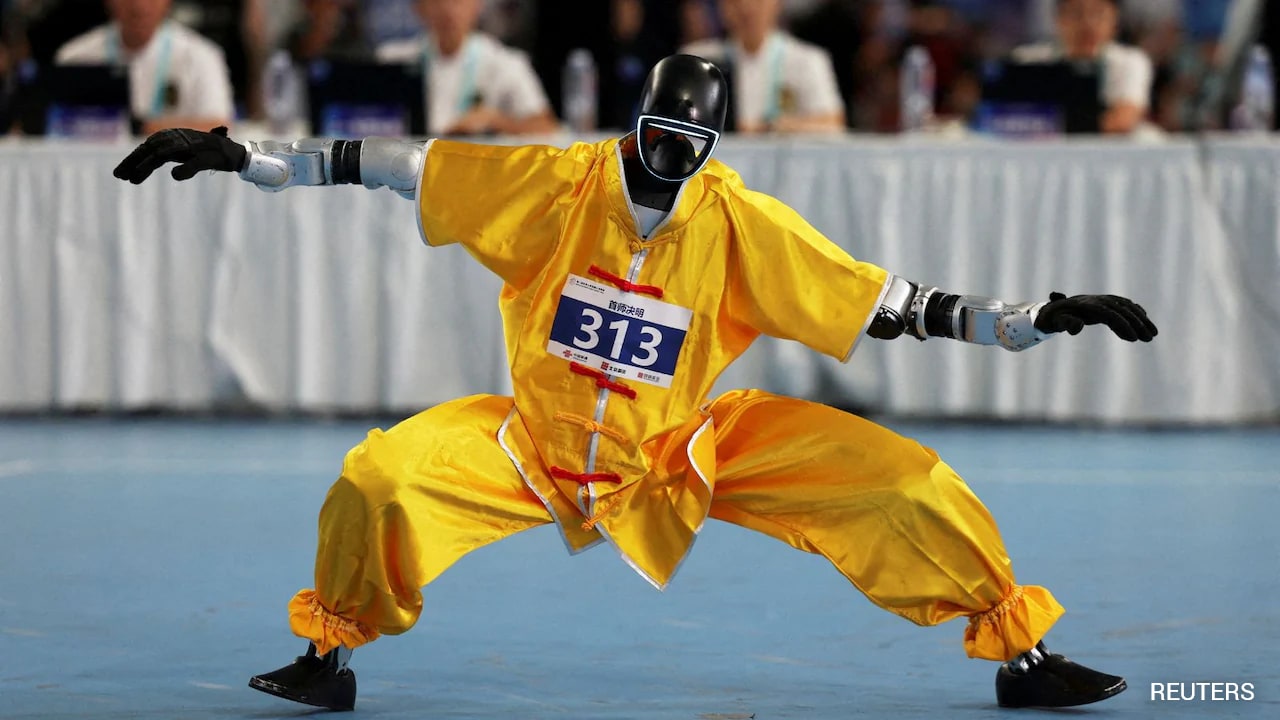
We just watched robots sprint faster than Olympic athletes, box, and perform synchronized dances at the World Humanoid Robot Games in Beijing. It looked like high-tech entertainment. But security planners weren't just watching for fun. Days after the crowds cleared, the People’s Liberation Army’s official newspaper published a direct directive: push these systems out of the lab and into military training grounds.
The transition from the dance floor to active combat isn't some distant sci-fi fantasy. It's happening right now. Military research facilities are heavily funding hardware, perception software, and training data pipelines to turn commercial bipedal machines into frontline infantry assets. If you think this is just marketing hype, you aren't paying attention to how fast industrial manufacturing scales in Asia.
The Reality of Urban Assault Automation
Military strategists love humanoids for one simple reason: they fit into spaces built for humans. Tanks and tracked vehicles get stuck in narrow city streets, rubble, and multi-story stairwells. A bipedal robot doesn't have that problem.
Research papers coming out of military testing centers in Xi'an sketch out a clear tactical picture. Imagine mixed squads of six units—combining humanoids, quadruped robot dogs, and wheeled drones—clearing a hostile building room by room. You don't risk human lives on the most dangerous entry points. The machine takes the first bullet.
Let's look at the numbers driving this push. Companies like AgiBot and Unitree shipped thousands of units recently, with broader Chinese production tracking toward tens of thousands of advanced bipedal systems annually. That massive commercial manufacturing base creates a dual-use engine that defense planners can tap into instantly. When you pump out thousands of factory robots, tweaking their software for reconnaissance, logistics, or perimeter defense is a short engineering leap.
Why Current Systems Aren't Ready Yet
Don't panic just yet. Bipedal combatants still face massive engineering roadblocks.
Walking on a flat gym floor during a robot competition is entirely different from navigating mud, snow, shrapnel, and active gunfire. Battery life remains a massive bottleneck. Most humanoids run dry after a couple of hours of heavy exertion. Processing power, onboard thermal management, and reliable target identification in chaotic environments are still works in progress.
Wang Yonghua, a researcher at China's Academy of Military Sciences, pointed out that hardware endurance and intelligence gaps must shrink before these units become standard infantry. But military procurement budgets don't care about current limitations—they fund solutions. Procurement documents show millions flowing into radar, camera integration, and terrain traversal datasets specifically to solve these navigation hurdles.
The Global Arms Race for Bipedal Infantry
China isn't operating in a vacuum. The United States military runs its own ongoing initiatives to field militarized humanoid capabilities for urban terrain and hazardous material cleanup. Yet, China's aggressive integration of state manufacturing capacity gives them a distinct speed advantage in hardware iteration.
The ethical implications are staggering. Autonomous systems struggle to interpret nuanced human intent. International bodies warn that machines cannot reliably process a legal surrender in the heat of combat. Even if human operators theoretically keep a "finger on the trigger" for lethal authorization, the speed of modern combat heavily pressures commanders to delegate split-second engagement decisions to automated code.
Keep a close eye on defense procurement budgets rather than consumer tech expos. When mass manufacturing meets aggressive military doctrine, the line between commercial automation and battlefield combat dissolves overnight.
Check out this China Robot Revolution video to see the latest advancements in humanoid robot mobility and artificial intelligence demonstrated at recent tech conferences.
http://googleusercontent.com/youtube_content/1