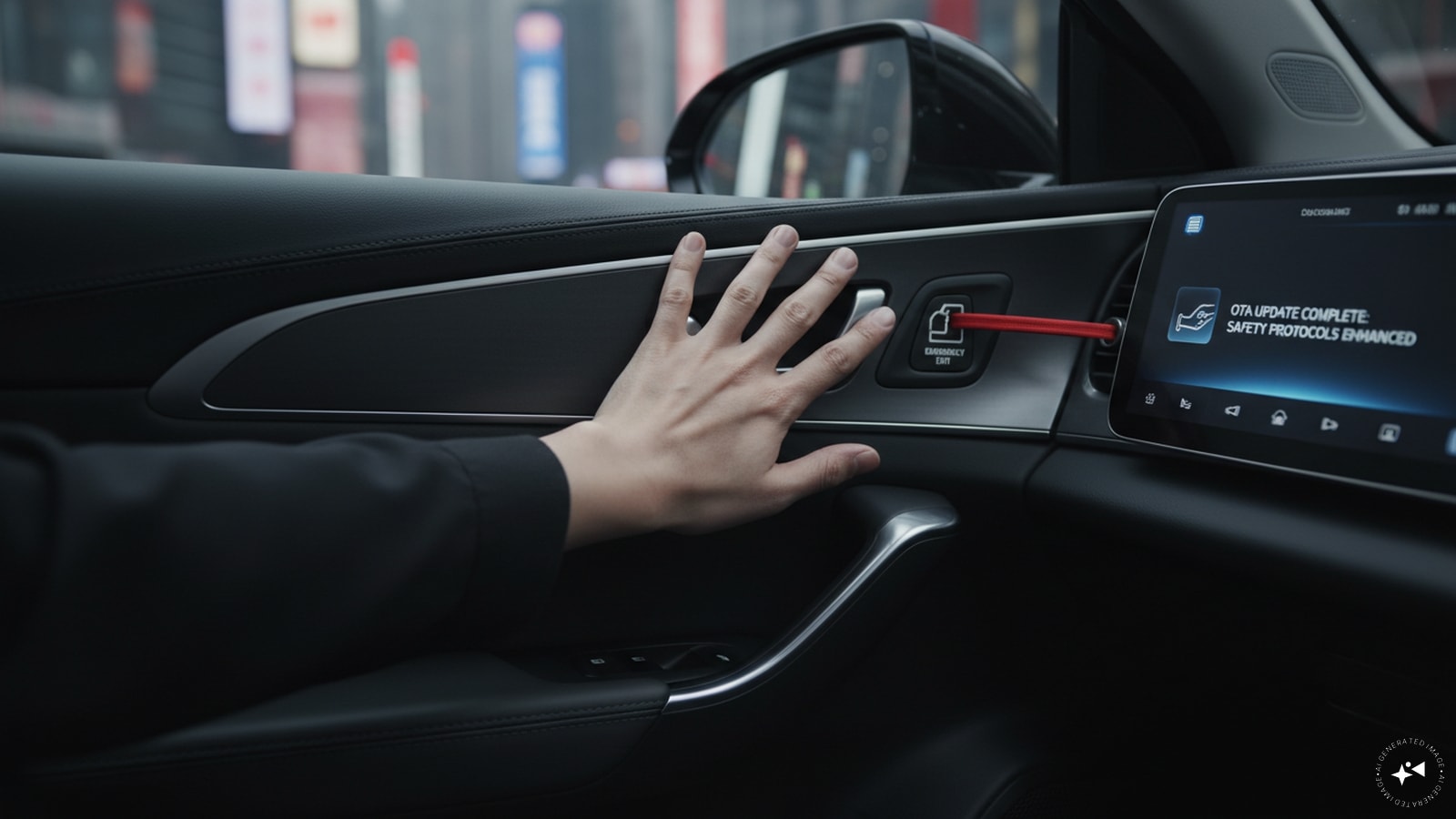
When a severe crash cuts off a car's power, seconds matter. If you can't open the doors, tragedy follows. China just made history with its largest automotive recall ever, forcing Tesla, Xiaomi, and several other manufacturers to pull back roughly 4.3 million electric vehicles. The core issue? Emergency mechanical door releases that are practically invisible or impossible to operate when the low-voltage electrical system fails.
If you think this is just standard bureaucratic red tape, you're missing the bigger picture. Modern car design has prioritized sleek aesthetics over basic survival mechanics. Flush-mounted electronic buttons and hidden handles look futuristic in a showroom, but they turn into death traps when a battery pack dies. Meanwhile, you can explore other events here: Orbital Inference Mechanics Decoding Classified Military Space Payloads.
The Crisis Behind the Numbers
China's State Administration for Market Regulation didn't pull these numbers out of thin air. The regulatory hammer dropped following intense scrutiny over electronic and concealed door designs. Tragically, real-world disasters forced the issue. State media highlighted harrowing incidents, including a high-profile crash involving a Xiaomi SU7 where bystanders and emergency responders couldn't pry open the doors after a post-collision fire.
Out of the 4.3 million vehicles affected, Tesla accounts for a staggering 2.98 million imported and locally made Model 3, Model Y, Model S, and Model X units. Xiaomi is recalling roughly 390,000 vehicles, while Leapmotor and Xpeng are pulling back 371,000 and 264,000 cars respectively. Other major players like Geely and Chery are also making urgent adjustments. To understand the complete picture, check out the recent article by The Next Web.
How Manufacturers Plan to Fix It
Fixing millions of cars sounds like an administrative nightmare. Fortunately, modern software changes the game.
Tesla's remedy relies on a dual approach starting September 25. The company will push an over-the-air software update that automatically cracks open the vehicle's power windows slightly after a serious collision. They are also deploying physical warning labels to clearly identify the hidden mechanical emergency latches.
Other brands are taking similar routes. Leapmotor is pairing warning stickers with power-window control software upgrades. Chery is swapping out emergency handle covers entirely. Because many of these fixes happen over Wi-Fi or via quick technician visits to apply labels, the financial downtime for automakers is surprisingly low.
Writing the Death Warrant for Flush Door Handles
This recall is just the opening salvo. Beijing has already instituted a total ban on concealed, flush-mounted door handles starting in 2027, making China the first global market to outlaw a trend popularized heavily by Tesla.
Design trends shouldn't compromise occupant safety. When style overrides basic human egress, regulators have a duty to step in. Western safety agencies, including the National Highway Traffic Safety Administration in the United States, are already examining whether electronic and flush door setups violate safety baselines.
Automakers need to realize that cool tech features are worthless if people can't escape a burning wreckage. Real innovation means keeping drivers alive first, and looking sleek second. Check your vehicle's emergency releases today, because you never know when you might need to find them in the dark.