Silence.
It is the first thing you notice when a grocery store dies, though most people expect alarms, flashing red strobes, or frantic shouts over the intercom. Instead, the fluorescent lights simply hum above the produce section while the familiar, rhythmic beep-beep-beep of the barcode scanners vanishes all at once, replaced by the dull thud of a plastic carton of milk hitting a stationary conveyor belt.
Picture a Tuesday evening in late autumn—a hypothetical composite drawn from dozens of real retail outages across the continent. Let us call our shopper Elena, a nurse finishing a twelve-hour shift in Rotterdam, standing in aisle four with a basket containing chicken thighs, sourdough bread, and children's fever medicine. Ahead of her, the card terminal flickers, displays a cryptic error code, and goes black. Two minutes later, the store manager walks out from the back office, keys jingling, his face pale under the harsh retail glare, and announces that the registers cannot process cash, cards, or mobile wallets, and the automatic sliding doors have just been locked from the inside to prevent looting while corporate headquarters figures out what happened.
Elena is trapped between the bakery and the frozen peas, holding dinner for two hungry kids, witnessing the exact moment modern civilization's most fragile illusion shatters.
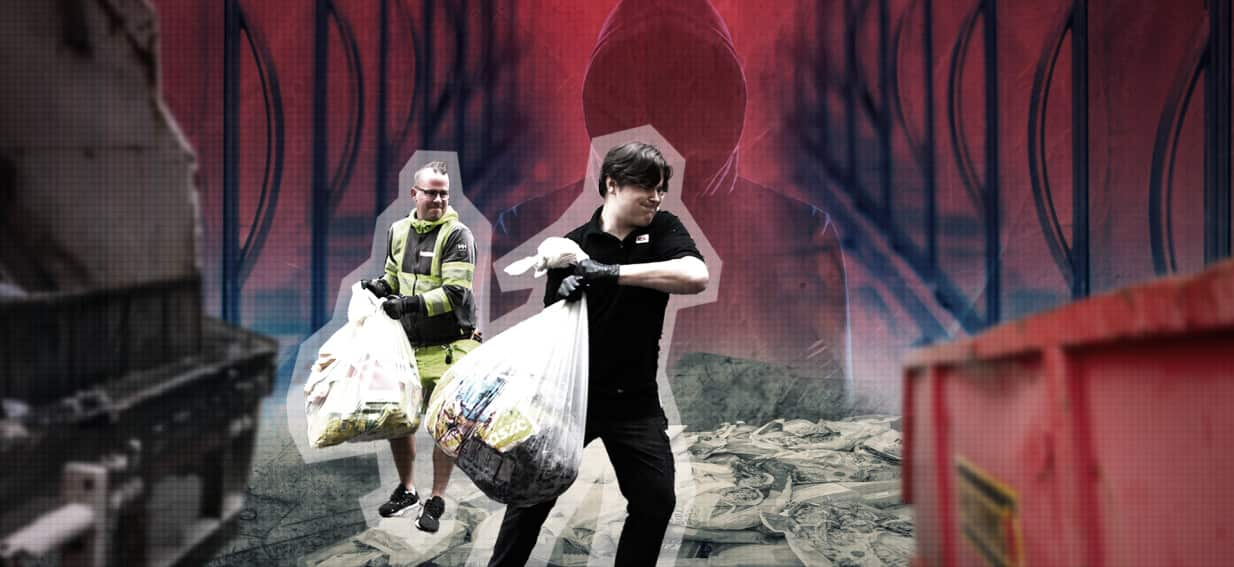
We tend to think of cyberattacks as abstract theatrical events involving hooded figures typing green code in darkened basements, or sterile corporate press releases about compromised databases and quarterly earnings dips. Yet when reports began circulating about a coordinated digital disruption targeting supermarket chains across Europe, the true story had nothing to do with servers in windowless data centers. It was about the three-day buffer that separates a bustling European capital from empty shelves, spoiled dairy, and quiet panic.
The Invisible Nervous System Behind the Lettuce
To understand how a single piece of malicious code can freeze thousands of cash registers from Stockholm to Madrid, you have to stop looking at a supermarket as a building full of food. A modern grocery store is actually a high-speed software terminal that happens to temporarily hold tomatoes.
Think of the supply chain like a human circulatory system where the blood never stops moving, because the moment it pools, it clots. Decades ago, supermarkets kept massive warehouses in the back, stacked to the ceiling with canned goods and dry pasta, enough to survive a snowstorm or a truckers' strike. Today, that backroom barely exists. Driven by thin profit margins—often hovering between one and three percent—European grocers pioneered just-in-time logistics, an algorithmic ballet where a head of lettuce harvested in Almería on Monday morning is tracked by satellite, routed through automated distribution hubs, priced dynamically by cloud software, and scanned at a self-checkout kiosk in Antwerp on Wednesday afternoon.
Every single link in that chain speaks the same digital language. When an attacker compromises a third-party logistics provider, a point-of-sale software vendor, or an enterprise resource planning network, they do not need to smash the front windows of ten thousand stores. They simply whisper a poisoned command into the central nervous system.
I remember the first time I stood inside a distribution center during a major software blackout a few years back, watching hundreds of thousands of euros worth of fresh fish and berries sit idling on loading docks while diesel engines rumbled outside. The forklifts had power. The drivers were ready to roll. The food was right there, shrink-wrapped and chilled. Yet nobody could move a single pallet because the warehouse management system had locked the digital manifests, meaning no one knew which truck was supposed to go to which city, what temperature each trailer required, or whether the receiving doors at the destination stores would even recognize the shipment. Without the data, the physical world simply turned to stone.
Why Cash Cannot Save You Anymore
Whenever news breaks that European supermarkets are possibly targeted in a cyberattack, the loudest chorus on social media inevitably shouts the same smug advice: This is why you should always carry cash.
It sounds logical, grounded in common sense, and completely wrong.
In a modern supermarket, a cash register is no longer a mechanical drawer with a bell inside; it is a networked computer client tethered to a central server. When the point-of-sale network goes down, the drawer will not pop open. Even if a manager overrides the lock with a physical key, the scanner cannot look up the price of a barcode, the scale cannot weigh a bunch of bananas, and the tax engine cannot calculate value-added receipts required by European fiscal laws. Worse still, every item sold without being logged into the inventory database creates a phantom shortage—telling the automated ordering system that the store still has forty cartons of milk when the shelves are actually bare.
Consider what happens next when an outage stretches past the four-hour mark:
- The cold chain begins to sweat. Automated refrigeration units in newer flagship stores rely on central building-management networks to regulate defrost cycles and alert technicians to compressor failures. If an attack bleeds from corporate IT into operational technology, thousands of tons of meat and dairy quietly warm toward the danger zone while staff scramble with clipboards and manual thermometers.
- Payment rails sever. During major European retail disruptions—such as the infamous 2021 Coop Sweden ransomware incident, where attackers exploited a vulnerability in Kaseya VSA software and forced roughly eight hundred stores to shut their doors for days—the paralysis was absolute. Customers stood outside locked glass doors staring at fully stocked aisles they could not legally touch.
- The ripple hits the kitchen table. When a major regional grocer goes dark, panicked shoppers immediately flood the competing chains down the street. Those competitors, operating on the exact same lean, algorithmic inventory models, are stripped clean of bread, milk, baby formula, and toilet paper within six hours.
You do not need a continent-wide blackout to trigger scarcity. You only need to knock out twenty percent of the checkout lanes in a metropolitan area to overwhelm the remaining eighty percent.
The Anatomy of a Modern Grocery Heist
So who pulls the trigger on a grocery store, and why would anyone target cabbages and laundry detergent instead of banks or defense contractors?
The answer lies in the brutal economics of extortion. Banks spend hundreds of millions of dollars on fortress-grade cybersecurity, employ standing armies of threat hunters, and hold digital reserves that can absorb downtime without immediate physical chaos. A supermarket chain, by contrast, operates on razor-thin margins, relies on a sprawling web of thousands of small suppliers—from local bakeries to packaging plants—and sells products that literally rot if they are not sold by Friday.
Time is the ultimate weapon against a grocer. A software company can tell its clients to wait forty-eight hours while engineers rebuild a server. A supermarket cannot tell a crate of strawberries to wait forty-eight hours.
Attackers know this. Whether they are financially motivated ransomware syndicates looking for a fast, multimillion-euro payout before the produce spoils, or state-aligned disruption groups testing how easily they can rattle public morale across Europe without firing a single missile, the retail food sector represents the softest underbelly of national infrastructure. Security agencies across the European Union have repeatedly warned that food distribution sits in a dangerous gray zone—vital to daily survival, yet historically treated as a private commercial concern rather than critical infrastructure like power grids or water treatment plants.
Let us be candid about what happens behind closed doors when a breach hits. In the early hours of an incident, nobody knows if it is a routine server crash, a botched software update, a severed fiber-optic cable in the North Sea, or an active adversary encrypting the backups. That ambiguity is why official statements always sound so maddeningly vague—words like suspected, isolated technical issue, or investigating potential unauthorized access. Executives are not necessarily lying when they hesitate to use the word cyberattack; they are often staring at blank screens in a war room, praying the outage is just a broken router while forensic investigators hunt for digital fingerprints in the dark.
Surviving the Seventy-Two-Hour Gap
If the digital grid behind our dinner plates is this fragile, what does a resilient response actually look like? It starts with abandoning the fantasy that technology will never fail, and rebuilding analog muscle memory before the next screen goes black.
At the corporate level, European grocers are slowly waking up to the necessity of network segmentation—building firebreaks between the corporate email servers where phishing links land and the point-of-sale terminals that ring up groceries. Forward-thinking chains are beginning to run fire drills where store managers practice operating offline: maintaining laminated price sheets for staple goods, keeping battery-powered calculators and manual receipt books under the counter, and establishing emergency local protocols so a neighborhood store can sell essentials for flat-rate cash amounts without waiting for permission from a cloud server three countries away.
And what about those of us pushing the shopping cart? You do not need to build an underground bunker or hoard pallets of canned beans to insulate your family from a digital grocery freeze. You simply need to widen your personal buffer from three days to ten.
Keep a rotating pantry of shelf-stable staples—oats, lentils, tinned tomatoes, olive oil, rice, and long-life milk—that you actually eat and replenish every month. Keep enough cash in small denominations tucked into a kitchen drawer to buy a week's worth of fresh food from a local open-air market or an independent corner butcher who still uses a mechanical scale and a pencil. Most importantly, pay attention to the early tremors: when payment terminals start glitching across multiple stores in your city, do not wait until evening to pick up prescriptions or baby supplies.
Back in Aisle Four
Think back to Elena, standing under those humming fluorescent lights in Rotterdam with fever medicine and chicken in her basket.
In a brittle system, the story ends with her walking out empty-handed into the drizzle, joining a frustrated crowd outside locked glass doors while trucks sit idle on the highway. In a resilient one, the store manager pulls a thick binder from beneath the customer service desk, unlocks the emergency cash box, hands a grease pencil to the teenage cashier, and opens a single manual lane for neighbors who need milk, bread, and medicine tonight.
We spent the last thirty years engineering friction out of the grocery store, celebrating every millisecond shaved off a barcode scan and every warehouse eliminated by an algorithm. Now we are learning the hard way that friction was never the enemy. Friction was the cushion that kept the whole machine from shattering when the power flickered.
Next time you stand in the checkout line and hear that familiar, effortless beep as your groceries slide across the glass, listen closely—because that tiny electronic chirp is the only thing standing between a bustling city and a locked door.