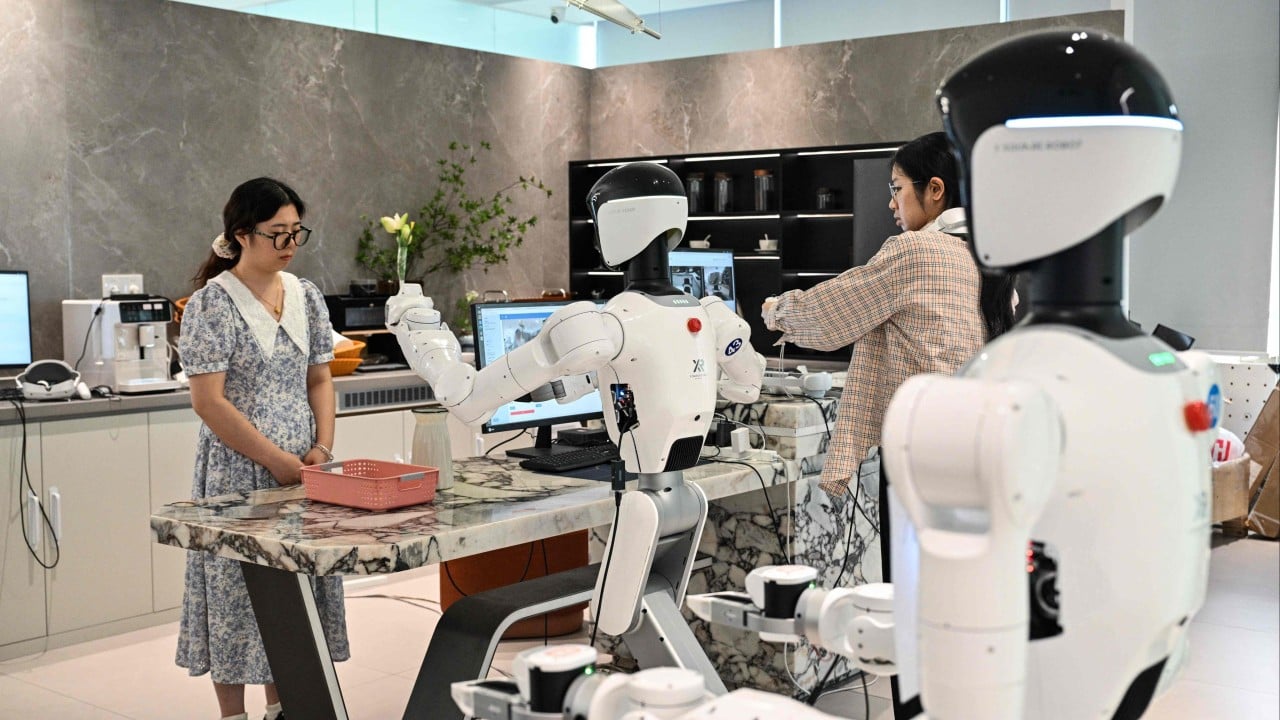
You can't build a socialist utopia when algorithms are quietly pocketing the profits. China is learning this the hard way. As the race for technological dominance hits hyperdrive, Beijing faces a nasty paradox. The very tools meant to catapult the economy into the future are tearing the social fabric apart at the seams.
Automation is squeezing ordinary workers. White-collar professionals are watching software do their jobs in seconds. Meanwhile, the financial rewards are concentrating in fewer and fewer hands.
To prevent an algorithmic underclass, the Chinese government is ditching old playbooks. They are shifting from mere employment targets to aggressive, direct wage interventions. It's a massive, state-led attempt to ensure that common prosperity doesn't get crushed by machine learning.
The Trillion Yuan Paradox
For decades, China relied on a simple formula. Keep economic growth steady, hit specific urban job creation targets, and the rising tide lifts all boats. Not anymore.
The Ministry of Human Resources and Social Security quietly dropped its traditional five-year numerical target for urban job creation. For the first time, Beijing is refusing to tie its hands to a rigid hiring quota. Why? Because the massive rollout of artificial intelligence has made old labor metrics completely obsolete.
Instead of chasing raw numbers, the state is shifting focus toward the quality of employment and, crucially, wage distribution.
Academic data highlights why policymakers are sweating. A comprehensive study using data from the China Family Panel Studies reveals that artificial intelligence is actively widening occupational income gaps across the country. The skill premium—the financial bonus that highly technical workers command—is exploding.
If you code the algorithm, you get rich. If your job is managed by the algorithm, your wages stagnate or disappear.
This trend strikes at the heart of the ruling party’s legitimacy. "Common prosperity" isn't just a political slogan; it's a structural survival strategy. To keep the wealth gap from triggering widespread social unrest, the government is stepping into the private sector's payroll departments with unexpected force.
Direct Intervention Over Market Forces
So, how do you fix a wage gap driven by software efficiency? You don't wait for the market to sort it out. You use state leverage to reset the baseline.
Beijing’s strategy centers on a few aggressive moves:
- Mandatory Wage Guidance: Local governments are issuing aggressive salary guidelines that push companies to lift the floor for low- and mid-level workers.
- Targeted Skill Subsidies: Instead of generic unemployment checks, funding flows directly into high-level technical retraining, attempting to push lower-skilled workers up the value chain before their current roles vanish.
- Closing the Regional AI Divide: The income gap isn't just between people; it's between provinces. The tech boom concentrated immense wealth in eastern coastal hubs like Shenzhen and Hangzhou. Western regions are getting left behind. The state is forcing tech infrastructure inland to equalize geographic earning power.
There’s also an invisible crisis happening on the factory and office floors. Research from organizations like Global Neighbours points out a massive, hidden screening process where automated systems disproportionately disadvantage female workers. In China, female-dominated professions are nearly twice as likely to face automation risks compared to male-dominated ones.
By stepping in to mandate wage floors and narrow the gap, the state is trying to counteract the built-in biases of corporate software.
The Real Cost of Capping the Tech Premium
Let’s be real about the risks here. Beijing is walking a razor-thin tightrope. On one side is the need for social stability through equal pay. On the other is the absolute necessity to out-innovate the West.
If you suppress the financial upside for tech founders and top-tier engineers, you risk stalling the innovation engine. High-risk, high-reward tech development requires massive capital incentives. International monetary research warns that heavy-handed capital and wage interventions can significantly slash overall economic output if implemented too crudely.
Tech executives are privately terrified of these developments. They argue that rigid wage mandates make it harder to pivot in a brutal global market. If a company is forced to artificially inflate administrative or entry-level salaries while facing fierce international competition, its research and development budget takes a direct hit.
Yet, the alternative is worse for China's leadership. An uncontrolled wealth gap creates a fragmented society.
Survival Steps for Modern Businesses
If you run an enterprise operating in or dealing with the Chinese market, the old ways of managing labor costs are dead. You can't just automate a department, fire the staff, and pocket the margin. The regulatory blowback will be swift.
First, look closely at your internal pay dispersion ratios. If the gap between your highest-paid tech stars and your baseline workers is widening exponentially, expect regulatory scrutiny. Audit your internal compensation structures now before a local labor bureau does it for you.
Second, pivot your automation strategy from replacement to augmentation. The companies thriving under this new regulatory regime are those using tech to make lower-skilled workers more productive, naturally justifying their higher state-mandated wages.
The state will support automation that empowers workers. It will punish automation that discards them. Adjust your operational roadmap accordingly.