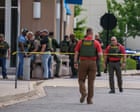
Panic doesn't make a sound until it's too late. One minute you're browsing for shoes or grabbing a pretzel, and the next, the air splits open with the crack of gunfire. That’s exactly what happened when a shooting at a Louisiana mall left at least one person dead and five others injured. It’s a nightmare we’ve seen play out too many times, yet the shock never wears off. The screaming starts, the store shutters slam down, and people are left huddled in dressing rooms texting their families goodbye.
The violence at the Mall of Louisiana in Baton Rouge wasn't a random glitch in the system. It was a targeted, public display of brutality that turned a Friday afternoon into a crime scene. Police reports indicate that the shooters didn't care who was watching. They opened fire in a busy parking lot area near the food court, a place usually filled with teenagers and families. When the smoke cleared, one man lay dead on the pavement. Five others were rushed to local hospitals, their lives changed in a heartbeat.
How the Baton Rouge Shooting Unfolded
Initial reports from the Baton Rouge Police Department paint a grim picture. This wasn't a long, drawn-out siege. It was fast. It was loud. It was over in minutes, but the damage is permanent. Witnesses described hearing dozens of shots. Some thought it was construction or fireworks. Then the reality hit.
Police Chief Murphy Paul confirmed that the incident appeared to involve two groups of people targeting each other. This wasn't an "active shooter" looking to rack up a body count of strangers, but that doesn't make it any less terrifying for the bystanders caught in the crossfire. Bullets don't have GPS. They hit whatever—or whoever—is in the way.
The victims were found in different spots around the mall perimeter. Some were hit while trying to run. Others were likely the intended targets. Emergency medical services swarmed the area, setting up a triage site while officers with long guns cleared the building store by store. You can imagine the terror of those trapped inside, hiding behind clothing racks, waiting to find out if they were next.
Why Mall Security and Police Response Matters
We need to talk about why these "targeted" shootings are becoming mall staples. We see it in Omaha, in Atlanta, and now again in Baton Rouge. Malls are soft targets with massive footprints. Even with a heavy security presence, stopping someone determined to settle a beef with a handgun is nearly impossible.
The Baton Rouge Police Department responded within minutes. That’s great for the "after" part, but it does nothing for the "before." We're seeing a shift in how law enforcement handles these scenes. They don't wait for a perimeter anymore. They go in. In this case, the shooters managed to flee the scene before the first squad car arrived. It highlights a massive gap in public safety. If people can fire thirty rounds in a crowded parking lot and disappear into traffic, we have a serious problem with how we monitor these high-traffic hubs.
- Quick Response Times: Police arrived fast, but the suspects were faster.
- Surveillance Gaps: Despite hundreds of cameras, tracking a getaway vehicle in real-time remains a challenge.
- Public Safety Protocols: Malls often rely on "Run, Hide, Fight," which assumes the shooter is inside, not outside the doors.
The Human Cost of Public Violence
It's easy to look at the numbers—one dead, five injured—and move on to the next headline. Don't do that. One person dead means a family is planning a funeral today. Five injured means five people are facing surgeries, physical therapy, and the kind of PTSD that makes you jump every time a car backfires.
One of the injured was reportedly in critical condition. That’s code for "fighting for their life" while their relatives wait in a hospital lobby. The trauma ripples outward. Every person in that mall that day is a victim of sorts. They lost their sense of safety in a place that’s supposed to be mundane and boring.
Louisiana has struggled with high rates of gun violence for years. Baton Rouge specifically has seen a spike in brazen, daylight shootings. When violence moves from the "bad parts of town" into the regional mall, it forces the entire community to acknowledge that no one is truly insulated. It’s a wake-up call that usually goes unheeded until the next tragedy.
What You Should Do During a Mall Shooting
If you find yourself in a situation like this, forget the movies. Most people freeze. They wait for someone else to tell them what to do. You can't afford that delay. If you hear shots, you have to move immediately.
Don't go toward the sound to see what's happening. I’ve talked to people who did that, and it’s the biggest mistake you can make. If you're near an exit, get out and keep running until you’re well away from the building. If you can’t get out, find a room with a lock. Turn off the lights. Silence your phone. Not just the ringer—turn off the vibration too. A buzzing phone on a hard floor is loud enough to give away your position.
Stay low and stay quiet. Don't come out until you see a uniform and a badge, and even then, keep your hands visible. Police are on high alert and they don't know who the "good guy" is.
Accountability and Next Steps
The investigation into the Baton Rouge mall shooting is ongoing. Police are looking for a light-colored vehicle, possibly a sedan, that fled the scene. They’re combing through hours of grainy CCTV footage. They need help from the public, but witnesses are often too scared to talk, fearing retaliation from the groups involved.
This cycle of violence only breaks when people decide that silence isn't an option. If you have information about the shooters, call the authorities. Crime Stoppers is anonymous for a reason.
The Mall of Louisiana will likely beef up security for a few weeks. There will be more patrol cars in the parking lot and maybe some "Safety First" signs. But the real work happens in the community. Addressing the root causes of these "group disputes"—which is usually just a polite way of saying gang or street violence—is the only way to stop the next parking lot from becoming a graveyard.
Check on your friends who were there. If you were there, don't pretend you're fine. Talk to someone. Trauma doesn't just go away because the yellow tape was taken down. Reach out to local support groups or mental health professionals who specialize in crisis response. Stay vigilant, watch your surroundings, and never assume a "safe" place is a shield.


