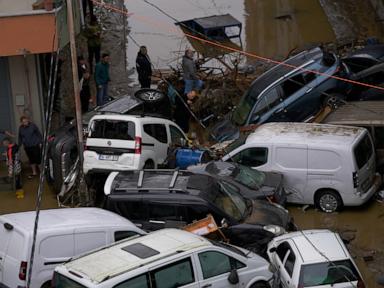
When a bus crashes into a train on the French side of the Channel Tunnel and leaves nineteen casualties in its wake, the press releases write themselves before the smoke even clears. Every headline reaches for the same comforting story. Driver error. A sudden mechanical failure. A freak convergence of bad luck in a high-stakes transit corridor.
That story is lazy. Worse, it is dangerous.
Treat a bus-versus-train collision near the Channel Tunnel as an isolated freak accident and you miss the real structural rot sitting right in front of us. Multimodal bottlenecks around major cross-border arteries do not fail because a single human suddenly forgets how to steer or brake. They fail because we build high-speed, tightly coupled transit systems on top of messy, poorly synchronized ground logistics, then patch the gaps with expensive safety theater.
I have spent years studying transport infrastructure, risk modeling, and high-consequence operations across Europe and North America. I have watched operators blow tens of millions of euros on shiny sensors, command-center dashboards, and post-incident compliance checklists while ignoring the exact friction points where road traffic, rail schedules, and terminal access collide. When nineteen people become casualties in a bus-train crash near the French approach to the Channel Tunnel, the real culprit is rarely a single moment of madness. It is the illusion that segregation on a map equals separation in reality.
The Lazy Consensus Around "Human Error" and Freak Collisions
Read standard incident coverage of a bus hitting a train near the Channel Tunnel and you will see three predictable moves. First comes the solemn tally of casualties and emergency response updates. Second comes speculation about whether a driver misread a signal, misjudged a crossing or approach lane, or suffered a medical issue. Third comes a ritual pledge that "safety is the top priority" and an investigation is underway.
None of that is wrong on the surface. Someone drove a bus. A train was involved. Nineteen people suffered casualties.
The mistake is stopping at the proximate trigger and calling it the root cause. In high-reliability engineering, "human error" is rarely an explanation; it is a starting point. When a heavy vehicle collides with rail infrastructure in a dense cross-border corridor like the Pas-de-Calais approaches to the Eurotunnel, blaming an individual driver lets system designers off the hook.
Why was a bus in a position to collide with a train in the first place? How were road approaches, service roads, shuttle loading zones, signaling interfaces, or perimeter access points laid out? When road and rail share adjacent corridors, feeder lanes, or terminal interfaces, you are not running two independent worlds. You are running a coupled system where one misrouted coach, one confusing sign, one late schedule adjustment, or one congested merge turns a routine movement into a catastrophe.
Public commentary loves neat villains and simple accidents because they keep the rest of the system feeling safe. If it was just one bad driver or one fluke moment, then the tunnel itself—and the wider transport network feeding it—must still be sound. That comfort is a mirage.
What People Actually Ask When a Crash Happens—And Why the Questions Are Broken
Whenever a high-casualty crash hits a major international link like the Channel Tunnel on the French side, search queries spike with predictable questions. People type them into search bars looking for certainty. Most of those questions start from a flawed premise.
"How could a bus crash into a train near the Channel Tunnel?"
Ask this question expecting a single neat answer and you will get fed guesswork. On a train, physics is brutally simple: massive weight, high momentum, fixed steel rails, and long stopping distances. A bus is lighter, flexible in steering, and subject to tire-road friction, visibility limits, blind spots, and traffic geometry. When the two meet, the train wins on mass and momentum every single time, and the occupants of the bus—or people caught in the interface between road and rail—pay the price.
The real question is not "How is that physically possible?" Any engineer knows how kinetic energy works. The real question is why corridor geometry, traffic routing, and physical separation allowed two incompatible modes of transport to intersect with enough energy to cause nineteen casualties.
"Is the Channel Tunnel still safe after a bus-train collision?"
This question mixes up two different things: the structural integrity of the undersea bore and the operational safety of the surrounding transit ecosystem. A crash on the French side affects the broader cross-border corridor, terminal operations, emergency response, and public confidence. Even when the main tunnel bore itself is undamaged or unaffected directly, corridor safety is a chain, not a single link.
Asking "Is it safe?" as a binary yes-or-no question invites PR spin. A better question is: where are the highest-probability failure points along the approach roads, shuttle interfaces, and emergency evacuation paths, and how do those risks behave under peak traffic and bad weather?
"Who is to blame when 19 casualties happen?"
Blame is a legal and political exercise, not an engineering one. Courts and investigators will examine licensing, signaling, right-of-way rules, speed, visibility, and operating procedures. That matters for accountability and compensation.
For anyone trying to prevent the next nineteen casualties, hunting for a single scapegoat is a distraction. By the time a bus and a train occupy the same space with destructive force, multiple layers of defense have already failed one after another.
The Mechanics of Corridor Friction: Why Road and Rail Collide
To understand why incidents like a bus crashing into a train near the French side of the Channel Tunnel keep happening across modern transport networks, look at how corridors evolve rather than how they are drawn on blueprints.
1. Legacy Geometry Meets Modern Volume
Major cross-border gateways accumulate layers over decades. Highway connectors, freight routes, coach transfers, customs and border checkpoints, maintenance tracks, and rail spurs get stitched together incrementally. Traffic volumes grow. Vehicle sizes change. Schedules tighten.
What worked at lower traffic density or older speeds becomes unforgiving when congestion builds up. A tight turn, an awkward merge, a poorly sighted junction, or a confusing approach lane does not cause a crash every day. It waits quietly until fatigue, rain, darkness, or a schedule hiccup lines up with peak traffic.
2. Tight Coupling and Zero Slack
Modern transport networks run lean to maximize throughput and keep ticket prices competitive. Trains run on tight headways. Coaches run to strict transfer windows. Terminals push vehicles through as fast as possible.
Slack—extra time, buffer space, clear separation, forgiving margins—is expensive, so operators trim it. The catch is that systems with zero slack absorb shocks poorly. When something goes slightly off-script, recovery margins shrink fast.
3. The Illusion of "Fail-Safe" Systems
Many people assume that because a system uses modern rail signaling, barriers, cameras, or control rooms, a collision between a bus and a train simply cannot happen. That belief confuses engineered controls with infallibility.
Physical barriers can fail, be bypassed, or sit at points where road vehicles still interact with rail corridors or terminal approaches. Signals only work if they are seen, understood, and obeyed—and if road layouts do not tempt drivers into making fatal assumptions. Technology reduces certain errors while sometimes creating new ones, such as over-reliance on automated alerts or complex signage under stress.
4. Emergency Response Under Constrained Access
When nineteen casualties occur in a high-profile corridor, survival and recovery depend heavily on how fast medical teams, fire crews, and recovery units can reach the scene without getting trapped in the very bottleneck that caused the crash. Narrow access roads, heavy traffic backups, cross-border jurisdictional handoffs, and complex rail-road scenes turn response into a logistical puzzle. Every minute lost on approach approaches matters when severe injuries are involved.
Imagine a Scenario Where We Stop Pretending Interfaces Are Harmless
Imagine a scenario where a regional transport authority treats every road-rail interface along a major cross-border corridor with the same ruthless skepticism aviation applies to runway incursions.
In aviation, a plane crossing an active runway without clearance is treated as a near-miss crisis of the highest order, even when no collision occurs. Engineers do not shrug and say, "Well, nobody got hurt today." They dissect the signage, paint markings, air traffic phraseology, controller workload, and runway layout until the error mode is engineered out.
Now apply that mindset to a bus-rail collision near the Channel Tunnel. Before nineteen casualties happen, there are almost always warning signs: near-misses, confusing routing, congestion spilling onto wrong lanes, drivers taking unfamiliar detours, or tight interfaces between road coaches and rail movements. Most organizations treat those warnings as minor annoyances until blood is on the tracks.
If operators audited every single point where road vehicles and rail assets come within striking distance—and physically separated them or redesigned the geometry so a single mistake cannot become fatal—the baseline risk would drop dramatically. It would cost money upfront. It would slow down a few layouts during construction. And it would save lives.
Lessons from Heavyweights Who Actually Study Failure
If you want real insight into why accidents like this happen, skip the press briefings and read the people who have spent their careers studying complex system failures.
Jens Rasmussen showed how human performance operates across a gradient of pressure, workload, and migration toward the boundary of safe performance when organizations chase efficiency. People do not usually wake up wanting to cause a crash; they adapt to pressures, ambiguities, and local conditions—sometimes stepping right onto a razor's edge without realizing how thin the margin has become.
James Reason gave us the Swiss cheese model of organizational accidents, reminding us that catastrophic outcomes rarely stem from one lone failure. Instead, latent conditions in design, maintenance, scheduling, and supervision align with active failures at the sharp end.
Charles Perrow examined how "normal accidents" emerge in tightly coupled, interactively complex systems where parts interact in ways designers did not anticipate and failures cascade faster than humans can intervene.
When a bus collides with a train on the French side of the Channel Tunnel with nineteen casualties, those frameworks are not academic jargon. They are an X-ray of the accident.
What You Should Actually Do—And Where My Contrarian Take Has Teeth
If you run infrastructure, manage fleet operations, advise policymakers, or simply travel through high-density corridors, here is unconventional advice that works better than platitudes:
- Audit interfaces, not just assets. A well-maintained train and a well-maintained bus can still collide at a poorly designed junction, approach, or transfer point. Map every spot where road vehicles and rail lines or rail terminals come close, and treat the boundary as the highest-risk zone.
- Design for tired, stressed humans in bad weather. Do not design routes and signage for a rested engineer on a sunny Tuesday morning. Design them for a driver navigating unfamiliar lanes, glare, rain, or tight schedules after hours on the road.
- Measure near-misses and routing confusion aggressively. If drivers regularly miss turns, hesitate at merges, or use workarounds near a corridor, fix the geometry and signage immediately. Confusion is an early stage of a crash.
- Build real physical separation where kinetic energy is high. Paint, rules, and reminders are cheap; concrete barriers, grade separation, and smarter routing are expensive. Where heavy buses and trains operate near each other, physical separation beats behavioral hopes every time.
Now for the honest part—because credibility dies the moment you pretend your own advice is cost-free.
The downside of taking this hardline, interface-first approach is friction and cost. Redesigning junctions, adding physical barriers, slowing throughput during upgrades, and auditing every edge case requires capital, political will, and operational patience. In a world where budgets are tight and travelers hate delays or higher fares, pushing for deep structural changes is an uphill fight. Sometimes regulators and operators also over-correct with rigid rules that create new bottlenecks without fixing the underlying layout.
Admitting those trade-offs does not weaken the argument. It makes it real.
Nineteen casualties from a bus crashing into a train near the Channel Tunnel is a tragedy that demands more than sympathy and surface-level headlines. Stop blaming lone mistakes for systemic flaws, fix the places where road and rail collide, and build corridors that forgive human limits instead of punishing them with fatal consequences.