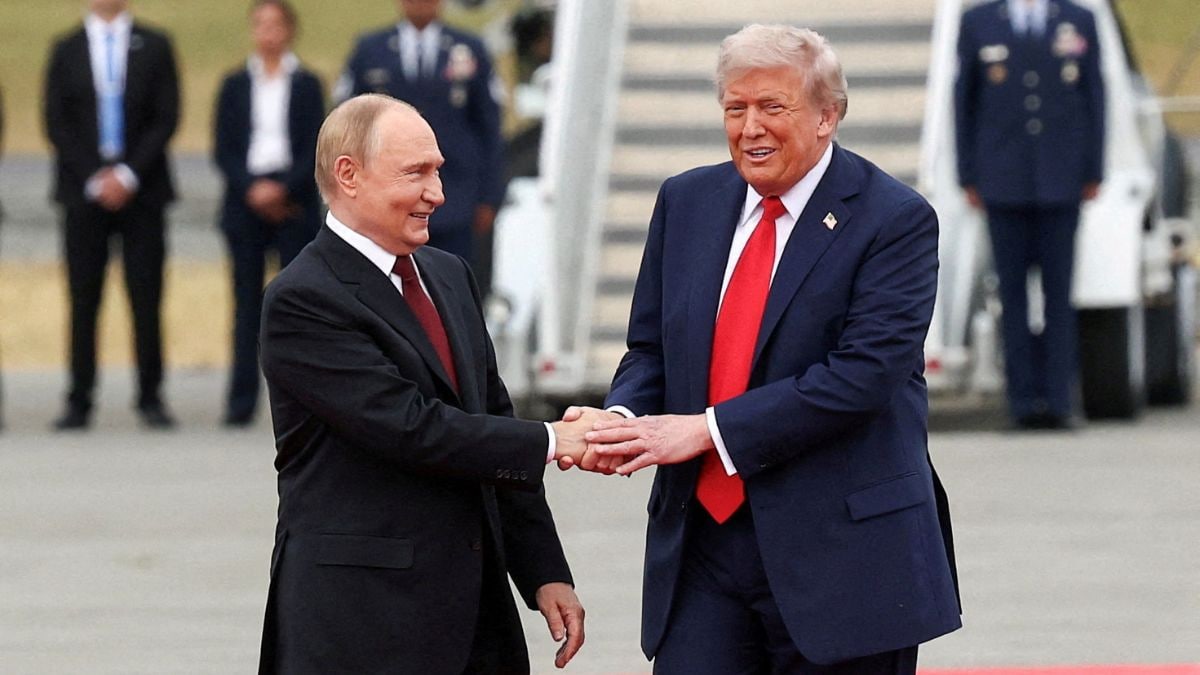
Most foreign policy commentators look at energy markets like a morality play. They see a headline about the White House easing restrictions or striking a pragmatic understanding with Moscow over refined diesel, and they immediately reach for their fainting couches.
"Double standards," they cry. "Hypocrisy."
They are looking at a complex, physical commodity chain through the lens of a press release. In the real world of physical barrels, refinery margins, and maritime logistics, moral purity does not keep freight trains moving or prevent inflation from detonating an economy. Calling a diesel arrangement with Vladimir Putin a "double standard" isn't sharp political analysis. It is a fundamental misunderstanding of how global refining actually works.
The Refining Reality Nobody Wants to Admit
To understand why the "double standard" critique is lazy, you have to understand the difference between crude oil and refined products.
Politicians love talking about energy independence because the United States produces massive amounts of light, sweet crude oil. What they conveniently leave out—and what most pundits don't even know—is that American refineries were largely built decades ago to process heavy, sour crude. Furthermore, the U.S. has not built a major new greenfield refinery since the 1970s. Environmental regulations, capital costs, and permitting nightmares have locked domestic refining capacity in a tight box.
When you pull crude out of the ground in Texas, you cannot just pour it into the tank of an 18-wheeler. It has to be cracked, distilled, and hydrotreated.
Diesel is the lifeblood of the physical economy. Gasoline moves commuters; diesel moves everything else. Tractors, cargo ships, freight locomotives, construction equipment, and semi-trucks all run on middle distillates. When diesel inventories tighten, the cost of transporting every single item in a grocery store goes up. It is an immediate, regressive tax on the entire population.
Critics argue that buying or facilitating Russian diesel—even indirectly—undermines Western sanctions and exposes American hypocrisy after years of lecturing European allies about weaning themselves off Russian gas. That argument sounds great in a university seminar. In a shipping port, it falls apart.
How the Shadow Market Already Defeated the Sanctions
Here is the dirty secret of the post-2022 energy sanctions regime: the oil never stopped flowing. It just changed zip codes.
When the G7 and the European Union imposed price caps and import bans on Russian crude and refined products, Russia didn't shut in its wells. Instead, Moscow assembled a massive "shadow fleet" of aging tankers, turned off transponders, and rerouted millions of barrels to refineries in India, China, and Turkey.
Those refineries took discounted Russian crude, processed it into high-grade diesel, and then legally sold that diesel back to the United States and Europe.
Think about the economics of that arrangement. Western nations patted themselves on the back for boycotting Moscow while quietly burning diesel refined from Russian crude in Indian ports. Meanwhile, middlemen and shipping syndicates pocketed billions of dollars in arbitrage profits, longer shipping routes burned extra fuel and drove up freight rates, and consumers paid a massive premium for the illusion of moral cleanliness.
If the Trump administration looks at that broken loop and decides to cut out the middleman—or adjust enforcement to let refined barrels flow directly to tame domestic distillate prices—that isn't a sudden betrayal of principles. It is an acknowledgment that the existing sanctions architecture was a theater production that enriched third-party refiners while punishing Western consumers.
Why Critics Are Asking the Wrong Question
The mainstream media keeps asking: Does this deal prove Washington has double standards on Russian energy?
Of course Washington has double standards. Every superpower in human history has operated on double standards when vital national interests collide with stated ideals. During the Cold War, the U.S. bought titanium from the Soviet Union to build the SR-71 Blackbird spy plane used to surveil the Soviet Union. Nations do not survive by sacrificing their own economic stability on the altar of ideological consistency.
The real question—the one energy traders and industrial logistics managers are actually asking—is this: What happens to global distillate cracks and inflation if Washington refuses to play hardball with reality?
Let's look at the mechanics of what happens when middle distillate supplies get squeezed:
- Agricultural Input Spikes: Planting and harvesting seasons are non-negotiable. Farmers cannot wait six months for diesel prices to normalize. High distillate costs get baked directly into food prices six to nine months down the line.
- Freight Bottlenecks: Trucking companies operate on razor-thin margins. When diesel jumps by a dollar a gallon, small fleet operators go bankrupt, shrinking trucking capacity and driving up shipping rates across every supply chain.
- Industrial Contraction: Heavy manufacturing and mining rely on diesel for off-road machinery. Sustained high prices force production cuts, leading to layoffs and sluggish GDP growth.
Politicians in Washington know a simple, brutal truth: voters will forgive a foreign policy contradiction in a heartbeat, but they will never forgive $5-a-gallon diesel and 8% grocery inflation.
The Cold Calculus of Leverage
Pundits who frame any energy accommodation with Moscow as "giving Putin a win" also fundamentally misread how leverage works in commodity markets.
Sanctions are not a magic wand; they are a depreciating asset. The longer a sanctions regime stays in place, the more time the target has to build alternative payment rails, parallel shipping networks, and new customer bases. By 2026, Russia had already spent years restructuring its energy trade toward Asia and the Global South. The maximum shock value of Western embargoes expired long ago.
When an administration uses selective easing, waivers, or quiet backchannel arrangements on specific grades of fuel like diesel, it isn't surrendering leverage—it is actually reclaiming control over a market that had slipped entirely into the gray zone.
By bringing grey-market barrels back into regulated, visible channels—or using access to Western markets and maritime insurance as a bargaining chip—Washington regains the ability to turn the tap on or off. You cannot threaten to revoke market access from an adversary who has already permanently shifted their supply chains outside your jurisdiction.
Furthermore, flooding the Atlantic Basin with refined distillates crushes the refining margins of third-party nations that have been profiting off the geopolitical standoff. It lowers global benchmark prices, which paradoxically can reduce the total revenue windfall Moscow enjoys during supply crunches. High prices caused by Western supply self-sabotage actually helped fund the Kremlin's budget far more than high volumes at depressed prices ever could.
The Risks of Pragmatism
To be clear, treating energy purely as a transactional commodity carries real, undeniable downsides.
First, it creates massive regulatory whiplash for energy companies and commodity traders. Businesses that spent hundreds of millions of dollars reconfiguring supply chains to comply with strict sanctions suddenly find themselves at a competitive disadvantage against rivals willing to take on geopolitical risk. If Washington signals that rules are flexible whenever pump prices get uncomfortable, compliance departments stop taking future sanctions seriously.
Second, it strains alliances. European nations endured severe industrial pain and an energy crisis to sever their direct dependence on Russian pipelines. Watching Washington cut pragmatic deals to protect American consumers breeds deep resentment in Brussels and Berlin, making it much harder to build unified coalitions the next time a geopolitical crisis erupts.
Finally, there is the sheer unpredictability of dealing with Moscow. Energy has always been a political weapon for the Kremlin, not just a commercial export. Relying on Russian refined products for price relief introduces a single point of failure that Moscow can manipulate right before a major election or a diplomatic standoff.
Stop Confusing Press Releases with Policy
The biggest mistake observers make when analyzing White House energy moves is taking the public rhetoric at face value.
Whether an administration is preaching "green transition" while quietly begging OPEC to pump more oil, or preaching "maximum pressure" while carving out exemptions for critical refined products, the underlying driver is always the same: the physical limits of thermodynamics and economics.
You cannot print diesel. You cannot legislate refining capacity into existence overnight. And you cannot run a modern economy on moral superiority.
The commentators wringing their hands over American double standards are judging geopolitics by the rules of a debate club. The people actually managing energy security are playing an entirely different game—one where keeping the trucks moving is the only metric that matters.