More than half of California voters now believe the federal government could actively intervene to halt the counting of ballots during an election, a stark reflection of how deeply institutional distrust has taken root in the nation's most populous state. According to recent polling data tracking voter sentiment in the Golden State, this anxiety spans demographic groups and stems from years of legal battles over mail-in ballots, intense rhetoric surrounding election certification deadlines, and confusion over how state and federal authorities divide power over American elections.
It sounds like the plot of a political thriller. Yet for millions of residents from San Diego to Eureka, the prospect of federal interference in local vote tabulation feels entirely plausible. To understand why this fear has gripped a majority of the electorate, you have to look past the surface-level partisan shouting matches and examine the collision between California’s uniquely slow counting mechanics and a national political climate obsessed with immediate results.
The Anatomy of a Modern Election Fear
When voters tell pollsters they worry the federal government might try to stop the vote count, they are rarely imagining armed agents marching into a county registrar's warehouse to unplug optical scanners. The fear is usually far more bureaucratic, legalistic, and insidious. Voters are reacting to a decade of high-profile litigation, emergency court injunctions, and executive branch posturing that have made the courtroom a standard venue for contesting election administration.
In California, the sheer scale of the voting apparatus amplifies these anxieties. The state routinely processes upwards of 15 to 22 million ballots in a major statewide election. Because California automatically mails a ballot to every active registered voter, millions of envelopes arrive at county election offices on or just before Election Day. Under state law, ballots postmarked by Election Day can arrive up to seven days later and still be legally counted.
That takes time. A lot of time.
While cable news anchors declare winners in other states before midnight on Tuesday, California counties spend weeks verifying signatures, curing mismatched envelopes, and running paper through high-speed tabulators. In tight congressional races—particularly in swing districts across Orange County, the Central Valley, and the Inland Empire—control of the U.S. House of Representatives has repeatedly hinged on ballots counted two or three weeks after polls closed.
Every single day that passes between Election Night and final certification creates an information vacuum. And in modern American politics, an information vacuum is an open invitation for conspiracy theories, legal challenges, and calls to "stop the count." When federal officials, members of Congress, or presidential candidates question the legitimacy of late-arriving ballots, California voters hear a direct threat to their franchise.
What the Constitution Actually Says About Stopping the Count
Here is the hard legal reality that gets drowned out by cable news punditry: the federal government does not run California’s elections, and no president or federal agency possesses the unilateral executive authority to order county registrars to stop counting valid ballots.
Under Article I, Section 4 of the U.S. Constitution—commonly known as the Elections Clause—the times, places, and manner of holding elections are prescribed in each state by the legislature thereof. While Congress retains the power to make or alter certain regulations regarding federal elections, the actual administration of the vote is fiercely decentralized. In California, elections are overseen by the Secretary of State and executed on the ground by 58 independent county election officials.
Neither the Department of Justice, the Department of Homeland Security, nor the White House can simply issue an order halting tabulation in Los Angeles or Sacramento County.
So why do voters think they can? Because the federal courts do have jurisdiction when federal constitutional rights are alleged to be violated.
The Judicial Lever
The real mechanism by which federal power intersects with state vote counting is litigation. Any campaign, political party, or aligned advocacy group can file a lawsuit in federal district court seeking a temporary restraining order or preliminary injunction to halt the processing of specific categories of ballots.
Voters remember Bush v. Gore in 2000, when the U.S. Supreme Court effectively ended a statewide recount in Florida. They remember the flurry of federal lawsuits filed across battleground states in 2020 and 2024 challenging mail-in ballot receipt deadlines, drop boxes, and signature verification standards. When a federal judge issues an injunction, the average voter does not parse the nuances of appellate procedure or the Equal Protection Clause. They see a federal authority stepping in and telling local officials to stop counting.
The Psychological Weight of Partisan Polarization
Polling consistently reveals a sharp partisan divide in how voters perceive this threat, though anxiety exists across the political spectrum for entirely different reasons.
Among Democratic and left-leaning independent voters—who make up a substantial majority of California's electorate—the fear is rooted in memories of federal rhetoric targeting mail-in voting. When national figures characterize late-counted California ballots as inherently suspicious or fraudulent, these voters interpret it as a precursor to federal intervention aimed at disenfranchising a blue state. They worry about federal lawsuits designed to throw out ballots postmarked on Election Day that arrive the following week, or potential congressional refusals to seat representatives from districts where counting stretched into late November.
Conversely, many Republican and conservative voters in California harbor their own deep skepticism toward the state's election apparatus, though their fear of federal intervention often manifests differently. Some worry about federal overreach in the form of Department of Justice monitors or federal mandates overriding local oversight. Others, frustrated by the weeks-long delay in finalizing results, actually welcome stricter federal deadlines, viewing California's extended counting window as an invitation to error or manipulation.
Both sides are looking at the exact same set of rules and seeing an existential threat. One side sees a deliberate attempt to suppress legitimate votes through premature cutoffs; the other sees a chaotic system that invites abuse by refusing to finish on time.
How California’s Counting Laws Fuel the Fire
To be fair to the skeptics, California’s election timeline is an outlier, and its defenders often brush aside legitimate frustrations about how long the process takes. Acknowledging that gray area is essential to understanding why public confidence remains so fragile.
Consider the mechanics of what happens to a mail-in ballot in California:
- Receipt and Sorting: Envelopes arrive via the U.S. Postal Service or official drop boxes. Machines photograph the outside of every envelope.
- Signature Verification: Election workers—or automated verification software backed by human review—compare the signature on the envelope against the voter's registration file. If a signature is missing or does not match, the county must notify the voter and give them an opportunity to "cure" the ballot up to two days before final certification.
- Extraction and Flattening: Once verified, the envelope is sliced open, the ballot is removed to preserve secrecy, and the paper is flattened so it does not jam the high-speed scanners.
- Tabulation and Adjudication: Scanners read the votes. Any ballot with a stray mark, a tear, or an ambiguous bubble is kicked out for bipartisan human adjudication.
This process is designed to maximize voter access and accuracy, not speed. California lawmakers deliberately chose to prioritize giving every eligible voter the maximum possible window to cast a ballot and fix minor clerical errors over delivering a tidy result by 11:00 PM on Election Night.
Yet speed has its own democratic value. When results drag on for four weeks, public patience evaporates. Every day of delay breeds suspicion. Even voters who trust their local county registrar begin to wonder why other large states can finish counting millions of ballots within 24 to 48 hours while California takes nearly a month. That frustration leaves the electorate psychologically primed to believe that outside forces might step in to force an end to the process.
The Role of Media Ecosystems and Misinformation
Modern media consumption habits pour gasoline on these institutional doubts. Algorithms on social media platforms reward outrage, urgency, and existential dread. A nuanced explanation of California Elections Code Section 3020—which governs the seven-day postmark rule—gets almost zero engagement online. A viral post claiming that federal authorities are preparing to seize ballot boxes in Riverside County gets shared hundreds of thousands of times before fact-checkers even wake up.
Partisan media outlets on both sides also profit from keeping their audiences in a state of perpetual alarm. For fundraising emails and cable segments, telling viewers that their vote is safe and protected by multi-layered constitutional guardrails is bad for business. Telling them that hostile forces in Washington are plotting to silence their state is a guaranteed way to drive clicks, donations, and viewership.
Over time, constant exposure to this framing alters a voter's baseline perception of reality. Even when no credible threat of federal seizure or forced shutdown exists, the idea becomes normalized. When a pollster calls and asks whether the federal government might try to stop the vote count, saying "yes" feels like common sense rather than an extreme prediction.
Historical Precedents That Linger in Voter Memory
Voters are not inventing these fears out of thin air; they are extrapolating from real historical flashpoints where federal and state authorities clashed over ballot counting.
During the 2000 presidential recount in Florida, demonstrations erupted outside election offices, culminating in the infamous "Brooks Brothers riot" in Miami-Dade County, where protesters pounded on doors and successfully pressured local officials to halt a manual recount. Days later, the U.S. Supreme Court stepped in to stop the statewide recount altogether. That episode permanently shattered the illusion that vote counting is a purely ministerial task insulated from raw political power.
More recently, the aftermath of the 2020 presidential election saw unprecedented pressure placed on state election officials, state legislatures, and the Department of Justice to intervene in the certification of electoral votes. Proposals were openly floated in political circles to have federal authorities seize voting machines in battleground states under the guise of national security investigations.
Although those proposals were ultimately rejected by career Justice Department officials and blocked by the courts, the mere fact that they were seriously discussed at the highest levels of government left an indelible mark on the public consciousness. California voters watched those events unfold in real time. Once a political norm is visibly tested, voters rarely assume it is completely unbreakable again.
The Concrete Consequences of Institutional Distrust
When a majority of the electorate believes the vote count itself is vulnerable to federal interference, the damage goes far beyond grim polling numbers. Distrust actively degrades how democracy functions on the ground.
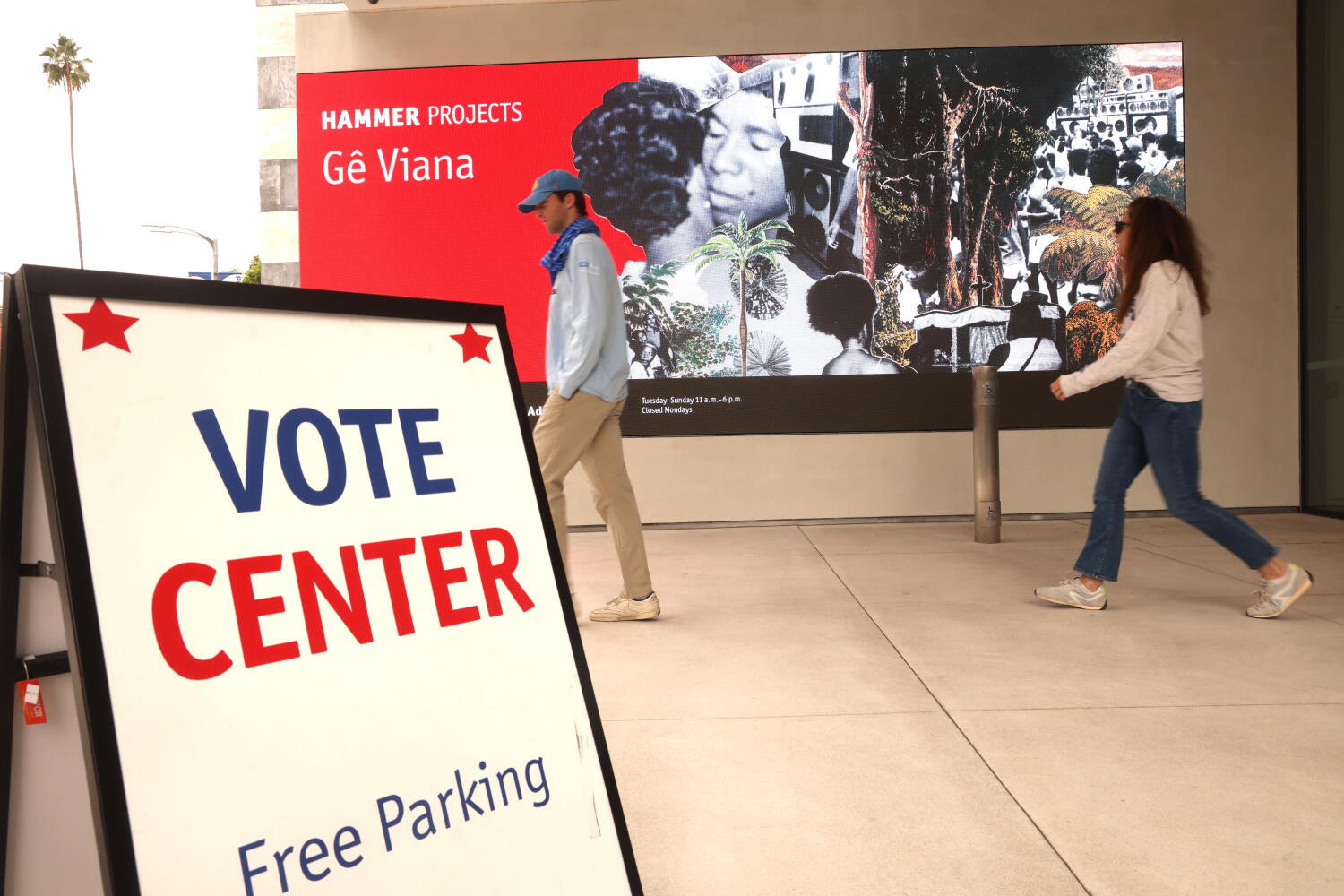
First, it alters voter behavior. Voters who fear that late-counted ballots might be invalidated by a sudden federal court order or legislative maneuver are increasingly hesitant to use mail-in ballots close to Election Day, creating bottlenecks at in-person vote centers and overwhelming county infrastructure.
Second, it fuels severe attrition among election administrators. Across California, experienced county registrars and veteran poll workers have resigned in record numbers over the past several election cycles, exhausted by public hostility, records requests, and threats directed at staff performing routine tabulation duties. Replacing institutional knowledge of that caliber takes years, increasing the risk of genuine administrative errors during future elections.
Third, it creates a self-fulfilling prophecy of illegitimacy. If a major candidate loses a close race in California and claims the count was compromised—or conversely, if a federal court intervenes to enforce a strict statutory deadline—half the public is already pre-conditioned to view the outcome as stolen or rigged.
What Actually Protects California's Ballots
Despite widespread voter anxiety, the structural defenses protecting California's vote count from outside interference are remarkably sturdy. Understanding how those defenses work strips away much of the mystery that feeds public fear.
California's voting system is fundamentally air-gapped from federal control. Voting machines and tabulators across all 58 counties are prohibited by state law from ever being connected to the internet. Ballots are printed on physical paper, marked by hand or ballot-marking devices, and stored under dual-custody locks monitored by continuous video surveillance and bipartisan observers.
Furthermore, the decentralization of the count makes a single point of failure virtually impossible. To stop the vote count in California, an outside actor wouldn't just have to shut down one central server in Sacramento. They would have to simultaneously halt operations across 58 separate county jurisdictions, each operating under its own elected or appointed registrar, backed by county sheriffs, local superior courts, and state constitutional protections.
Even if a federal lawsuit were filed seeking to halt tabulation in a specific county, federal courts operate under strict standards of review. Under the Purcell principle—a well-established doctrine named after a 2006 Supreme Court case—federal courts are strongly discouraged from altering election rules or halting established procedures close to or during an election, precisely to avoid sowing voter confusion and chaos.
State officials have also spent years gaming out legal scenarios with the California Attorney General's office, preparing rapid-response legal teams to defend county registrars against any outside attempt to disrupt certification timelines.
The Widening Gap Between Reality and Perception
The disconnect at the heart of California's polling numbers is stark. On one hand, you have a decentralized, paper-backed election system protected by clear constitutional boundaries and decades of legal precedent. On the other, you have an electorate convinced that the entire apparatus could be halted by a stroke of a pen or a gavel in Washington.
Laws alone cannot close that gap. As long as political leaders continue to treat election administration as a partisan battlefield, and as long as California's vote-counting timeline leaves winners hanging in limbo for weeks after Election Day, voter anxiety will remain high.
County registrars can publish live camera feeds of their tabulation rooms, conduct exhaustive post-election risk-limiting audits, and explain the Elections Clause until they are hoarse, yet millions of Californians will still walk up to the ballot box wondering whether someone in Washington will try to pull the plug before their vote is tallied.