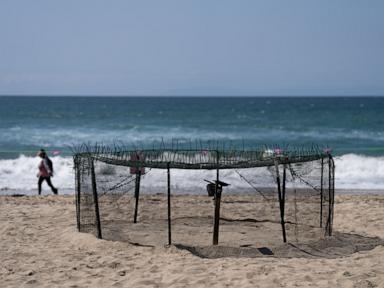
The headlines arrived wrapped in confetti and coastal euphoria. News outlets breathlessly declared that sea turtle eggs discovered on California beaches represent a historic first for the United States West Coast, framing the event as a feel-good triumph of modern conservation. Environmental groups popped metaphorical champagne. Social media feeds flooded with heart emojis and applause for nature finding a way.
It is a comforting delusion. For a closer look into this area, we suggest: this related article.
Anyone who understands marine biology beyond a press release knows the truth. This is not a heartwarming milestone. It is a loud, flashing red warning klaxon telling us that the marine ecosystem is breaking down. Those turtles did not swim north to expand their real estate portfolio. They fled north because their ancestral breeding grounds are turning into a frying pan.
When an animal abandons its evolutionary blueprint to spawn in hostile, alien territory, you do not throw a parade. You look at what broke their home. To get more details on this development, comprehensive coverage can be read on The New York Times.
The Thermal Refugee Crisis Nobody Wants To Name
To understand why this is a crisis rather than a victory, look at how sea turtles select nesting sites. For millions of years, species like the green sea turtle have returned to the exact stretch of sand where they hatched. This fidelity is hardwired into their DNA. They do not randomly decide to roll the dice on a colder, higher-latitude coastline on a whim.
The waters off Central America and Mexico are warming at a blistering pace. Marine heatwaves are no longer anomalies; they are the baseline. As nearshore water temperatures spike, the sand temperatures on traditional nesting beaches follow suit. Sea turtles possess a thermal tolerance window. When sand temperatures exceed critical thresholds during incubation, the embryos cook inside their shells, or hatchlings emerge with severe neurological defects, physical deformities, or mortality rates approaching one hundred percent.
What we are witnessing in Southern California is not expansion. It is climate displacement.
These females are thermal refugees. They swam hundreds of miles past their traditional beaches because the sand down south was too hot to sustain life. Driven by desperation and biological compulsion, they hauled themselves onto unfamiliar California shores, depositing eggs into sand that their evolutionary lineage never designed for.
Celebrating this as a conservation win is like cheering because refugees are sleeping on a freezing highway after their house burned down. You are mistaking sheer desperation for successful migration.
The Urban Gauntlet Of The Golden State
Imagine a newborn sea turtle hatching on a Southern California beach. In a textbook environment, hatchlings scramble toward the ocean guided by the low-horizon light reflecting off the water. It is a dangerous sprint past ghost crabs and shorebirds, but the evolutionary odds give them a fighting chance.
Now drop that same hatchling onto a beach in San Diego or Orange County.
Instead of a dark, natural horizon, the hatchling faces a wall of multi-story beachfront condos, highway glare, streetlights, and neon signs. Phototaxis takes over. Confused by artificial light pollution, the tiny turtles crawl inland toward the parking lots, straight into traffic, storm drains, and the jaws of domestic pets and urban raccoons.
Even if they manage to find the surf, they enter a coastal zone choked with urban runoff, microplastics, propeller-driven watercraft, and heavy boat traffic. The nearshore environment of California is an industrial highway compared to the sheltered bays and seagrass meadows of the tropics.
State wildlife agencies rush to rope off the nests with yellow caution tape, as if a few yards of plastic netting can protect a clutch of eggs from the brutal reality of an urbanized coastline. They monitor the nests with clipboard-wielding devotion, broadcasting updates to eager journalists hungry for a happy animal story. They ignore the systemic trap they are applauding.
The Sex Ratio Time Bomb
There is another biological ticking clock hidden beneath the sand that the feel-good articles conveniently omit. Sea turtles exhibit temperature-dependent sex determination. The temperature of the sand during the middle third of incubation dictates whether the hatchlings become male or female.
Warmer sand produces females. Cooler sand produces males.
In many tropical rookeries across the globe, warming temperatures have already skewed sex ratios to extremes, producing clutches that are ninety-nine percent female. Populations need males to sustain reproduction over time.
Now look at California. While the southern waters are warming, California coastal sand remains cooler than the traditional tropical nesting beaches. When eggs are laid in cooler California sand, the incubation temperatures hover near the lower threshold of viability. This can cause the incubation period to stretch out for weeks longer than normal, exposing the eggs to a prolonged gauntlet of fungal infections, tidal inundation, and predators.
If the eggs are too cool, you get massive embryo mortality. If they manage to hatch, the sex ratios might swing wildly or produce weakened, lethargic hatchlings that cannot survive the colder Pacific currents. The Pacific Ocean off California is famously frigid. Tropical sea turtle neonates are physiologically adapted to warm currents like the Gulf Stream or equatorial gyres. Throwing a tropical hatchling into the cold upwelling zones of the California Current is a sentence to thermal shock.
The Conservation Vanity Complex
Why do agencies and environmental nonprofits lean so hard into the celebratory narrative? Because doom fatigue is real. People grow weary of endless reports detailing coral bleaching, acidification, and collapsing fisheries. A cute turtle nest on a famous beach provides an easy hit of dopamine for the public and a reliable fundraising hook for organizations desperate for a win.
It is easier to sell a miracle than to explain the grim mechanics of ecosystem collapse.
When you frame a displacement event as a triumph, you shift the focus away from the root cause. You stop asking why the tropics are becoming unlivable. You stop questioning global emissions trajectories or oceanic heat absorption rates. Instead, you focus all your energy on guarding a patch of sand in Malibu, treating the symptom while the patient burns up in the other room.
I have watched organizations blow millions of dollars on theatrical local interventions while ignoring the macro-level catastrophe unfolding offshore. It makes for great television. It makes for stellar press releases. It does nothing to save the species.
The Uncomfortable Truth About Adaptation
The lazy consensus in modern ecology suggests that nature will simply adapt on the fly. Animals will pack their bags, move north, and figure it out. Evolution in real-time, right before our eyes.
Evolution does not work at the speed of a carbon tax debate. It takes thousands of years of genetic drift, natural selection, and physiological adaptation for a marine reptile to shift its foundational life-history traits. A sea turtle cannot rewrite its biological programming over the course of a single human generation just because coastal waters warmed up a degree or two.
When species are forced to move faster than their genetics can keep up, they enter evolutionary dead ends. They wander into habitats where they cannot thrive, laying eggs that cannot survive, trapped in a loop of ecological displacement.
California beaches are not the new frontier for sea turtles. They are a hospice ward for climate refugees.
Stop writing heartwarming profiles about pioneer turtles conquering the West Coast. Stop treating a climate distress signal like a nature documentary finale. Until we address the catastrophic thermal shift cooking the oceans from the equator upward, every nest discovered on a California beach is not a beginning. It is a casualty report.