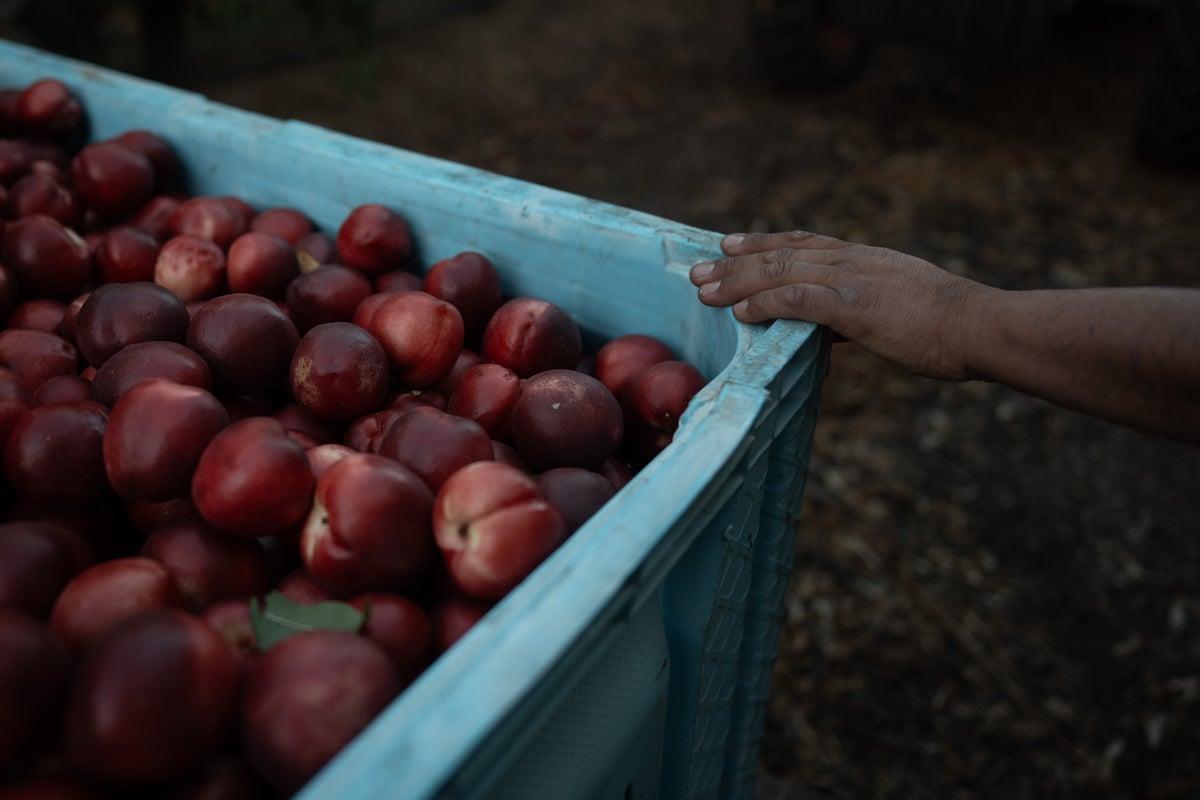
Imagine watching an entire year of hard work rot on the ground. Every step you take through your own orchard, you hear the heavy, sickening thump of perfectly ripe fruit hitting the dirt. That's the reality Cesar Mora faced last year. This year, the third-generation Central Valley farmer decided he'd rather give away his harvest for absolutely nothing than let a massive produce distributor force him to watch it go to waste again.
Mora opened up his orchard in Reedley, California, to the public this week. He's handing out roughly 125,000 pounds of premium white nectarines to anyone willing to make the drive. Thousands of people have flooded his farm, filling bags and buckets with a sweet, less-tart variety called Monalise.
But this isn't a simple act of charity. It's an act of defiance. Mora is locked in a high-stakes legal battle with the Giumarra Brothers Fruit Company, one of the biggest industrial produce players in the country. The distributor claims exclusive rights over the fruit Mora grew, effectively blocking him from selling his own crop anywhere else.
The Messy Battle Over Fruit Patents
Agriculture isn't just about soil, water, and sun anymore. It's about intellectual property. Plant breeding programs, private companies, and universities develop new crop varieties and slap them with tight restrictions.
While legendary fruits like the Rainier cherry or Honeycrisp apple eventually made their way into the public domain where anyone can grow them, newer varieties are guarded like software code. Breeders use these agreements to collect hefty royalties on the trees they sell, the fruit produced, or both.
Mora's legal headache started back in 2017 when he signed a sublicensing agreement with Giumarra to grow the Monalise white nectarine. Giumarra holds the sublicense from a French company named Star Fruits Diffusion. By 2019, Mora had entered a marketing agreement that required him to pack and sell the fruit strictly through Giumarra. He says they sold him on a big dream, promising the exclusive fruit would fetch top dollar.
The dream quickly soured. Mora claims that by 2020, Giumarra was tossing out up to half of the nectarines he delivered, destroying his profit margins. He alleges he was farming at a loss just to benefit the distributor. When he tried to sever ties and sell his 2023 harvest to a different packer, Giumarra slammed him with a lawsuit for breach of contract.
Because of the ongoing litigation, Mora can't legally sell his white nectarines to anyone. If he can't sell them, and he leaves them to rot, he loses everything anyway. So, he chose a different path. He started the "No Nectarines Wasted" campaign, turning his orchard into a free-for-all for locals and fruit lovers driving from hours away.
What Big Ag Corporate Monopolies Mean for Local Farming
This dispute shines a harsh light on the tightening grip corporate marketers hold over independent farmers. When you sign a contract for a proprietary crop variety, you aren't just selling your harvest. You're handing over your operational freedom.
Giumarra pushes back against Mora's claims, asserting that the case is a straightforward disagreement over two written contracts that belongs in court. They argue they are simply protecting the proprietary programs that bring value to their network of growers.
But for small-scale farmers, the financial math behind these exclusive partnerships rarely adds up when things go sideways. Mora pays a royalty of $2.50 per tree, a 4% production royalty on gross sales, plus a sales commission. When a distributor decides your fruit isn't up to their specific packing standards, or shifts its marketing focus, you're the one left holding the bag—and the rotting fruit.
Mora still grows peaches and plums that aren't tied to Giumarra contracts, but losing the ability to market his white nectarine crop has wiped out a quarter of his annual income. He's counter-suing the company for fraud, misrepresentation, and unfair business practices.
The Immediate Next Steps for Independent Growers
If you're an independent grower looking at the chaos in Reedley, you need to protect your operation before signing onto the next "exclusive" hot crop variety.
- Audit your contract exit clauses. Never sign an agricultural marketing agreement that doesn't include a clear, fast-acting termination clause if the distributor fails to move a certain percentage of your volume.
- Verify patent claims independently. Court filings from Mora's lawyers show Giumarra admitted the Monalise variety isn't actually covered by a U.S. plant patent, despite marketing it as an exclusive variety. Always double-check USPTO filings yourself.
- Diversify your acreage. Never let a proprietary corporate crop account for more than 10% to 15% of your total farm income. You need open-market crops to stay afloat if a legal dispute freezes your main asset.
The trial between Mora and Giumarra is set for July 20, 2026. Until then, the gates in Reedley stay open, and the free nectarines will keep moving until the trees are empty.
California farmer gives 125,000+ pounds of nectarines away amid lawsuit
This news broadcast provides on-the-scene footage of the Reedley orchard, interviews with local residents picking the fruit, and direct statements from the farmer regarding the financial toll of the corporate dispute.