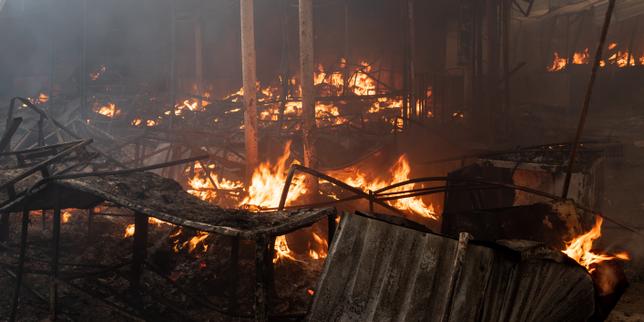
The escalation of the war in Ukraine took a dark and calculated turn when night strikes across the country left at least four civilians dead. Amid the devastation of shattered residential blocks and rescue workers digging through rubble, Moscow quickly claimed responsibility, emphasizing the deployment of its new Orechnik intermediate-range ballistic missile. This is not just another chapter in a long war of attrition. It is a deliberate, highly synchronized demonstration of force aimed far beyond the borders of Ukraine.
While early reports focused on the tragic human toll in cities like Dnipro and Kyiv, the underlying strategic shift demands closer inspection. The Kremlin is using these strikes to send a chilling message to Western capitals. By pairing localized terror with the deployment of experimental, high-velocity weaponry, Moscow intends to paralyze Western decision-making and test the limits of modern air defense systems.
The Reality Behind the Orechnik Deployment
Military analysts have spent days dissecting the data from the recent strikes. The Orechnik is a multi-warhead ballistic missile designed to travel at hypersonic speeds, making interception incredibly difficult for standard air defense networks.
But why use a weapon capable of carrying strategic payloads to strike regional infrastructure?
The answer lies in psychological warfare. Moscow wants the world to see the kinetic impact of a weapon that can outrun most contemporary anti-missile shields. This is muscle-flexing on a geopolitical stage. The four civilian casualties, while a profound human tragedy, represent the immediate collateral damage of a broader, more sinister testing program. Russia is treating Ukrainian urban centers as a live-fire proving ground for its next generation of strategic deterrence.
Furthermore, the timing of these strikes aligns perfectly with shifting political dynamics in Washington and Brussels. As Western allies debate whether to allow Ukraine to use long-range weaponry deeper inside Russian territory, the Kremlin responded with a kinetic counter-argument. The message is simple: any increase in Western support will be met with unpredictable, highly destructive technology.
The Chilling Anatomy of Night Strikes
Nighttime bombardments serve a specific operational purpose. They maximize chaos. Emergency services are stretched thin, darkness complicates rescue efforts, and the psychological impact on the civilian population is magnified exponentially.
Consider how these attacks unfold on the ground. Air siren warnings give residents mere minutes to find shelter. For many, that shelter is nothing more than a basement or a reinforced hallway. When an Orechnik or a similar high-velocity missile impacts, the kinetic energy alone causes structural collapses blocks away from the actual target.
The strategy relies heavily on the element of surprise. Standard cruise missiles can often be tracked and intercepted by Gepard anti-aircraft guns or Patriot batteries if spotted early enough. Hypersonic or near-hypersonic ballistic missiles offer no such luxury. They rain down from the upper atmosphere at steep angles, leaving air defense crews with seconds to react. This vulnerability has forced Ukraine’s allies to reconsider the current architecture of European air defense.
The Limits of Current Air Defenses
Ukraine has successfully integrated a patchwork of Soviet-era systems and advanced Western platforms like the Patriot, IRIS-T, and NASAMS. This network has saved thousands of lives. However, no air defense system is foolproof, especially when facing a saturation attack.
When Russia mixes slow-moving Shahed drones with supersonic cruise missiles and tops off the barrage with a ballistic Orechnik, the defense network faces overwhelming data tracking requirements. The drones are used to draw fire and expose radar positions. The cruise missiles force defenders to expend expensive interceptors. Then, the ballistic missile strikes the primary target with near-impunity. It is a mathematical problem of supply and demand, and right now, Ukraine is running low on the high-end interceptors needed to stop ballistic threats.
Beyond the Official Propaganda
State-run media in Moscow painted the strikes as a resounding success against military infrastructure. They claimed Western supply depots and troop concentrations were neutralized.
The reality on the ground tells a vastly different story.
Independent journalists and international observers documented destroyed apartments, cratered streets, and damaged energy infrastructure. This discrepancy highlights a fundamental truth of the conflict: Russia’s definition of a legitimate military target is broad enough to encompass anything that sustains Ukrainian societal resilience. By targeting the electrical grid and residential areas during the transition into colder months, the Kremlin seeks to break the civilian will to resist.
This tactic has historically failed to achieve its goals. From the Blitz in World War II to the modern bombing campaigns in the Middle East, history shows that targeting civilians rarely forces a government to capitulate. Instead, it hardens public resolve and deepens the animosity between the warring populations.
The Geopolitical Ripple Effect
The deployment of the Orechnik changes the calculus for NATO planners. This is no longer just a regional conflict contained within the borders of Eastern Europe. The technology demonstrated in these recent strikes possesses the range and speed to threaten capitals across Central and Western Europe.
- Poland and the Baltic States: These nations are urgently demanding a permanent expansion of NATO’s air defense umbrella, arguing that their proximity to the conflict zone leaves them exposed to stray missiles or deliberate provocations.
- The United States: Washington faces pressure to accelerate the delivery of advanced missile defense systems, though manufacturing constraints and domestic political debates complicate the timeline.
- The European Union: Economic sanctions have hampered Russia's ability to import high-tech components, but the assembly of the Orechnik proves that Moscow has found ways to bypass Western export controls through third-party intermediaries in Asia and the Middle East.
The supply chains keeping Russia's missile program alive are complex and resilient. Smuggled microchips, dual-use electronics, and illicit oil revenues fund the factories working three shifts a day behind the Ural Mountains. Stopping this flow of material requires a level of international enforcement that Western sanctions have so far failed to achieve.
The Human Cost and the Long Road Ahead
Behind the technical specifications of the Orechnik and the geopolitical maneuvering of world leaders are the four individuals who lost their lives in the dark. Their deaths are a reminder that modern warfare is fought on the backs of everyday people.
The international community now faces a critical turning point. Allowing these strikes to go unanswered signals to authoritarian regimes worldwide that ballistic terror is a viable tool of statecraft. The coming months will determine whether the West can muster the industrial capacity and political will to supply Ukraine with the tools necessary to close its skies, or if the Orechnik will become the standard instrument of Russian foreign policy.


