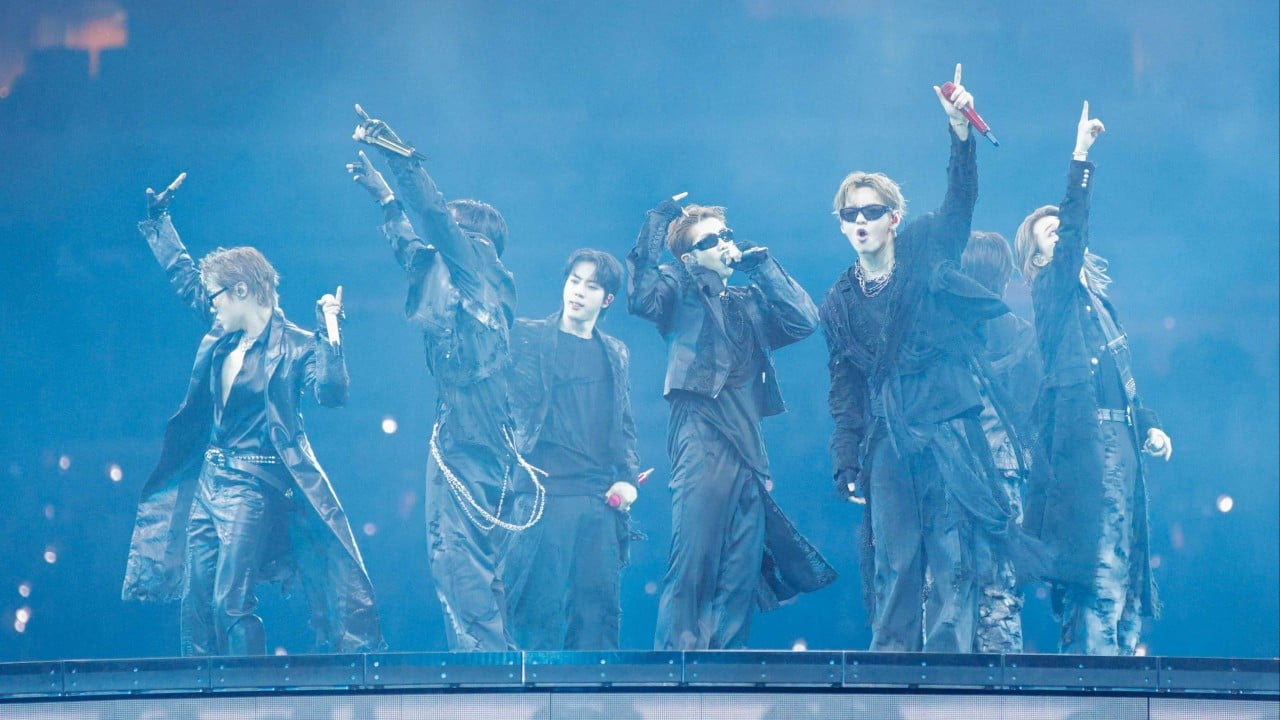
The music industry is addicted to an imaginary scoreboard. Every year, millions of armchair executives hyperventilate over whether K-pop acts will secure validation from a declining institution in Los Angeles. When a boycott or a snub happens, the commentary machine spins into overdrive. Fans cry xenophobia. Pundits ask if the genre has hit a glass ceiling.
They are asking the wrong question entirely.
The real question is why anyone with a functioning business brain still believes the Recording Academy holds any functional utility for global superstars who have already bypassed traditional gatekeepers.
I have watched legacy media companies hemorrhage billions trying to manufacture artificial scarcity in a digital-first economy, and the obsession with the Grammys is the exact same symptom of institutional brain rot. Winning a gold-plated gramophone does not drive revenue, secure streaming dominance, or build generational audience loyalty. It grants a brief, expensive PR cycle followed by a swift return to irrelevance for most recipients.
For BTS, chasing a Grammy isn't just unnecessary. It is a strategic trap.
The Myth of the Global Validation Stamp
Let us address the lazy consensus head-on. The mainstream music press loves to frame the Grammy Awards as the ultimate mountaintop of musical achievement. If you reach the peak, you have arrived. If you are locked out, you are a regional novelty waiting for your crossover moment.
This perspective ignores how modern attention economies actually function.
The Grammys are voted on by roughly twelve thousand industry insiders—session musicians, retired producers, legacy label executives, and aging artists whose primary exposure to contemporary pop culture involves reading industry trade magazines in gated communities. This demographic does not represent the global consuming public. They represent a declining cartel attempting to project relevance onto an ecosystem that has already outgrown them.
When an artist pivots their strategy to appease this specific voting body, they compromise their own distribution velocity. They trade direct-to-consumer intimacy for archaic industry approval.
Think about the structural mechanics of how music is consumed today. Streaming algorithms, algorithmic discovery playlists, TikTok integration, and Weverse-style community platforms operate on direct feedback loops. Fans want connection, frequency, and authenticity. They do not care about a committee of tuxedo-clad voters in Los Angeles deciding who gets a trophy in a broadcast that fewer people watch every single year.
The Economic Reality of the Gold Trap
Let us look at the numbers, because sentimentality is cheap, but balance sheets tell the truth.
Major label executives will privately admit that submitting for and campaigning for a Grammy nomination requires a multi-million-dollar war chest. You have to fly voters out, host expensive showcases, buy heavy advertising spreads in trade publications like Billboard and Variety, and hire dedicated PR teams to massage the egos of people who stopped listening to pop music during the George Bush administration.
What is the ROI on that capital expenditure?
For a mid-tier legacy act desperate for a touring bump, maybe it makes sense. For a juggernaut like BTS—an enterprise that generates billions of dollars in economic value for South Korea and commands a borderless, rabid fan base that buys out stadiums in minutes without a single American radio hit—the ROI is negative.
You are spending millions of dollars to buy a validation stamp from people who do not understand your language, your culture, or your business model.
Worse, winning a Grammy often triggers a creative curse. History is littered with boundary-pushing artists who won Album of the Year or Record of the Year, only to spend their next creative cycle terrified of alienating the conservative voting block that rewarded them. They start making prestige music instead of honest music. They trade their edge for a plaque.
BTS built their empire by ignoring the rules of the Western promotional machine. They communicated directly with ARMY through live streams, unpolished behind-the-scenes content, and lyrics that tackled mental health, societal pressure, and generational anxiety. The moment they start tailoring their track lengths, production choices, and lyricism to check boxes for a Recording Academy nominating committee, they dilute the very thing that made them untouchable.
The Boycott Fallacy
When a high-profile snub occurs, the standard counter-narrative is that the institution is broken and needs to be fixed from the inside. Fans demand boycotts, open letters, and diversity initiatives within the voting ranks.
This is a waste of energy. You cannot reform a fortress designed to protect a specific hierarchy.
The Recording Academy operates to validate traditional Western music industry structures—specifically, major label ecosystems centered around American radio conglomerates and legacy distribution models. K-pop operates on an entirely different operating system. It is a vertically integrated, fan-obsessed, multi-platform entertainment model that treats music as the anchor tenant for a broader lifestyle ecosystem spanning merchandising, digital interaction, intellectual property, and live experiences.
Trying to force K-pop into the Grammy framework is like trying to fit a hyper-optimized electric vehicle into a horse-and-buggy race. Even if you win the race, you are racing the wrong vehicle on the wrong track.
The smartest move an artist can make when facing a biased or obsolete institution is total irrelevance through indifference. Stop submitting. Stop campaigning. Let the telecast ratings flatline into oblivion while your global stadium tours sell out continents.
What Actually Matters in the Modern Era
If the Grammys are a ghost town, what should global superstars focus on?
- Direct Fan Ownership: Control the data, control the platforms. When you own the direct line to your audience through proprietary apps and direct merchandise channels, you do not need a television network to grant you permission to exist.
- Geographic Diversification: The American market is loud, but it is not the center of the universe. Latin America, Southeast Asia, the Middle East, and Europe offer massive, rapidly expanding infrastructure that does not rely on American terrestrial radio airplay or legacy trade magazine approval.
- Intellectual Property Expansion: Music is the top of the funnel. The real staying power comes from building characters, universes, and brand extensions that outlive musical trends.
The industry wants you to believe that a gold statue defines your legacy because they are trying to sell you the machinery required to win it.
BTS has already proven that you can conquer the world on your own terms, in your own language, with a community that answers to no one in Los Angeles. Winning a Grammy would not elevate them. It would be a step down.
Stop asking if the Grammys need K-pop. Ask why K-pop ever cared about the Grammys in the first place.