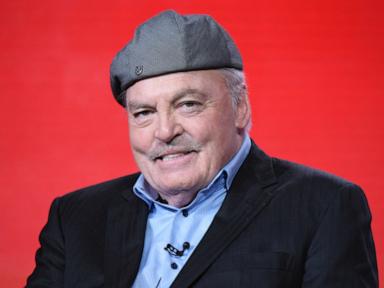
Stacy Keach, the towering stage actor and definitive television detective behind Mickey Spillane’s Mike Hammer, has died at the age of 85. While mainstream obituaries reduce his six-decade run to a trench coat, a fedora, and a gravel-throated voiceover, the real story of Stacy Keach is a forensic case study in how Hollywood systematically dismantles classical talent. He was not merely a character actor who found a comfortable niche on network television. He was a Yale-trained tragedian and Fulbright scholar who possessed the physical and vocal architecture to become the American Laurence Olivier, yet spent half his career navigating the friction between Shakespearean rigor and commercial typecasting.
To understand what the industry lost with Keach, you have to look past the syndicated reruns and examine the mechanics of mid-century American acting. Most performers choose a lane early. You either become a theater purist who sneers at the camera, or you chase studio paychecks until your craft atrophies. Keach refused the binary. Born Walter Stacy Keach Jr. in Savannah, Georgia, in 1941, he entered the profession with a rare combination of brute physicality and academic precision. At 6 feet tall with a barrel chest, a broken nose, and a cleft lip that required multiple childhood surgeries, he did not look like a matinee idol. He looked like a man who had survived something.
The Classical Pedigree Hollywood Tried to Erase
Before the trench coat ever touched his shoulders, Keach was dominating the American stage. In the late 1960s, fresh out of the Yale School of Drama and the London Academy of Music and Dramatic Art, he walked into New York theater and immediately altered the temperature in the room. His breakthrough performance in MacBird! in 1967, followed by his devastating turn as Buffalo Bill in Arthur Kopit’s Indians, earned him Obie Awards, Drama Desk Awards, and Tony nominations before he turned thirty.
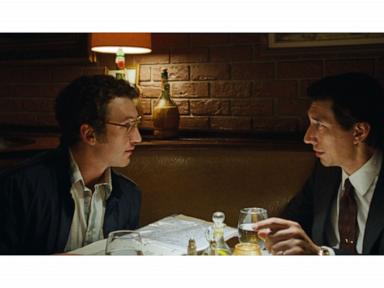
Directors of that era recognized an unusual duality in his instrument. He had the booming, resonant baritone required to fill a 1,500-seat auditorium without a microphone, paired with an almost unsettling stillness on camera. In 1972, John Huston cast him as Billy Tully in Fat City, a bleak, unvarnished portrait of a washed-up boxer in Stockton, California. Watch that film today, and you see an actor operating without a safety net. Keach plays Tully not as a noble tragic hero, but as a man hollowed out by small-town inertia and cheap wine. He doesn't beg for sympathy. He simply exists in the frame, sweating through a stained undershirt, letting the audience watch a human being quietly surrender.
That same year, Huston cast him again in The Life and Times of Judge Roy Bean, and Richard Fleischer put him in The New Centurions alongside George C. Scott. At that precise moment, Keach stood at the exact intersection of New Hollywood grit and classical theatrical authority. Industry insiders assumed he would inherit the mantle of Scott or Marlon Brando.
Instead, the studio system did what it always does when confronted with an actor who refuses to soften his edges. It stopped knowing how to market him. He was too intense for romantic leads, too intelligent for standard villain roles, and too intimidating for conventional sitcoms. When he played Barabbas in Franco Zeffirelli’s 1977 miniseries Jesus of Nazareth, he delivered a masterclass in coiled, feral desperation. Yet major film offers began to narrow. The studios wanted pretty boys for the blockbuster era that Jaws and Star Wars had just ushered in. Men who looked like they had been carved out of granite were suddenly out of fashion.
The Mike Hammer Trap and the Economics of Typecasting
When Keach signed on to play private eye Mike Hammer for CBS in 1984, few critics expected it to become the defining role of his public life. Mickey Spillane’s creation was a relic of 1950s pulp fiction—a brutal, unapologetic vigilante who solved problems with a .45 caliber automatic and a pair of brass knuckles. On paper, it looked like a step backward for a man who had played Hamlet, King Lear, and Falstaff.
Keach approached the material with the exact same textual discipline he brought to Shakespeare. He realized early on that if he played Hammer with a wink, the show would collapse into camp. He had to play the pulp straight. He lowered his register, leaned into the jazz-soaked cynicism of the scripts, and treated Spillane’s hardboiled narration like Jacobean verse. The result was an immediate ratings juggernaut. Mickey Spillane’s Mike Hammer turned Keach into a household name across America and Europe, proving that audiences were starving for a protagonist who didn't apologize for his masculinity.
The financial upside was massive, yet the professional cost was steep. Television success in the 1980s acted like concrete. Once 30 million viewers saw you every Saturday night in a fedora, casting directors lost the imagination to see you in anything else.
The 1984 Arrest and the Tabloid Machine
Just as the series hit its stride, Keach’s career collided with a self-inflicted crisis that nearly destroyed him. In April 1984, British customs officials arrested him at Heathrow Airport for possession of cocaine. He pleaded guilty and served six months at Reading Prison.
In the ruthless ecosystem of 1980s network television, a felony drug conviction was supposed to be a career death sentence. Sponsors fled. Tabloids feasted on the hypocrisy of a television lawman caught smuggling narcotics. Many actors would have vanished into obscurity or spent the next decade on a humiliating apology tour.
Keach did neither. He served his time, got clean, and walked straight back onto the set when CBS resumed production of Mike Hammer in 1986. Behind the scenes, the imprisonment fundamentally altered his approach to the craft. He later noted that stripping away his celebrity status inside a British cell forced him to confront his own ego. When he returned to work, the theatrical vanity was gone. What remained was a leaner, more dangerous presence that informed every role he took for the next forty years.
Reinvention Through Prestige Television and Subversion
While the film industry largely relegated him to supporting parts in action vehicles, Keach quietly engineered a second act by exploiting the very persona that had boxed him in. He understood that audiences trusted his face and voice. They associated him with authority, patriarchy, and old-school American grit. So he began using that trust as a Trojan horse.
Consider his turn as Cameron Alexander in Tony Kaye’s 1998 drama American History X. Keach plays the soft-spoken, intellectual architect of a neo-Nazi skinhead movement in Venice Beach. He doesn't scream slurs or wave flags. He speaks with the measured, avuncular warmth of a favorite high school history teacher. By weaponizing his own natural gravitas, Keach made the character infinitely more terrifying than a conventional cartoon bigot. He showed how extremism recruits young men not through rage, but through false mentorship.
This willingness to subvert his own image made him indispensable to the golden age of television comedy and drama in the 2000s and 2010s.
- Titus (2000–2002): Cast as Ken Titus, the hard-drinking, emotionally stunted, five-times-divorced father of comedian Christopher Titus, Keach delivered one of the sharpest sitcom performances of the decade. He played a monster of a father with zero sentimentality, turning toxic parenting into high-wire dark comedy.
- Prison Break (2005–2007): As Warden Henry Pope, he grounded an absurdly plotted thriller with genuine moral weight, creating a complex dynamic with Wentworth Miller’s Michael Scofield that anchored the show's best seasons.
- Nebraska (2013): Alexander Payne cast him as Ed Pegram, a small-town con man trying to shake down an aging, dementia-ridden former partner. In just a few scenes, Keach radiated decades of petty Midwestern resentment, proving he could still steal a movie with a single sideways glance.
Even when he took paychecks in broad comedies like Up in Smoke—where his turn as the hapless Sergeant Stedenko remains a touchstone of stoner cinema—he never phoned it in. He operated under a simple, unyielding rule of theater: the audience paid for a performance, regardless of whether the script was written by Eugene O'Neill or Cheech and Chong.
The Voice That Sold a Thousand Documentaries
Parallel to his on-camera work, Keach built an empire in the recording booth. If you turned on a television at any point between 1990 and 2020, you heard his voice. He narrated Nova episodes for PBS, National Geographic specials, American Greed on CNBC, and countless historical documentaries.
Voiceover work is often dismissed by snobs as easy money for aging actors, yet doing it at an elite level requires immense technical control. Documentary narration demands a delicate equilibrium. If you overact, you distract from the archival footage. If you underact, the audience changes the channel. Keach mastered the art of vocal authority. His baritone carried an implicit promise that the information being delivered was verified, serious, and worth your attention. For millions of viewers, Stacy Keach was the literal voice of institutional truth.
Why Modern Hollywood Cannot Replace Him
The death of Stacy Keach marks more than the passing of a reliable working actor. It highlights a structural shift in how modern entertainment develops talent. Today’s casting pipelines are built around micro-targeted demographics, social media metrics, and algorithmic predictability. Actors are groomed to be brand ambassadors first and performers second.
Keach came from a generation forged in regional repertory theaters, summer stock, and grueling international tours. He understood how to project to the back row of the balcony without amplification. He knew how to handle blank verse, how to take a stage punch without breaking rhythm, and how to command a scene simply by refusing to blink. You cannot manufacture that kind of presence in a three-week boot camp before a green-screen shoot.
Look at the landscape of contemporary leading men. Plenty of actors can bulk up for a superhero franchise or whisper convincingly into a boom mic during an indie drama. Almost none of them possess the sheer theatrical horsepower required to play King Lear on Broadway in the spring and a sleazy private detective in Los Angeles in the fall. Keach did both without breaking stride, treating every medium as a legitimate arena for the craft.
He worked relentlessly until the end, taking roles on stage and screen well into his eighties, driven not by a desperate need for relevance, but by the blue-collar conviction that actors are meant to act. When the curtain falls on a career like Stacy Keach’s, you don't mourn a man who missed his shot at greatness. You look at the body of work—the Shakespearean tragedies, the battered boxers, the corrupt wardens, the detectives in the rain—and realize he never needed Hollywood’s permission to be a giant.