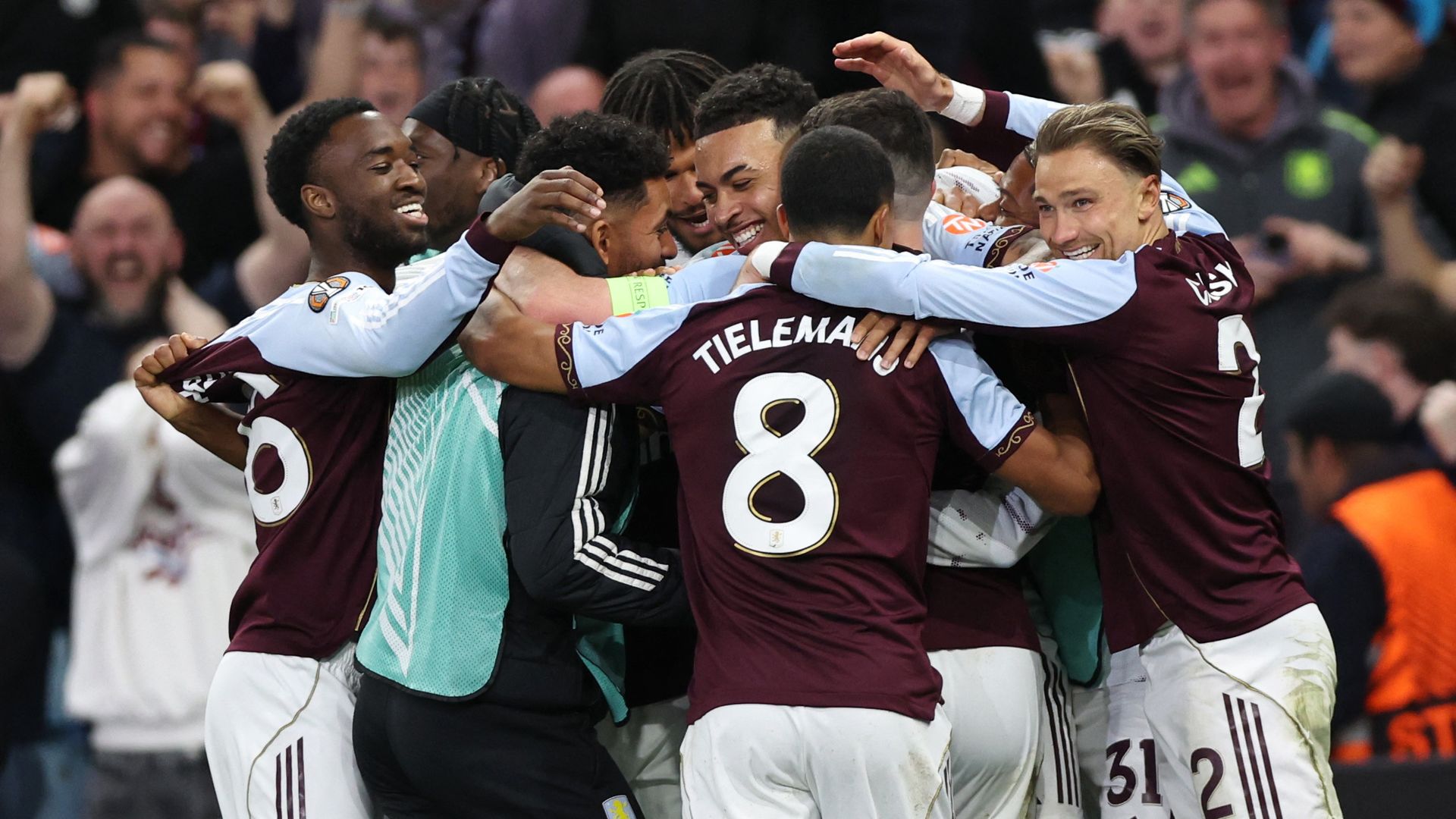
For the first time in the history of continental football, clubs from a single nation have secured every slot in the finals of the Champions League, the Europa League, and the Europa Conference League. While headlines celebrate this as a golden era of English tactical brilliance, the reality is far more clinical. This isn't a sudden surge in British grit or a mystical alignment of the stars. It is the inevitable result of a decade-long financial decoupling where the Premier League stopped being a football competition and started operating as a sovereign wealth fund.
The dominance is absolute. By locking out Spanish, German, and Italian giants from the biggest stages in 2026, the English top flight has effectively turned the European trophies into domestic hardware with extra travel requirements. This monopoly didn't happen by accident. It is the product of a brutal economic disparity that has turned the rest of Europe into a developmental farm system for six or seven English behemoths.
The Wealth Gap is No Longer a Gap
To understand how English clubs reached all three finals, you have to look at the balance sheets before you look at the team sheets. The broadcast revenue of the Premier League now dwarfs its closest rivals by such a significant margin that even a relegated team in England often out-earns the champions of Italy or France.
This financial muscle allows English clubs to make mistakes that would bankrupt a club in the Bundesliga. If a Premier League side spends $80 million on a striker who fails to perform, they simply bench him and buy another the following summer. In Milan or Dortmund, a single bad transfer cycle can cripple the sporting project for five years. This "safety net" of infinite liquidity has allowed English teams to hoard the world’s best coaching talent and, more importantly, the deepest squads ever assembled.
When you look at the benches of the teams in these three finals, you see international starters who would be the centerpiece of any team in La Liga. That depth is what wins European campaigns. The continental grind of Tuesday nights in Istanbul and Sunday afternoons in Manchester requires a level of physical redundancy that only the English treasury can afford.
Tactical Colonization and the Death of English Style
There is a persistent myth that this success represents the triumph of "English football." That is a lie. What we are seeing is the colonization of the Premier League by the best ideas from the continent, funded by global capital.
The managers leading these clubs to European glory are rarely British. Instead, the league has used its wealth to import the heavy-metal pressing of Germany, the positional play of Spain, and the defensive pragmatism of Italy. They haven't just bought the players; they bought the blueprints. By concentrating every elite tactical mind in one 20-mile radius in the North West and London, the Premier League has created an internal ecosystem so competitive that European nights have actually become easier than league matches.
For a mid-table English side, facing a top-six opponent is now more tactically demanding than facing a historic giant from the Eredivisie or Ligue 1. The sheer intensity of the weekly domestic schedule has battle-hardened these squads to a point where they simply outrun and out-muscle their European counterparts.
The Coaching Brain Drain
The vacuuming of talent isn't limited to the pitch. The backroom staffs of these three finalists are populated by the best analysts, physios, and scouts poached from across the globe. When an English club wants to improve its set-piece efficiency, it doesn't just train harder; it buys the best set-piece coach in the world from a rival league.
This brain drain has left the rest of Europe hollowed out. Historical giants are finding themselves unable to retain not just their "wonderkids," but their tactical architects. The result is a tactical homogenization where everyone is trying to play like the English leaders, but with 40% of the budget. It is a losing battle.
The Europa Conference League as a Power Statement
Perhaps the most telling sign of this total takeover is the seriousness with which English clubs now treat the secondary and tertiary competitions. Previously, the Europa League was seen as a distraction, a "Thursday night nuisance" that got in the way of the domestic top-four race.
That arrogance has vanished. The UEFA coefficient system and the sheer prestige of winning "any" European trophy have turned these competitions into essential targets. When an English team with a squad valuation of nearly a billion dollars enters the Europa Conference League, the competition is effectively over before it begins. The disparity between an English side sitting 7th in the Premier League and a team sitting 2nd in the Greek or Portuguese league is now a chasm that cannot be bridged by "passion" or "atmosphere."
The Financial Fair Play Paradox
We are told that Financial Fair Play (FFP) and the new Profit and Sustainability Rules (PSR) are designed to keep the game healthy. In practice, they have acted as a moat for the English elite. By limiting spending based on revenue, these rules have baked in the advantage of the clubs who were already wealthy when the music stopped.
Since the Premier League generates the most revenue, its clubs are permitted to spend the most. A club like Aston Villa or Newcastle, despite having wealthy owners, must navigate a minefield of regulations that the established "Big Six" can bypass through their massive commercial engines. Meanwhile, European giants like Juventus or Barcelona have been forced into a state of permanent austerity or creative accounting just to stay registered.
The three finals of 2026 are the scoreboard for this economic policy. English clubs didn't just play better; they out-leveraged the entire continent.
The Super League by Stealth
While the world protested the European Super League, the Premier League quietly became it. We are currently living in a world where the Champions League knockout stages are beginning to look like a repeat of the League Cup semifinals.
The concern for the sport at large is no longer whether English clubs will win, but whether anyone else will even bother to show up. If the path to a final requires beating three different English teams with three different tactical profiles and three different billion-dollar squads, the "magic of the cup" becomes a statistical impossibility.
The Physical Toll of Domestic War
One overlooked factor in this year’s clean sweep is the evolution of sports science in the UK. The Premier League is famously the most physically demanding league in the world. The speed of play is higher, the tackles are heavier, and the winter break is a suggestion rather than a rule.
In previous decades, this intensity worked against English clubs in Europe. They would arrive at a May final exhausted, their legs heavy from the festive period. That has changed. The massive investment in recovery technology, cryotherapy, and squad rotation means that English players are now finishing the season faster than they started it.
We saw this in the semifinals. In the final twenty minutes of those matches, the English sides didn't look tired. They looked like they were just warming up, while the Spanish and Italian sides were cramping and searching for the oxygen mask. You cannot coach your way out of a 50% deficit in pure athletic output.
Why This Isn't a "One Off"
There is a temptation to view this as a statistical outlier—a "perfect storm" that will revert to the mean next year. That is a dangerous misunderstanding of the current trajectory.
The new Champions League format, with more games and a heavier emphasis on squad depth, plays directly into the hands of the wealthiest league. The more games you add to the calendar, the more you favor the teams that can afford two world-class players for every position. The "underdog" story requires a short tournament and a bit of luck. A marathon favors the person with the most expensive shoes and a team of doctors following them in a van.
The English takeover is not a cycle. It is a structural shift. Unless there is a radical change in how European television rights are distributed, or a hard salary cap that applies across all UEFA territories, this is the new normal.
The Cultural Cost of Dominance
While the trophies head to London, Manchester, or Birmingham, something is being lost. The variety of European football—the clash of styles between the catenaccio of Italy and the flair of the Iberian Peninsula—is being sanded down.
When English clubs occupy every final, the matches lose their "inter-continental" feel. It feels like a high-stakes episode of Match of the Day. For the global fan, that might be entertaining. For the local fan in Lyon, Porto, or Amsterdam, it is a signal that their club has been relegated to a permanent supporting role in someone else’s movie.
The dominance of the Premier League is a testament to its marketing genius and its ruthless pursuit of commercial excellence. But as the trophies pile up on one side of the English Channel, the rest of the continent is left wondering if the "European" part of these competitions still holds any meaning at all.
Winning everything is the goal of any competitor. But when you win so decisively that you destroy the competition itself, the victory begins to feel hollow. The English clubs haven't just reached every final; they have effectively bought the stadium and the airwaves too.
The rest of the world is now just watching a domestic league with a different anthem.