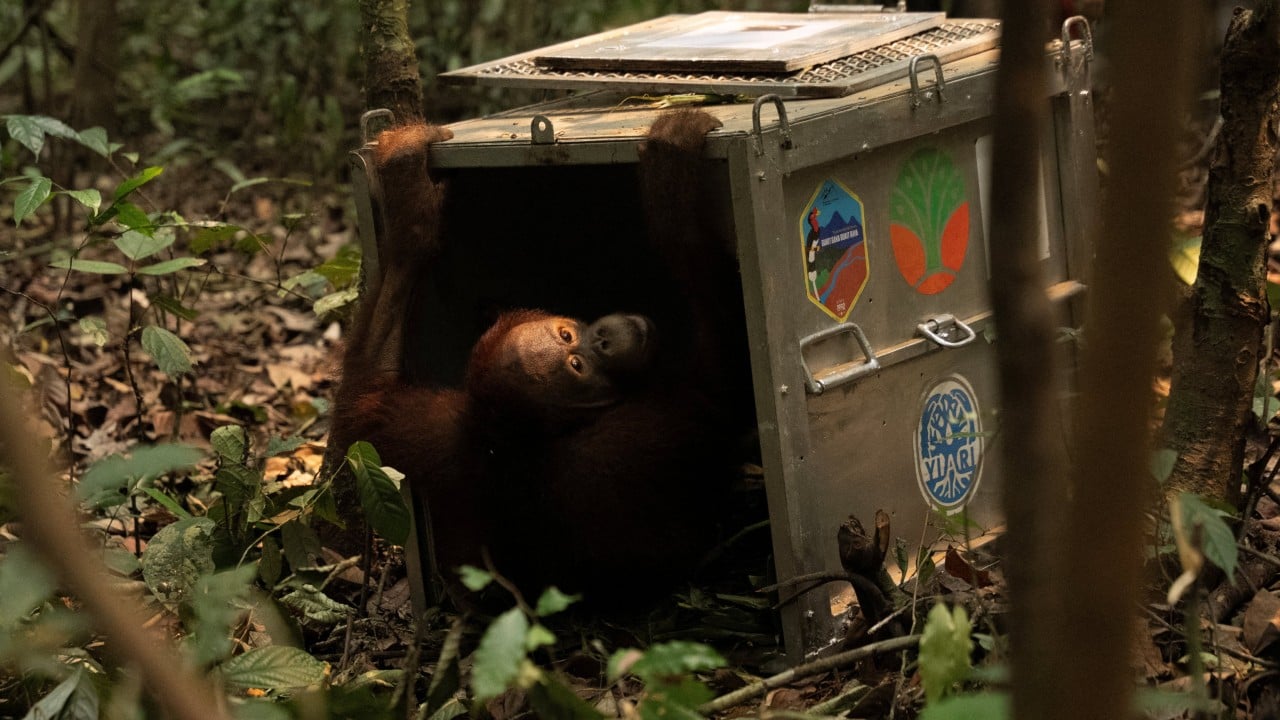
When the smoke finally clears over the peatland forests of Borneo and Sumatra, the hardest part of the conservation crisis begins. Thousands of displaced orangutans escape incinerated canopies only to face a slower, more insidious threat: starvation, capture, and displacement into fragmented remnants of jungle that cannot sustain them. Recent headlines highlight successful sanctuary releases and government-backed relocations, framing these events as triumphant victories for wildlife preservation. The reality on the ground is infinitely more complex, marked by severe habitat carrying capacity limits, human-wildlife conflict at agricultural borders, and the staggering financial burden of long-term rehabilitation.
Understanding this crisis requires looking beyond the immediate feel-good imagery of a rescued primate climbing back into a tree. Conservation is not merely an act of opening a cage in a protected reserve. It is a grueling, multi-decade logistical operation fraught with ecological bottlenecks
Exile and Evacuation Indonesia Finds New Territory for Wildfire Survivors
news, travel
The smoke clears, but the crisis remains. When recurring seasonal infernos scorch Indonesia’s carbon-dense peatlands, the immediate casualties are obvious. Charred timber, toxic haze choking regional airspaces, and displaced wildlife running for their lives. For the surviving orangutans plucked from the burning edges of palm oil plantations and logging concessions, survival usually means a one-way ticket to a crowded rescue center. But cages cannot substitute for a canopy. Indonesia has begun executing a massive relocation strategy, transferring rehabilitated orangutans away from the smoldering frontiers of Kalimantan and Sumatra into protected, high-altitude sanctuaries designed to shield them from the next wave of ecological destruction.
Conservationists have watched this logistical maneuver with cautious hope mixed with deep anxiety. Moving an apex arboreal primate is not like releasing a domestic pet back into a backyard. It requires a delicate choreography of veterinary science, political negotiation, and territorial calculus. Every relocation is an intervention in a fragile ecosystem that may or may not have the carrying capacity to absorb new competitors.
The Logistics of Displacement
The path from a smoky rehabilitation cage to a pristine jungle canopy involves months of medical clearance, behavioral assessments, and grueling transport logistics. Orangutans are intelligent, highly specialized creatures. Reintroducing them into unfamiliar forests introduces high mortality risks if they fail to locate reliable food sources or clash with existing wild populations.
Indonesian forestry authorities, working alongside international non-governmental organizations, have had to identify pockets of deep forest remote enough to escape the reach of agricultural expansion yet accessible enough for ongoing monitoring. These are not merely drops into the wild. They are carefully managed reintroductions where every individual is tracked via telemetry.
The underlying driver of this displacement remains untouched by these rescue efforts. Deforestation for pulp and paper, illegal logging, and slash-and-burn agriculture continue to shrink the available habitat year after year. Relocation is a treatment for the symptom, not a cure for the disease. Every time a rescued orangutan finds a new home, it underscores the harsh reality that its old home was sacrificed for global commodity supply chains.
Financial Realities and Corporate Accountability
Behind every successful transfer lies a complex financial architecture funded by conservation grants, government oversight, and occasionally, corporate restitution funds. Critics argue that corporations responsible for the habitat destruction that drives these animals out of their native ranges escape genuine financial liability. The burden of rescue, rehabilitation, and relocation falls almost entirely on public agencies and philanthropic donors.
When a palm oil conglomerate pushes its boundaries deeper into a peat swamp, the displacement of wildlife is treated as an externality. The animals are left to flee or burn. Only when public outrage peaks do rescue teams mobilize. The new sanctuary model attempts to institutionalize a safety net, but it operates on a shoestring budget relative to the massive revenues generated by the industries clearing the land.
Furthermore, local communities living adjacent to these new release sites must adapt to an influx of large primates. Human-wildlife conflict is a silent hazard in conservation biology. When displaced orangutans wander out of protected boundaries in search of calorie-dense agricultural crops like bananas or oil palm fruits, local farmers face tough choices. Protecting livelihoods often clashes with protecting endangered species. Long-term success depends entirely on community-level buy-in, ensuring that villagers view the newly arrived wildlife as a regional asset rather than an agricultural menace.
Measuring Success Beyond the Release Date
Counting a conservation program as a victory based solely on the number of crates opened in the jungle is a dangerous illusion. True success requires generational tracking. Are the relocated females reproducing? Are the young males establishing viable territories without engaging in fatal turf wars with resident populations?
Field researchers spend years tracking these metrics through dense undergrowth, battling malaria, monsoon rains, and difficult terrain. Their data reveals a sobering picture. While many rehabilitated orangutans adapt remarkably well to their new environments, others struggle to transition from human-provided sustenance to foraging wild forest foods.
The Indonesian government’s push to find secure territory for these survivors marks a departure from passive neglect, acknowledging that inaction is no longer politically or ecologically viable. Yet, the margin for error grows thinner with every dry season. Climate change continues to lengthen the wildfire seasons, turning once-resilient rainforests into tinderboxes.
As the transport crates are loaded onto boats and helicopters for the final leg of the journey, the orangutans gaze out with wary curiosity. They are moving away from the smoke, stepping into an uncertain sanctuary where the future of their species hangs in the balance, tethered to the political will of a nation caught between rapid economic development and the preservation of its natural soul.