The Bank of Japan is currently presiding over a financial experiment that has reached its breaking point. For decades, Tokyo attempted to defy the laws of economic gravity by maintaining negative interest rates and flooding the market with liquidity to spark inflation. Now that inflation has finally arrived, the central bank finds itself unable to raise rates effectively without risking a sovereign debt crisis or a total collapse of the yen. This is not merely a policy dilemma. It is a structural dead end.
Governor Kazuo Ueda inherited a balance sheet that is larger than the nation’s entire GDP. This staggering accumulation of government bonds was intended to keep borrowing costs at zero, but it has instead created a massive distortion in global capital flows. Japan is the world’s largest creditor, and any significant move in its interest rates sends shockwaves through every asset class from U.S. Treasuries to Australian real estate. The problem is that the BoJ cannot move too fast without bankrupting the very government it supports, yet it cannot stay still without watching the yen’s purchasing power evaporate.
The Yen Carry Trade and the Global Domino Effect
To understand why the BoJ is paralyzed, one must look at the carry trade. For years, investors borrowed yen at near-zero rates to buy higher-yielding assets elsewhere. This fueled global asset bubbles and kept the yen artificially weak. When the BoJ makes even the slightest hint of a rate hike, that trade begins to unwind. Capital rushes back into Japan, the yen spikes, and global markets experience a "flash crash" in liquidity.
The volatility seen in mid-2024 was a dress rehearsal for a much larger correction. When the yen strengthens too quickly, Japanese exporters—the backbone of the Nikkei—see their profits slashed. This creates a feedback loop where the central bank tries to normalize policy but is forced to retreat to protect the domestic stock market. It is a hostage situation where the kidnapper and the hostage are the same entity.
The Debt Service Nightmare
The math of Japan’s debt is relentlessly grim. With a debt-to-GDP ratio hovering around 250 percent, the Japanese government is the most indebted in the developed world. While the BoJ held rates at or below zero, the cost of servicing this debt was manageable. However, every 100-basis-point increase in interest rates adds billions of dollars to the annual interest bill.
If the BoJ raises rates to 1 percent or 2 percent to combat inflation, the Ministry of Finance would eventually be forced to choose between massive tax hikes, drastic spending cuts, or printing more money to pay the interest. The latter would trigger a hyper-inflationary spiral, defeating the purpose of the rate hike in the first place. The central bank is essentially trapped into being the permanent financier of the state, a role that destroys its independence and its ability to defend the currency.
Inflation is No Longer a Theory
For thirty years, Japanese policymakers prayed for inflation. They got it, but not the kind they wanted. Instead of demand-driven growth fueled by rising wages, Japan is suffering from "cost-push" inflation. The weak yen has made imports of energy and food prohibitively expensive. This hits the Japanese consumer directly in the pocketbook, depressing domestic spending and creating a "stagflationary" environment where prices rise while the economy shrinks.
The traditional economic textbook suggests that when inflation rises, you raise rates. But the BoJ knows that the Japanese economy is addicted to cheap credit. Small and medium-sized enterprises (SMEs) that have survived on "zombie" loans for decades would face mass insolvency if borrowing costs rose significantly. The social cost of a rate hike—unemployment and business failure—is a political third rail that the current administration is desperate to avoid.
The Myth of Wage Growth
The government’s primary defense is that "virtuous" wage growth will offset price increases. While major corporations like Toyota and Uniqlo have announced record raises, these "shunto" wage negotiations do not reflect the reality for the 70 percent of the Japanese workforce employed by smaller firms. These smaller companies lack the margins to absorb higher labor costs. Without broad-based wage growth, the BoJ’s policy tightening is effectively a tax on the working class.
The Demographic Anchor
Japan’s shrinking and aging population is the silent killer of monetary policy. A central bank can print money, but it cannot print people. An aging society is naturally deflationary; older people spend less and save more. By trying to force inflation onto a demographic that is structurally biased toward stagnation, the BoJ is fighting a war against time itself.
As the workforce shrinks, the tax base narrows, making the debt burden even more unsustainable. The central bank is trying to use 20th-century monetary tools to solve a 21st-century demographic collapse. It is like trying to jump-start a car that has no engine. No matter how much electricity you pump into the battery, the vehicle isn't going to move.
The Consequences of a Broken Currency
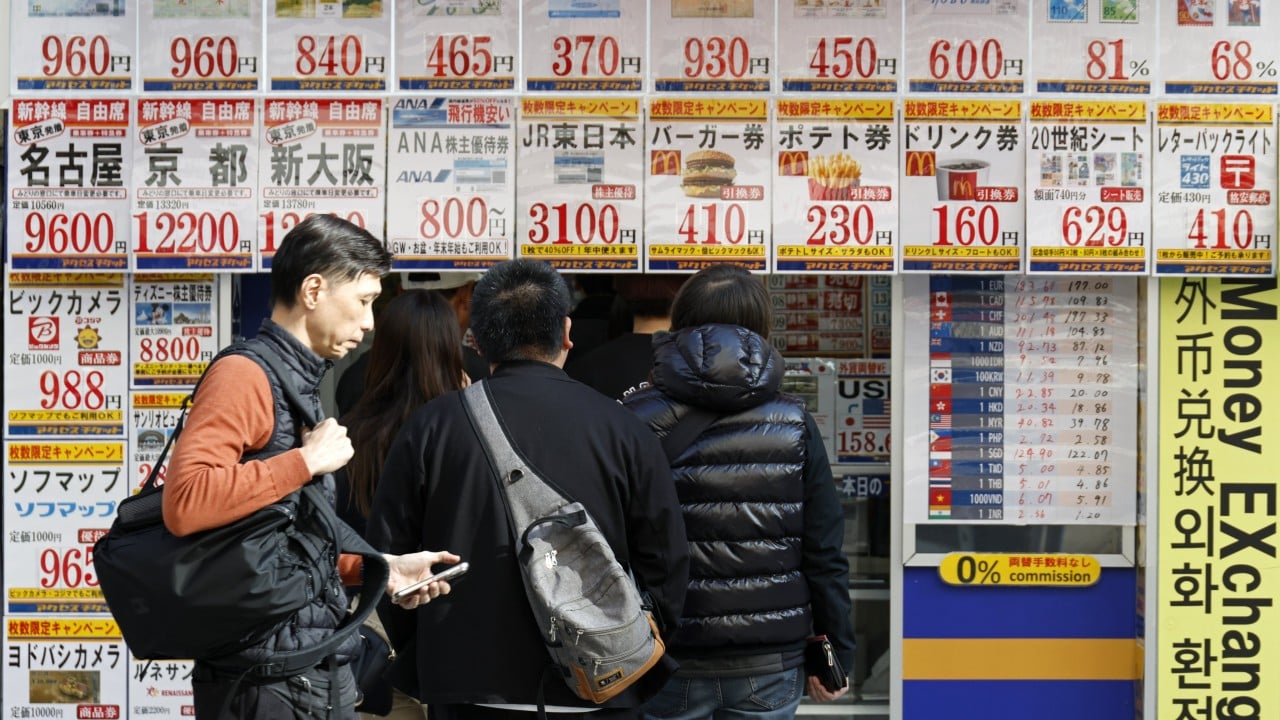
The yen’s slide toward 160 or 170 against the dollar is more than just a travel inconvenience for Japanese tourists. It is a fundamental shift in Japan's standing in the world. Japan was once the technological and economic envy of the globe. Now, it is becoming a bargain-basement destination. While tourism is booming because Japan is "cheap," a country cannot maintain its superpower status by selling cheap sushi and temple tours to foreigners.
A debased currency leads to a brain drain. Young, talented Japanese professionals are increasingly looking abroad for higher wages, further hollowed out the nation's future. The BoJ’s hesitation to defend the yen is a signal that it has prioritized the survival of the bond market over the integrity of the national currency.
The Exit Path That Does Not Exist
There is no clean exit from "Abenomics." The BoJ is the largest holder of Japanese Government Bonds (JGBs) and a top shareholder in the domestic stock market through ETFs. If it tries to sell these assets to shrink its balance sheet, it will trigger a market crash. If it holds them forever, it becomes the market, destroying price discovery and the capitalist function of risk assessment.
Critics argue that the BoJ should have started normalizing years ago when the global economy was stronger. By waiting until the rest of the world’s central banks were already deep into their own tightening cycles, the BoJ missed its window. Now, they are forced to tighten into a global slowdown, a move that historically ends in recession.
The market is no longer listening to the BoJ’s rhetoric. It is watching the exit signs. Every time the central bank intervenes in the currency market to prop up the yen, it is merely spending its foreign reserves to buy a few days of time. It is a temporary fix for a terminal problem.
The reality is that Japan is the canary in the coal mine for the rest of the over-leveraged world. The policy choices made in Tokyo over the next twelve months will determine if the global financial system can handle the transition away from "free money" or if the weight of the debt will finally break the gears of the world economy. The BoJ is not caught between a rock and a hard place; it is caught between a mountain of debt and a disappearing future.
Stop looking for a soft landing. In a system built on decades of zero-interest delusions, the landing is always hard. The only question remains who will be left standing when the dust clears.