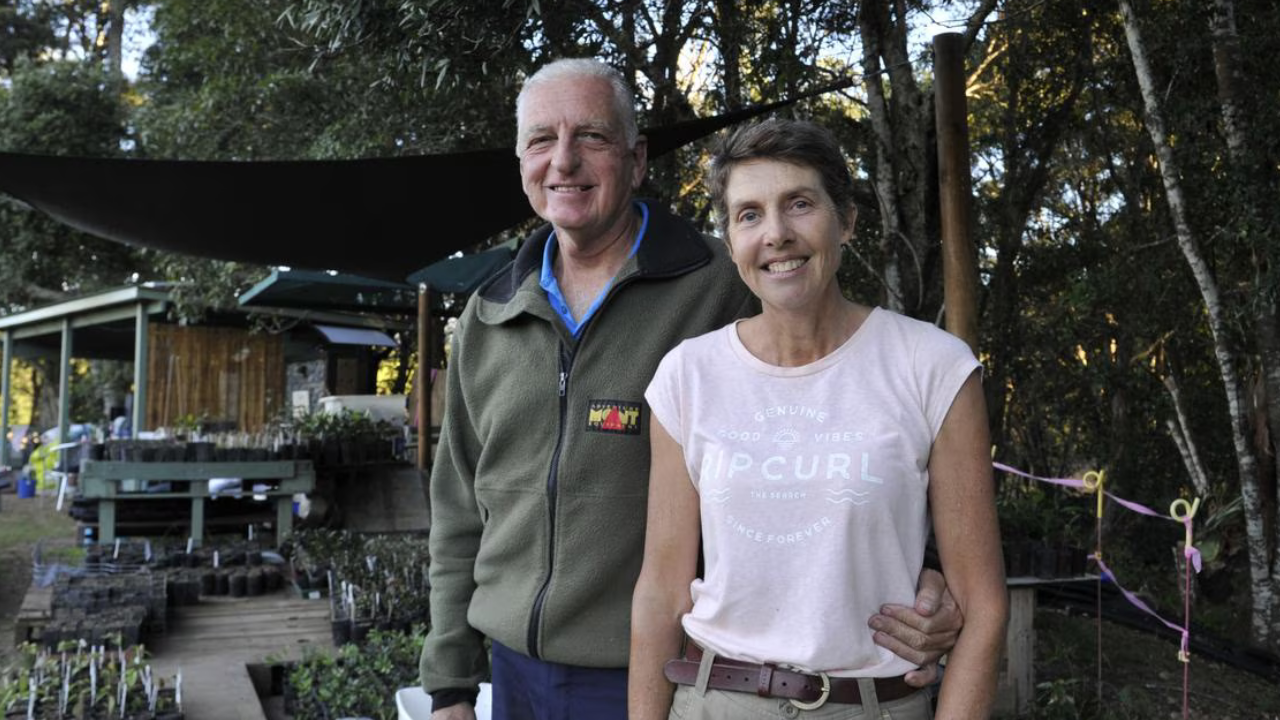
The narrative is seductively simple. A couple acquires a scarred piece of former cattle country, commits to planting thousands of native seedlings, and watches as the land heals itself. In the case of Brett and Lisa Vercoe, who purchased a 30-hectare site near Upper Orara in 2020, the headline is a triumph of conservation: 34,000 trees in the ground to revive a vanished ecosystem. It is a feel-good story that masks the grueling, expensive, and often precarious reality of ecological engineering in the modern age.
Restoration is not gardening. It is an act of defiance against a century of agricultural modification that has left Australian soil compacted, depleted, and choked with exotic pasture grasses. When private landowners take on the burden of reversing land clearing—a process that once saw Australia’s lowland subtropical rainforests reduced to a tiny fraction of their original expanse—they are not merely planting trees. They are engaged in a high-stakes battle against entropy.
The physics of this effort are unforgiving. At Narlu, the Vercoe property, success requires more than a shovel and a sunny disposition. It demands precise species selection mapped against topography, soil moisture, and sun exposure. This is not a project that can be automated or outsourced to a weekend workforce. It involves systemic management of weeds—which would otherwise suffocate nascent saplings—and the navigation of extreme weather events like floods and heatwaves that can wipe out years of labor in a single afternoon.
Critics of "tree-planting" as a climate solution often point to the high mortality rates of monoculture plantations. However, the work being done on projects like Narlu represents a shift toward bio-diverse reconstruction. By targeting specific ecological communities—such as wet and dry sclerophyll forests and the endangered Lowland Subtropical Rainforest—landowners are attempting to recreate complex animal corridors.
The integration of First Nations ecological knowledge adds a layer of sophistication often missing from Western restoration attempts. The use of cultural burning at Narlu is a prime example. By utilizing low-intensity fire, practitioners manage introduced grasses without the destructive heat of bushfires, providing an opening for fire-adapted native flora to reclaim space. This represents a move away from the "leave it to nature" approach, which—in the context of degraded agricultural land—frequently fails due to the dominance of invasive weeds.
The economic reality is equally stark. Most of these projects are essentially non-commercial in the traditional sense. While some enterprises, like the long-running Brookfarm operation in Byron Bay, successfully balanced macadamia production with rainforest regeneration, they are the exception rather than the rule. For the average private landholder, the "return on investment" is counted in platypus sightings, the return of eastern freshwater cod, or the stabilization of a water catchment. It is a legacy project, one that requires a multi-generational outlook because the planters will likely never see the forest at its mature, climax state.
There is also the question of scalability. Can a thousand such "Narlus" save a continent's biodiversity? The math is sobering. While the scale of individual efforts is impressive, the cumulative total of fragmented habitats remains the primary bottleneck for mobile species like the koala. Connectivity is the word that matters most here. Unless these individual islands of restored forest are linked, they risk becoming "ecological traps" where wildlife can exist but cannot thrive or migrate as the climate shifts.
Policy support, such as the Australian Government’s Saving Koalas Fund, provides necessary technical and logistical backing, but the heavy lifting remains with the individual. These landowners are essentially acting as unpaid stewards of public biological assets. When they succeed, the community benefits from cleaner water and increased biodiversity. When they fail—because of a dry year, a sudden surge in invasive lantana, or a loss of personal funding—the loss is absolute.
This underscores the inherent vulnerability of relying on private initiative to solve public environmental problems. There is no guarantee of continuity if the owners move, fall ill, or go bankrupt. The legal frameworks to ensure these restored lands remain protected long-term are often thin, relying more on the goodwill of current inhabitants than on ironclad covenant restrictions.
Ultimately, the restoration of land is a violent, beautiful, and tedious process. It is a rejection of the "extract and abandon" model that defined much of the rural development of the twentieth century. Yet, it is also a reminder of how much easier it is to destroy an ecosystem than it is to coax one back into existence. Every tree planted in a former cattle paddock is a temporary victory in a war against time. The real work begins only after the trees are in the ground, in the long, quiet years of watching, waiting, and pulling weeds under a hot sun, hoping that the forest will eventually grow deep enough to survive without human intervention.
This video provides a look at a successful long-term example of integrating commercial agriculture with rainforest regeneration on a former cattle farm.
http://googleusercontent.com/youtube_content/1


