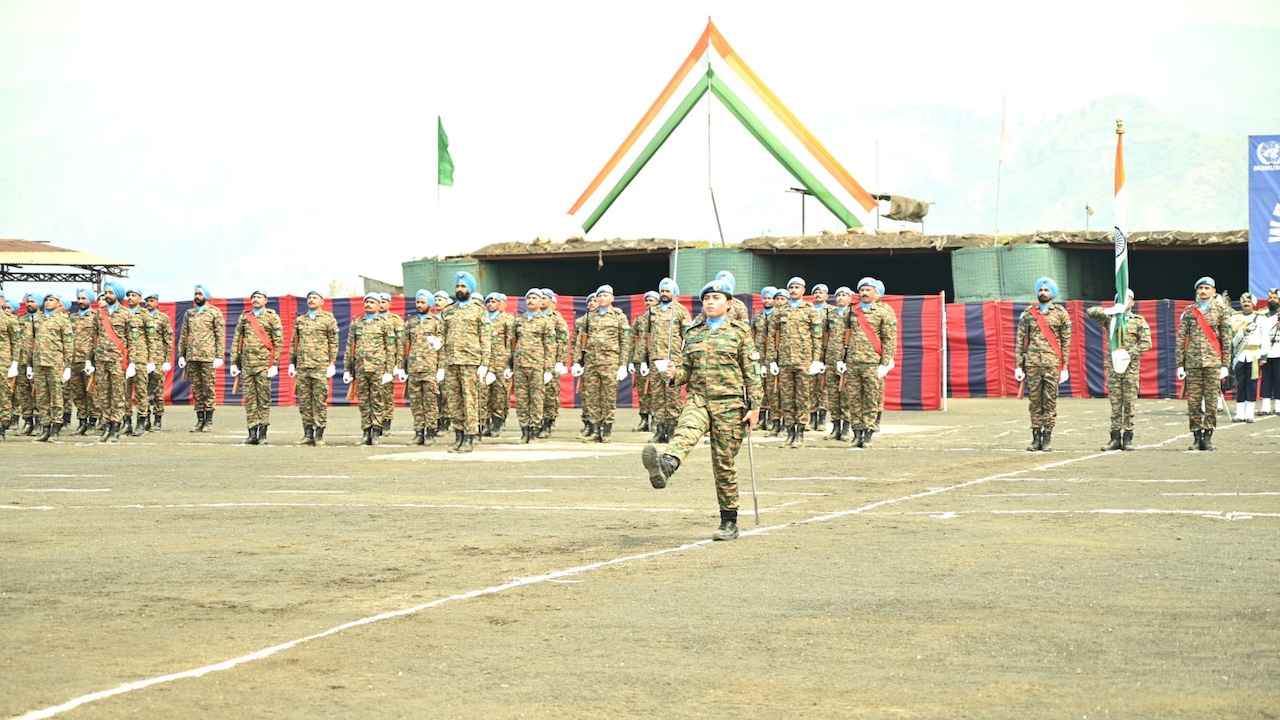
More than 800 Indian army peacekeepers operating under the United Nations flag recently received prestigious medals of honor for their service in the Democratic Republic of the Congo. While official press releases frame these awards as standard recognition of flawless diplomacy and routine stability operations, the reality on the ground is far more perilous. The blue helmets of the Indian contingent are not merely keeping a peace; they are holding the line against a catastrophic security collapse in a region fractured by shifting rebel alliances and intense local resentment toward the international community itself.
The Dangerous Illusion of Peacekeeping in a War Zone
Public relations machinery excels at celebrating milestones while scrubbing away the grit. When the United Nations Organization Stabilization Mission in the Democratic Republic of the Congo (MONUSCO) pins medals on the uniforms of the Indian Armed Forces, the accompanying narrative highlights stability, community outreach, and successful patrols. This sanitizes a brutal conflict. The Eastern Congo is currently an active theater of war, where peacekeepers routinely trade fire with heavily armed militias. Discover more on a similar topic: this related article.
India has historically stood as one of the largest troop contributors to UN missions globally. In the North Kivu province, particularly around the strategic hub of Goma, Indian soldiers face an array of armed groups including the lethal M23 movement, the Allied Democratic Forces (ADF), and various local Mai-Mai factions. These are not unorganized bandits. They are disciplined, well-funded military forces utilizing sophisticated weaponry and tactics.
The core contradiction of the MONUSCO mandate lies in its name: stabilization. You cannot stabilize a region where there is no fundamental peace agreement to enforce. The Indian blue helmets find themselves tasked with protecting civilians while operating under restrictive UN rules of engagement that frequently draw fire from both local populations and rebel combatants. Additional reporting by BBC News delves into comparable views on the subject.
The Two Front War Against Rebels and Resentment
To understand why these medals represent survival rather than triumph, one must look at the civilian blowback against the UN presence. Local populations in cities like Butembo and Goma have grown increasingly hostile toward international forces. The prevailing sentiment among Congolese citizens is that decades of UN intervention have yielded few tangible security results.
This dissatisfaction frequently erupts into violent anti-UN riots. Indian peacekeepers face a dual threat: sophisticated ambushes by armed rebels in the dense forests, and angry crowds throwing stones and petrol bombs in urban centers. When a crowd surrounds a UN base, the tactical options are painfully limited. Firing on civilians destroys the mission's legitimacy entirely, while showing weakness invites further incursions.
Navigating the M23 Resurgence
The geopolitical chess board complicates every move made by the Indian contingent. The resurgence of the M23 rebel group has displaced hundreds of thousands of civilians, pushing them directly toward UN operating bases for protection.
- Logistical Strains: Floods of internally displaced persons (IDPs) surrounding bases create immediate humanitarian emergencies that troops must manage alongside combat operations.
- Tactical Isolation: As rebels cut off main supply routes around Goma, Indian supply convoys must navigate roads laced with improvised explosive devices and ambush points.
- Geopolitical Gridlock: Regional tensions between the DRC government and neighboring Rwanda paralyze high-level diplomatic solutions, leaving tactical field commanders to deal with the fallout.
The Indian contingent operates medical clinics, repairs vital infrastructure, and secures transit corridors. Yet, these efforts are often viewed by critics as mere band-aids on a gaping chest wound. The structural failure of the Congolese state means that the moment UN troops withdraw from a secured sector, rebel forces immediately reoccupy the vacuum.
The Operational Cost of a Flawed Mandate
The UN Security Council writes mandates in New York, but soldiers pay for those words in blood. The Indian army's sustained presence in the DRC requires a massive operational footprint involving infantry battalions, helicopter squadrons, and engineering units.
Maintaining this presence creates a significant logistical burden. The terrain of Eastern Congo is notoriously unforgiving, characterized by dense jungles, poor road networks, and active volcanic geography. Military vehicles face rapid wear and tear, and supply lines are constantly vulnerable to weather and hostile actions.
Beyond logistics, the psychological toll on peacekeepers is immense. They are trained for decisive victory in conventional warfare, yet peacekeeping demands strategic restraint. A soldier must stand guard as political processes drag on indefinitely, often watching the same territory change hands multiple times over a multi-year deployment.
The medals awarded to these soldiers are earned through endurance under impossible conditions, not through the fulfillment of an achievable military objective. The international community relies on Indian troop resilience to prevent total regional collapse, even as the broader strategy for permanent peace remains entirely absent. The honors serve as a stark reminder that until global powers address the root economic and political drivers of the Congo conflict, the blue helmets will remain trapped in an endless cycle of crisis management.