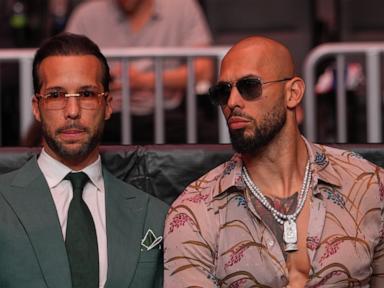
The international legal net around Andrew and Tristan Tate just snapped shut in the last place they expected it to. On Saturday, federal agents acting on a sealed warrant intercepted the polarizing internet personalities in Miami, placing them into federal detention ahead of a mandatory appearance before a federal magistrate. This is not another minor bureaucratic hurdle in Eastern Europe. This is a coordinated international extraction effort orchestrated by the British government, presenting 38 new criminal charges that include rape, human trafficking, and possession of indecent images of a child.
For years, the brothers treated national borders like minor inconveniences, moving assets and bodies across jurisdictions to outrun prosecution. That strategy died this weekend on the pavement of southern Florida. For a more detailed analysis into this area, we suggest: this related article.
The Shifting Battleground of International Law
To understand why this arrest matters, you have to look past the carefully curated social media feeds and examine the mechanics of international extradition treaties. The Tates fled Romania in February 2025 after local courts lifted their travel restrictions, flying via private jet directly into the safe harbor of Florida. They believed their legal troubles were safely contained within the slow-moving, bureaucratic gears of the Romanian judicial system. They were wrong.
The British Crown Prosecution Service was quietly assembling a massive, supplementary case file. By waiting until the Tates were on American soil, British authorities utilized one of the most aggressive and reliable extradition channels in the Western hemisphere. The bilateral extradition treaty between the United States and the United Kingdom is notoriously efficient. Historically, American federal courts show very little patience for individuals attempting to use the country as a shield against British indictments. For further context on this issue, detailed analysis can be read on Reuters.
The new indictment expands the scope of the allegations significantly. British prosecutors are now acting on behalf of seven distinct victims, up from the three originally cited in older European warrants. The specific nature of the charges, particularly those involving extreme pornography and child exploitation images, changes the entire complexion of their defense. These are no longer just disputes over webcam revenue or financial technicalities. These are severe criminal offenses that carry multi-decade prison sentences in the United Kingdom.
The Mechanics of Federal Detention
International extradition proceedings in the United States operate under a strict, unforgiving set of rules. When an individual is arrested on an international warrant, the standard presumption of bail is effectively inverted.
In a typical domestic criminal case, defendants enjoy a strong presumption of release unless prosecutors can prove they pose an active danger or a severe flight risk. Under international extradition law, the opposite is true. The federal government enters the courtroom with an obligation to keep the defendants in custody to fulfill its treaty promises to a foreign sovereign. Bail is historically denied in all but the most extraordinary circumstances.
The Tates have access to private aviation, vast international bank accounts, and a network of safe houses across multiple continents. Federal prosecutors will argue that the brothers are the textbook definition of a flight risk. Their defense team will attempt to argue that their high profile makes flight impossible, but that argument rarely holds weight when the defendants have a documented history of sudden, international relocation.
The Flawed Logic of Political Protection
The defense strategy crafted by the Tates' legal counsel relies heavily on a high-stakes political gamble. Their attorney, Joseph McBride, immediately characterized the arrest as a coordinated political attack orchestrated by a declining British state. This narrative plays directly to the brothers' core online audience, framing a complex criminal prosecution as an ideological war.
The Tates have spent their time in Florida aligning themselves with prominent political figures, making high-profile appearances at events and vocalizing absolute loyalty to the current administration. They believe that their political alignment will grant them immunity from execution of the warrant. This is a fundamental miscalculation of how the American federal judiciary functions.
- Federal magistrate judges are appointed, career judicial officers who operate outside the direct chain of command of the executive branch.
- The initial phase of an extradition hearing focuses strictly on identity and probable cause, leaving no room for political discourse.
- An American judge does not evaluate whether the British law is fair; the judge only evaluates whether the treaty requirements have been met.
The ultimate authority to block an extradition does technically reside with the executive branch, specifically with Secretary of State Marco Rubio. The defense is betting everything that Rubio will step in and veto the court's findings. Yet, doing so would require the State Department to publicly shatter a foundational legal treaty with America's closest geopolitical ally to protect two internet influencers accused of child exploitation and human trafficking. It is a political transaction that carries immense risk for zero systemic reward.
The Breakdown of the Romanian Precedent
For nearly three years, the Tates managed to stymie the Romanian legal system through an aggressive strategy of procedural delays, appeals, and public relations campaigns. They exploited the structural vulnerabilities of a judicial system still adapting to complex, cross-border human trafficking networks.
+-------------------------------------------------------------+
|               THE EVOLUTION OF LEGAL PRESSURE               |
+-------------------------------------------------------------+
| ROMANIA (2022-2025)     | UNITED KINGDOM (2026)             |
| Decentralized case      | Centralized Crown Prosecution     |
| Procedural bottlenecks  | 38 new, specific indictments      |
| Travel restrictions won | Federal Marshals enforcement      |
+-------------------------------------------------------------+
The American federal system offers no such bottlenecks. The U.S. Marshals Service and the Department of Justice operate with a level of institutional velocity that completely blindsided the Tates' inner circle. The tactical playbook that worked in Bucharest is entirely useless in a federal courtroom in Miami.
The Financial Architecture Under Fire
The business model that funded the Tates' lifestyle is inherently linked to their physical freedom. For years, they generated millions of dollars through online academies, private subscription networks, and digital content distribution. This revenue was funneled through a complex web of corporate entities designed to shield profits from taxation and asset forfeiture.
With both brothers sitting in a federal holding facility, that operational machine begins to crack. Financial institutions are incredibly sensitive to federal indictments involving human trafficking and child exploitation. Even without a formal asset freeze from the court, major payment processors and banking networks frequently terminate accounts associated with individuals facing these specific charges to protect themselves from regulatory backlash.
The cash reserves required to maintain their legal defense are staggering. Retaining top-tier defense lawyers across three jurisdictions simultaneously requires a constant, liquid cash flow. If the financial pipelines feeding their Florida operations are disrupted by institutional compliance departments, their ability to sustain a prolonged legal war will rapidly deteriorate.
The Reality of the Upcoming Hearing
When the brothers step into the Miami courtroom, the proceedings will be brief, cold, and entirely devoid of the theatricality that defines their public personas. The judge will read the terms of the provisional arrest warrant. The prosecution will present the formal request from the British government. The defense will enter their objections.
There will be no cameras allowed in the federal courtroom. There will be no long monologues about personal philosophy or global conspiracies. The machinery of the state will treat them exactly like any other international fugitives facing serious felony charges. The contrast between the digital mythos of the Tate brothers and the sterile, harsh reality of a federal detention center will be absolute.
The defense will almost certainly ask for a continuance to review the newly unsealed documentation. This is a standard tactical move, but it means the brothers will remain in custody, wearing standard-issue jumpsuits, while their lawyers rifle through boxes of evidence shipped from Bedfordshire. The lifestyle of luxury cars, private security details, and absolute personal autonomy is over for the foreseeable future.
The Limits of the Digital Fortress
The Tates built an empire on the premise that they were untouchable, that they had deciphered the hidden rules of the world and could bypass the restrictions that govern ordinary citizens. They treated the law as an adversary that could be outmaneuvered with enough money, influence, and loud rhetoric.
This arrest proves the enduring power of sovereign states when they choose to cooperate. No amount of online engagement can stop a federal marshal with a valid arrest warrant. No subscriber base can vote down an extradition treaty. The legal system moves slowly, often giving the illusion of weakness, but when it finally concentrates its weight on a target, the impact is total.
The narrative of the invincible internet mogul has collapsed under the weight of thirty-eight specific, horrifying criminal counts. The brothers are no longer fighting for internet relevance or brand preservation. They are fighting to avoid spending the remainder of their adult lives inside a British maximum-security prison. The legal theater has moved from the comment sections to a venue where facts are verified by evidence rather than algorithms.