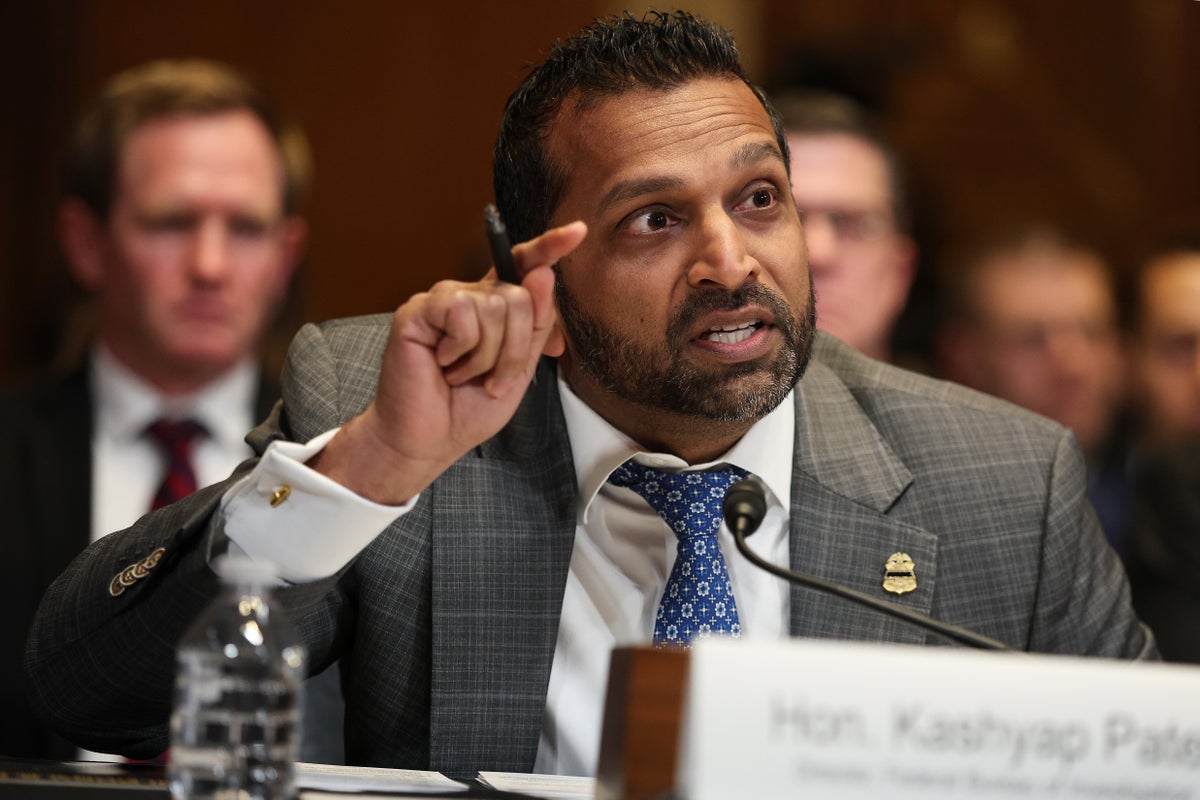
The spectacle in the Senate Hart Building wasn't just another partisan skirmish; it was a collision between the tradition of institutional vetting and a new era of political combat. When a senior Senator demanded that Kash Patel, the nominee for the Federal Bureau of Investigation, submit to a chemical test for problem drinking, the room didn't just go silent. It fractured. This wasn't a standard inquiry into policy or past performance. It was a calculated attempt to use personal vulnerability as a proxy for national security fitness.
The core of the conflict lies in a fundamental disagreement over what qualifies a person to lead the world's premier law enforcement agency. To his detractors, Patel is a wrecking ball aimed at the Deep State. To his supporters, he is the only person capable of cleaning out a corrupt hierarchy. But the hearing bypassed these ideological debates to focus on a more primal question: the temperament and reliability of the man himself. By bringing up allegations of alcohol use, the Committee signaled that the gloves are off, and the standard rules of political engagement have been discarded in favor of scorched-earth tactics.
Weaponizing the Personnel File
Traditional confirmation hearings usually follow a predictable rhythm. Senators ask about legal precedents, budgetary priorities, and jurisdictional boundaries. The nominee provides carefully rehearsed, non-committal answers. This script was burned the moment the focus shifted to Patel’s personal habits.
This isn't about health. It's about leverage. By demanding a medical or psychological intervention on the record, the opposition is attempting to create a "fitness for duty" standard that is historically applied to field agents, not political appointees. It’s a clever, if brutal, maneuver. If Patel refuses, he looks like he’s hiding something. If he agrees, he validates the Senate’s right to demand private medical data from any future nominee.
The reality of these high-stakes roles is that they are pressure cookers. Every person who has occupied the top floors of the J. Edgar Hoover Building has faced immense psychological strain. However, the public airing of these specific concerns suggests that the intelligence gathered by the Committee goes beyond mere rumors. Investigative journalists know that when a Senator swings this hard, they usually have a stack of depositions or whistleblower complaints sitting on their desk that haven't been made public yet.
The FBI Under the Microscope
The FBI is currently facing a crisis of identity. The rank-and-file agents are caught between a leadership that many perceive as increasingly politicized and a public that is losing faith in the agency’s impartiality. Patel’s nomination was designed to be a shock to the system.
When the discussion turns to "problem drinking," it’s often a code for "unpredictability." In the world of intelligence, unpredictability is a liability. The FBI operates on procedures, mandates, and a rigid chain of command. If the person at the top is seen as volatile—whether due to personal habits or political mission—the entire structure begins to wobble.
The Mechanics of Security Clearances
The irony of the hearing is that Patel already holds high-level clearances. To obtain these, an individual must undergo a Background Investigation (BI) that covers everything from foreign contacts to financial debt and, yes, substance use.
- SF-86 Disclosures: Every nominee fills out a massive document detailing their life history.
- Adjudicative Guidelines: There are 13 specific criteria used to determine if someone is a security risk. Alcohol consumption falls under "Guideline G."
- Mitigating Factors: The system allows for past mistakes if the individual has shown "rehabilitation" or if the incidents were isolated.
By challenging Patel on this front, the Senate is effectively saying they don't trust the executive branch’s own internal vetting process. They are asserting that the Senate’s "advice and consent" role includes a secondary, more invasive audit of the nominee’s psyche. This sets a precedent that will likely haunt both parties for decades.
The Strategy of Deflection
Patel’s response during the hearing was a masterclass in aggressive defense. He didn't just deny the allegations; he framed them as an attack on the millions of Americans who have supported the movement he represents. This is a common tactic in the modern political arena: turn a personal inquiry into a collective grievance.
The problem with this approach is that it leaves the underlying questions unanswered. In an agency that manages thousands of armed agents and sensitive domestic surveillance, "temperament" isn't a vague buzzword. It is a functional requirement. If a nominee cannot satisfy the Committee on their personal stability, the technicalities of their policy positions become irrelevant.
We are seeing a shift where the "background check" is no longer a private administrative hurdle but a public theatre of war. The goal isn't necessarily to find the truth, but to create enough "smoke" that the nominee’s authority is permanently charred before they even take the oath of office.
Intelligence Community vs Political Will
The friction between Patel and the permanent bureaucracy of the intelligence community (IC) is the real engine behind these hearings. Patel has spent years criticizing the IC, specifically targeting what he calls the "politicization" of the FISA courts and the Russia investigation.
The IC is an organism with its own immune system. When a foreign body—in this case, a nominee who has promised to fire large swaths of the leadership—is introduced, the system reacts. The "problem drinking" challenge can be viewed as an antibody response. It is the institution using its connections in the Senate to repel a perceived threat.
This creates a dangerous cycle. If the IC uses personal smears to block nominees they dislike, it confirms the nominee's argument that the IC is a rogue entity. If the nominee is actually unfit but is confirmed anyway out of political spite, the agency suffers. There are no winners in this scenario.
The Burden of Proof
In a court of law, the burden of proof lies with the accuser. In a Senate confirmation hearing, the burden is effectively on the nominee to prove their worthiness. Patel is finding that his past as a "disruptor" is a double-edged sword. The very traits that made him a favorite in the West Wing are being used to paint him as a risk factor in the halls of Congress.
The specific demand for a "test" is particularly aggressive because it implies that a nominee’s word is no longer sufficient. It suggests a level of distrust that hasn't been seen since the mid-20th century. If this becomes the new norm, we can expect future hearings to involve demands for polygraphs, bank records, and perhaps even DNA samples.
The Impact on Agency Morale
While the politicians trade barbs, the 35,000 employees of the FBI are watching their potential future boss be accused of being a functional alcoholic on national television. This has a devastating effect on morale. Law enforcement relies on a clear, respectable hierarchy. When the head of that hierarchy is treated like a defendant in a high-stakes trial, the credibility of every directive they eventually issue is undermined.
- Recruitment: Top-tier talent may avoid the agency if they see it as a political football.
- Retention: Experienced career officials often "retire early" rather than work under a controversial head.
- International Cooperation: Foreign intelligence agencies are hesitant to share data with an organization perceived to be in internal turmoil.
Beyond the Fiery Exchange
The media focused on the "fiery" nature of the hearing because conflict sells. But the real story is the erosion of the barrier between a person’s private struggles and their public service. If we decide that any hint of a personal issue is grounds for a public medical trial, we are narrowing the pool of potential leaders to only those who are perfect—or those who are best at hiding their flaws.
Neither of those options is healthy for a democracy. The focus should return to the specific actions Patel took while in the Department of Defense and the National Security Council. His record is long and documented. There is plenty of material there for a rigorous, professional debate without resorting to the tactics of a divorce court.
The Senate’s job is to determine if Kash Patel can lead the FBI without bias and within the bounds of the law. If they believe his personal habits prevent that, they should present the evidence clearly and vote accordingly. Turning the hearing into a medical interrogation is a sign that the process is no longer about finding the best leader, but about finding the most effective weapon.
The FBI cannot function as a partisan weapon, regardless of who is pulling the trigger. If the agency is to survive this era of hyper-polarization, the confirmation process must find a way back to substance over spectacle. As long as the hearings resemble a reality TV show, the institution itself will continue to lose the one thing it needs most: the trust of the people it is sworn to protect.
Stop looking at the shouting matches and start looking at the vacancies in the field offices. That is where the real damage is being done.