The Orion capsule bobbing in the Pacific Ocean off the coast of San Diego represents more than a successful recovery operation. It marks the first time in over half a century that human beings have returned from the vicinity of the Moon, surviving the violent reentry through Earth’s atmosphere at speeds exceeding 25,000 miles per hour. While the mission officially concludes with a textbook splashdown and the retrieval of the four-person crew by the USS John P. Murtha, the technical data gathered during this flight reveals a space program running at its absolute limit.
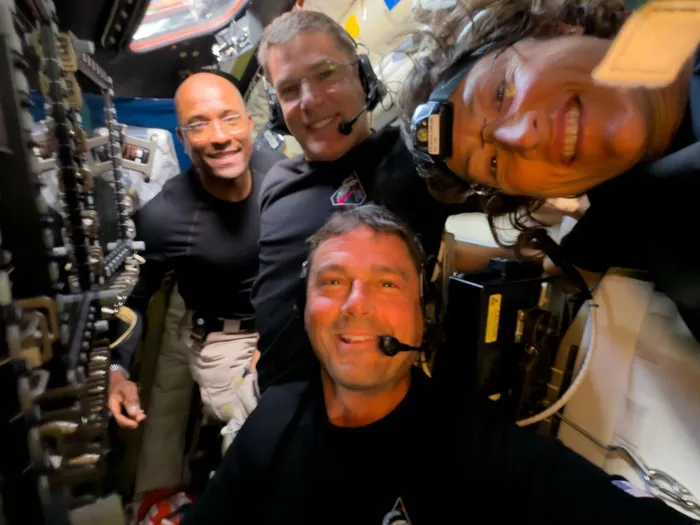
NASA’s Artemis II mission was never just a victory lap. It was a high-stakes stress test of the Space Launch System (SLS) and the Orion spacecraft, designed to prove that the architecture for a permanent lunar presence is viable. For the crew—Commander Reid Wiseman, Pilot Victor Glover, and Mission Specialists Christina Koch and Jeremy Hansen—the ten-day journey was an exercise in managing a craft that is significantly more complex, and in some ways more temperamental, than the Apollo command modules of the 1970s.
The Physics of Fire and Heat Shield Integrity
The most critical moment of the entire mission occurred minutes before the parachutes deployed. As Orion hit the atmosphere, the heat shield faced temperatures reaching 5,000 degrees Fahrenheit. This is the point where engineering theory meets the unforgiving reality of orbital mechanics.
During the uncrewed Artemis I flight, engineers observed unexpected "charring" and material loss on the heat shield that didn't align perfectly with their computer models. This phenomenon, known as ablation, is supposed to happen, but the specific way the Avcoat material wore away caused significant concern in the lead-up to this crewed flight. To the public, the splashdown looks like a finished task. To the engineers at Lockheed Martin and NASA, the state of that shield as it is hoisted onto the deck of a transport ship is the only metric that actually matters for the future of the program.
If the wear patterns on the Artemis II shield show the same irregularities as the previous test, the timeline for Artemis III—the actual moon landing—will likely face a multi-year delay. You cannot put humans on a lunar descent trajectory if you cannot guarantee the integrity of the bottom of the boat.
Life Support Under Pressure
Beyond the structural concerns, Artemis II served as the first real-world validation of the Environmental Control and Life Support System (ECLSS). In a low-Earth orbit environment like the International Space Station, a failure is an emergency, but one with a relatively quick exit strategy. On a lunar trajectory, you are days away from help.
The crew spent their ten days in a cabin roughly the size of a large SUV. During this time, the systems had to scrub carbon dioxide, regulate nitrogen and oxygen levels, and manage the moisture generated by four active human bodies. Early reports from mission control suggest that the nitrogen swing beds—the components responsible for removing $CO_{2}$—performed within expected parameters, but the "human factor" of living in such cramped quarters for over a week introduced logistical hurdles that the industry is still trying to solve.
Waste management remains the unglamorous Achilles' heel of deep-space travel. Unlike the Shuttle or the ISS, Orion’s systems must be lightweight and redundant. Every ounce of water recycled is an ounce of weight saved for fuel. The data from Artemis II will dictate whether the current life support hardware can actually sustain a crew for the longer durations required for a lunar orbit stay or a journey to a future Gateway station.
The SLS Budgetary Black Hole
While the technical achievement is undeniable, the investigative reality of the Artemis program is its staggering cost. Each SLS launch carries a price tag estimated between $2 billion and $4 billion. This is a fiscal reality that the commercial space sector, led by SpaceX and Blue Origin, is watching with predatory interest.
The SLS is a "expendable" rocket. Every time it flies, hundreds of millions of dollars in hardware is dropped into the ocean or burned up in the atmosphere. In contrast, the private sector is moving toward full reusability. The tension here is palpable. NASA is currently tethered to a legacy supply chain that spans all 50 states, making the program as much a political jobs initiative as a scientific endeavor.
Comparison of Launch Architectures
| System | Reusability | Estimated Cost per Launch | Primary Goal |
|---|---|---|---|
| NASA SLS | Zero | $2.2B - $4.1B | Heavy Lift / Lunar Core |
| SpaceX Starship | Full (Targeted) | $100M - $250M | Multi-planetary / Payload |
| Blue Origin New Glenn | Partial | Unknown | Commercial / Lunar Cargo |
The success of Artemis II provides NASA with the political capital it needs to secure further funding, but it also highlights the inefficiency of the current model. We are seeing a 20th-century procurement strategy trying to compete in a 21st-century technological environment.
The Hidden Risks of the Van Allen Belts
One of the most dangerous phases of the Artemis II mission was the transit through the Van Allen radiation belts. Because the mission utilized a high Earth orbit before committing to the lunar flyby, the crew was exposed to higher levels of ionizing radiation than any humans since 1972.
NASA equipped the capsule with various sensors and the crew with wearable radiation monitors to map the dose-rate during these passes. The industry knows how to shield electronics, but shielding biological tissue without adding tons of lead or water-weight is an ongoing struggle. The biological data harvested from Wiseman, Glover, Koch, and Hansen over the next six months will be the most comprehensive study ever conducted on the effects of deep-space radiation on the human body. This isn't just about the Moon; it is the foundational research required for any eventual mission to Mars.
San Diego as the New Frontier
The choice of San Diego as the recovery hub is a logistical necessity. The calm waters of the Pacific and the proximity to Naval Base San Diego allow for a controlled environment to offload the crew and begin the immediate "cold soak" analysis of the capsule.
As the recovery divers secured the flotation collars and the winch lines pulled the Orion into the well deck of the USS John P. Murtha, the atmosphere was one of relief, but also of intense scrutiny. The recovery team had to contend with the "toxic propellant" risk—ensuring that no residual hydrazine or nitrogen tetroxide from the spacecraft’s thrusters endangered the sailors or the returning astronauts. This process is a choreographed dance that takes hours, reminding us that the mission isn't over until the hatch is opened in a controlled hangar.
The Geopolitical Clock is Ticking
We cannot ignore the shadow of the Chinese Lunar Exploration Program (CLEP). While Artemis II was looping around the Moon, satellite imagery and intelligence reports indicate that China is accelerating its own heavy-lift rocket development. The "space race" is no longer a romantic notion of the Cold War; it is a race for the lunar South Pole and the volatile ice trapped in its permanently shadowed craters.
Water is the oil of the solar system. If you can harvest lunar ice, you can create oxygen for breathing and hydrogen for rocket fuel. This makes the Moon a refueling station for the rest of the solar system. Artemis II proved that the U.S. and its partners—including Canada, whose astronaut Jeremy Hansen was on board—can still reach out and touch the Moon. But reaching it and staying there are two different problems.
The successful splashdown of Artemis II ends the "testing" phase of the modern era. We now move into the implementation phase, where failure is no longer an option and the margins for error disappear. The capsule is back, the crew is safe, and the data is being crunched. But the window of American dominance in cislunar space is closing faster than the SLS can be built.
The next step is the assembly of the Gateway and the landing of the first woman and next man on the lunar surface. To get there, NASA must move past the celebration of splashdowns and address the looming mechanical and fiscal realities that Artemis II has laid bare. Use the momentum of this recovery to fix the heat shield flaws and streamline the supply chain, or prepare to watch another nation's flag rise over the lunar regolith.