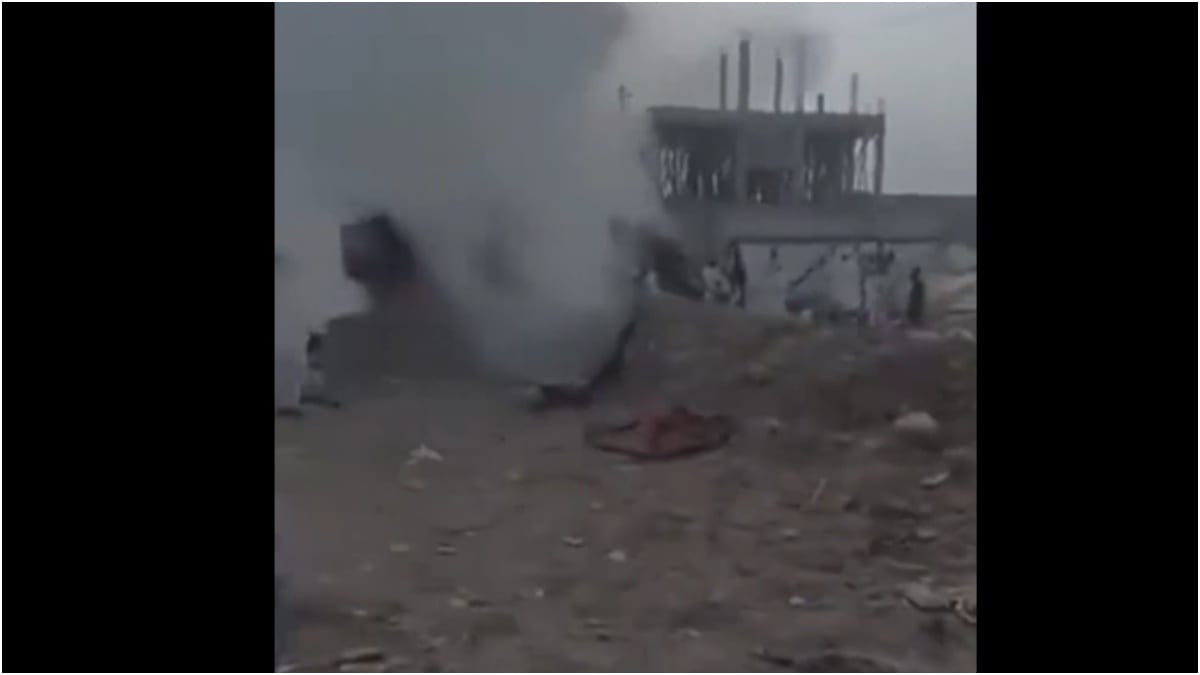
When a vehicle-borne improvised explosive device detonates against a roadside security checkpoint in northwestern Pakistan, the initial wire service report reduces human lives to a cold arithmetic of tragedy. Eleven dead. Thirty wounded. Another statistic logged in the restive expanse of Khyber Pakhtunkhwa. But behind the immediate flash of destruction lies a deeper, systemic failure of counterterrorism architecture that repetitive flash news updates fail to capture. Static defense mechanisms in Pakistan are collapsing under the weight of adaptive militant tactics, leaving frontline personnel exposed to relentless, asymmetrical attrition.
For decades, the standard response from Islamabad to rising insurgencies has been the militarization of roads through a dense network of checkpoints. Concrete blocks, sandbags, and armed guards transform rural highways into chokepoints intended to deter infiltration. Yet, military analysts who have spent careers tracking South Asian security dynamics recognize these structures for what they have increasingly become: stationary targets. A vehicle packed with explosives needs only a moment of distraction, a compromised surveillance angle, or sheer speed to breach a barrier that relies entirely on visual deterrence.
The Anatomy of a Static Defense Failure
The strategic reliance on static checkpoints stems from a legacy counter-insurgency doctrine that prioritizes territorial control over fluid mobility. In theory, checkpoints restrict the movement of unauthorized weapons and high-value targets. In practice, they serve as stationary bullseyes. When an attacker can survey a checkpoint for days, mapping shift changes, guard rotations, and blind spots, the element of surprise shifts entirely to the assailant.
Consider the operational reality of these posts. Many are situated on narrow highways or rural junctions where traffic must slow down to navigate chicane barriers. This bottlenecking, designed to force compliance, inadvertently creates clusters of civilian vehicles and personnel. When a suicide bomber drives a sedan packed with ammonium nitrate and fertilizer into this cluster, the resulting blast radius ensures maximum casualties. The physical architecture of the checkpoint itself—often consisting of temporary concrete jersey barriers and poorly reinforced guard shacks—magnifies the destruction rather than absorbing it.
Furthermore, these fixed positions isolate security personnel from immediate reinforcements. Located miles away from major garrison hubs, a remote checkpoint under assault relies on rapid response teams that must navigate mined roads, ambushes, or delayed communication channels. Insurgents exploit this geographic isolation, executing rapid vehicle-borne strikes and retreating into mountainous terrain before aerial surveillance or quick reaction forces can be deployed.
The Evolving Tactics of Asymmetrical Warfare
The mechanics of these attacks reveal a chilling tactical evolution by groups like the Tehrik-e-Taliban Pakistan and various regional offshoots. Modern insurgents no longer attempt complex, sustained ground assaults against heavily fortified military bases when an explosives-laden vehicle can inflict maximum psychological trauma with minimal exposure.
Insurgent bomb-making cells have achieved remarkable standardization. Improvised explosive devices are no longer crude, unreliable contraptions cobbled together in remote caves. They are engineered with military-grade detonators, shaped charges designed to punch through armored plating, and secondary incendiary compounds that guarantee catastrophic fires. By targeting checkpoints during shift changes or peak civilian traffic hours, attackers compound the carnage, ensuring that local populations bear the brunt of the devastation alongside police and paramilitary forces.
The integration of suicide pilots adds a fanaticism that conventional physical barriers cannot deter. When an attacker is fully committed to detonating a vehicle upon contact, secondary defenses such as warning shots or warning signs become obsolete. Militant leadership identifies vulnerable youths, radicalizes them within secretive cells, and equips them with vehicles purchased or stolen specifically for the operation, transforming ordinary commercial transport into weapons of mass disruption.
Intelligence Gaps and Interagency Friction
Understanding why these checkpoints remain chronically vulnerable requires examining the structural strain placed on local law enforcement. Police officers manning these frontier outposts are often underequipped, poorly paid, and deployed in regions where local sympathies are deeply fractured. Intelligence sharing between federal agencies and provincial police remains fragmented, creating critical blind spots.
When a warning about a stolen vehicle or a suspected suicide bomber filters down through the chain of command, it frequently arrives hours after the vehicle has already cleared multiple administrative boundaries. The bureaucratic lag between intelligence acquisition and tactical dissemination is lethal. Field commanders report receiving vague alerts about generalized threats without actionable specifics regarding vehicle makes, license plates, or intended targets. Without real-time communication networks and digital surveillance integration, constables on the ground are left flying blind against highly organized tactical cells.
Civilian intelligence agencies and military intelligence directorates often operate in organizational silos, sharing critical threat assessments only after a catastrophe has occurred. This interagency friction prevents the creation of a unified threat picture, leaving local police forces to bear the operational burden of interdiction without the analytical support necessary to anticipate sophisticated vehicle-borne attacks.
The Economic and Fiscal Drain on the State
The financial and operational toll on the state is staggering. Pakistan's economy, already reeling from inflation, structural debt crises, and governance deficits, absorbs a punishing fiscal cost every time security posture must be elevated across entire provinces. Resources diverted toward constant counter-insurgency operations drain budgets that should be allocated toward healthcare, education, and infrastructure development in neglected districts.
It is a war of attrition where the state expends vast sums to maintain defensive postures, while insurgent networks operate on minimal capital to sustain intermittent, high-impact disruptions. Road closures, trade delays, and commercial stagnation resulting from heightened checkpoint security create a cascading economic penalty for local businesses. The cost of securing a highway often exceeds the economic value of the commerce moving along it, creating a perverse incentive structure where insecurity chokes off development.
Small-scale traders, agricultural transport operators, and daily commuters suffer exponential financial losses due to extended travel times and arbitrary checkpoint delays. Over time, this economic strangulation breeds deep resentment toward state authorities, whom local populations view as incapable of providing security yet adept at imposing administrative hurdles.
The Frontline Reality for Security Personnel
Step inside the daily routine of an ordinary constable stationed at a remote rural barrier in the Dera Ismail Khan district, and the human cost of systemic institutional neglect becomes glaringly apparent. Standing exposed in the humid heat or freezing mountain air, tasked with intercepting high-threat vehicles with little more than a bolt-action rifle and a hand-operated metal detector, the absurdity of the defensive design is absolute.
Expecting low-tier police officers to successfully halt a high-velocity, suicide-driven vehicle bomb without advanced anti-ram barriers, remote-controlled drop gates, or real-time biometric screening tools is an exercise in institutional abandonment. These men are not frontline soldiers trained for mechanized urban warfare; they are local constables caught in the crosshairs of an ideological conflict they lack the institutional backing to suppress. When a checkpoint is hit, it is invariably these low-ranking officers and nearby civilians who absorb the shockwaves, while higher command echelons issue predictable statements of condemnation from secure cantonments miles away.
Morale within provincial police forces has plummeted to historic lows. Constables frequently voice frustration over inadequate protective gear, lack of hazard allowances, and the absence of armored vehicles capable of withstanding explosive blasts. When the state treats its front line as expendable cannon fodder, recruitment suffers, corruption at checkpoints increases as officers seek bribes for survival, and overall institutional efficacy disintegrates.
Geopolitical Fault Lines and Cross-Border Safe Havens
The geography of the conflict further complicates defense. Khyber Pakhtunkhwa shares a porous, mountainous border with Afghanistan, a terrain that has historically defied absolute state control. Despite repeated diplomatic rows and demands from Islamabad for Kabul to curb militant sanctuaries across the border, cross-border infiltration routes remain active.
Operatives train in secluded valleys, construct standardized explosive devices, and dispatch young recruits on suicide missions with chilling efficiency. The ideological indoctrination driving these individuals taps into deep-seated grievances, local governance vacuums, and persistent anti-state sentiments that military force alone cannot eradicate. Diplomatic friction between Islamabad and Kabul creates a geopolitical vacuum where militant groups can exploit sovereign boundaries to evade pursuit, making localized tactical defense at a roadside checkpoint an inherently reactive and flawed strategy.
When cross-border sanctuaries remain intact, tactical victories against individual bomb cells amount to little more than trimming weeds while the roots remain nourished underground. Islamabad's strategic calculus faces a dead end: military action inside neighboring territory risks wider regional conflict, while passive containment guarantees endless domestic carnage.
Propaganda and Psychological Operations
Militant propaganda networks have also shifted. Attacks are no longer just tactical operations; they are media events designed for digital amplification. Within hours of a checkpoint explosion, video clips and official claims of responsibility circulate through encrypted messaging applications, aiming to demoralize state security apparatuses and project an image of unstoppable momentum.
This psychological warfare targets the confidence of the average citizen who relies on these highways for commerce and daily survival. When a routine commute turns into a war zone, the social contract between the state and its peripheral populations frays further. Insurgents understand that the explosive blast at the checkpoint is only half the weapon; the secondary shockwave rippling through digital media channels and public consciousness is where the true strategic victory is claimed.
State counter-propaganda efforts, by contrast, remain sluggish, bureaucratic, and largely ineffective at countering the slick, decentralized media output of insurgent factions. By failing to control the narrative or offer transparent accountability after security failures, the state cedes psychological dominance to forces actively seeking its destabilization.
The Strategic Blind Spots of State Counterterrorism
Efforts by security forces to adapt have largely manifested as reactionary tightening of security protocols. Curfews are imposed, electronic surveillance is sporadically upgraded, and concrete barriers are pushed further out from administrative buildings. However, these measures frequently exacerbate civilian hardship without closing security gaps.
When investigative scrutiny moves past the initial casualty counts and the routine official condemnations, a bleak picture emerges. The security strategy relies on hardening static points that can easily be bypassed, outflanked, or blasted apart by an enemy whose mobility and tactical flexibility outmatch conventional state doctrines. Until authorities fundamentally overhaul their approach—shifting away from reactive checkpoint fortification toward intelligence-led preemption, community policing, and genuine regional counter-radicalization—the cycle of violence will continue unabated on these blood-soaked highways.