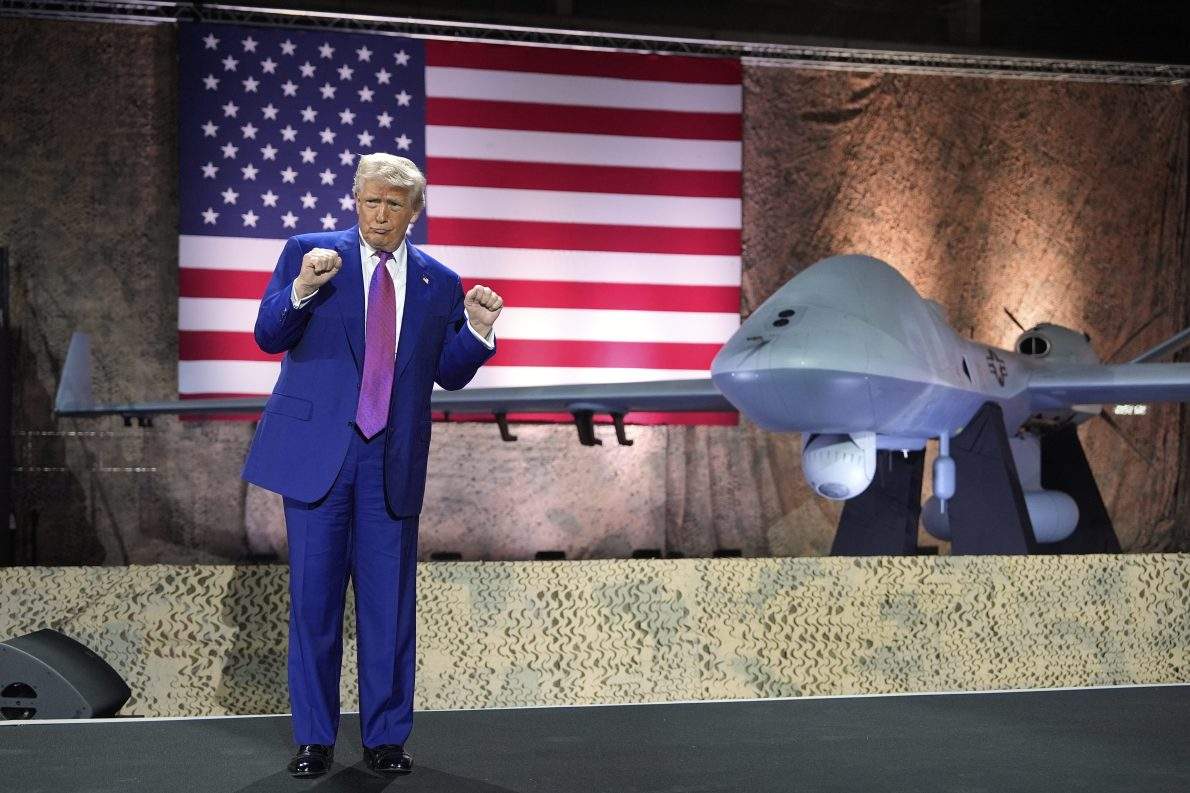
President Donald Trump has signed a proclamation imposing up to a 100% tariff on foreign unmanned aircraft systems (UAS) and critical components, directly targeting a market heavily dominated by China while extending tiered duties ranging from 10% to 15% onto key U.S. allies including the European Union, Japan, South Korea, and the United Kingdom. Driven by a Section 232 investigation led by Commerce Secretary Howard Lutnick, the White House strategy aims to dismantle structural dependencies in the aerial robotics supply chain. However, this heavy-handed trade intervention risks punishing allied hardware developers who maintain critical commercial infrastructure across North America.
The Section 232 Calculus and Industrial Vulnerability
Washington's policy shifts are rarely born in a vacuum. For years, the commercial drone sector operated under an invisible vulnerability: extreme reliance on foreign production lines, particularly Chinese manufacturing giants that captured more than two-thirds of the global market share.
When the Department of Commerce reviewed the data, the conclusion was stark. The United States cannot maintain long-term economic security when its critical infrastructure, agricultural monitoring, law enforcement surveillance, and search-and-rescue teams rely entirely on imported airframes and thermal-imaging payloads.
The proclamation establishes a tiered penalty structure. Heavy commercial platforms exceeding 25 kilograms, or systems equipped with specialized thermal imaging and dedicated docking stations, face an immediate 100% ad valorem tariff within 21 days. Smaller drones face a 25% penalty delayed by a 180-day grace period.
Yet, the collateral damage extends far beyond adversary states. Allies who supply precision components find themselves caught in the crossfire.
Catching Friendly Fire in a Trade War
Traditional trade policies typically attempt to isolate adversaries while protecting friendly exporters. This new directive diverges sharply from that precedent.
Drones and components originating from the European Union, Japan, South Korea, Switzerland, and Taiwan face a capped 15% tariff rate. British imports face a 10% levy. While these rates are significantly lighter than the punitive 100% walls erected against high-risk imports, they still impose severe cost pressures on allied manufacturers trying to access North American markets.
The Allied Dilemma
- South Korea and Japan: Advanced electronics producers face compressed profit margins just as they attempt to integrate their supply chains deeper with Western defense networks.
- European Union: Specialized industrial drone creators must now absorb an additional 15% cost overhead, blunting their competitive edge against emerging domestic alternatives.
- United Kingdom: A 10% floor still creates friction for specialized aerospace startups working jointly on cross-border defense and logistics projects.
For an allied manufacturer producing high-end inspection drones in Seoul or Munich, an extra 15% tax is not an abstract political talking point. It represents an immediate threat to project bids, municipal contracts, and regional scaling plans.
The Domestic Manufacturing Illusion
Protectionist measures assume that penalizing imports will automatically stimulate local manufacturing lines. Reality is rarely that cooperative. Building a modern unmanned aerial ecosystem requires more than legislative declarations or import penalties. It requires rare-earth material access, specialized semiconductor fabrication, and an expansive workforce trained in aerospace engineering and software security.
Domestic U.S. drone startups have long complained about a lack of component maturity within domestic borders. If a firm in Ohio wants to build a commercial inspection drone, they often need microchips from Taiwan, lithium batteries from Asian supply chains, and specialized optical lenses from European providers. Taxing those inputs at the border does not instantly create local factories capable of producing equivalent alternatives overnight. Instead, it temporarily spikes equipment costs for domestic end-users, from local fire departments to commercial real estate developers.
The Commerce Department's inclusion of an onshoring program authorization offers a theoretical pathway forward, allowing companies to seek exemptions or support by making new domestic investments. But capital expenditure projects take years to mature. Construction, environmental permitting, and workforce training move at a glacial pace compared to executive signatures and tariff effective dates.
Navigating the Staggered Timeline
The White House structured the rollout with deliberate implementation lags. The 100% tariff hits in 21 days, forcing a sudden rush among logistics coordinators to clear sensitive inventory. Meanwhile, the 25% duty on smaller categories and general components receives a 180-day runway.
This window triggers predictable commercial behaviors. Importers rush to pull forward shipments, warehousing as much foreign hardware as possible before the doors shut. Freight forwarders experience localized volume surges. Procurement officers scramble to lock down multi-year supply contracts under legacy pricing structures.
At the same time, foreign ministries in allied capitals are quietly reviewing their options. Trade diplomacy rarely stops when a proclamation drops; it simply shifts to backroom negotiations where carve-outs, compliance verifications, and technology-sharing agreements are bartered behind closed doors.
The American sky is undergoing a forced, expensive architectural redesign. Whether domestic assembly lines can scale fast enough to fill the void before commercial operations absorb permanent damage remains the defining, unanswered question of this industrial pivot.