The kitchen is always colder when the radiator stays off.
Arthur knows this better than most. At seventy-eight, his daily routine is a masterclass in quiet subtraction. He turns the heat down another notch. He wears two sweaters indoors. He calculates the cost of boiling the kettle against the price of his next loaf of bread. It is not a dramatic existence. It is simply small, constrained, and relentlessly monitored by a ledger in his head that never balances.
When politicians debate numbers in wood-paneled rooms miles away, they talk about fiscal responsibility, economic headwinds, and mathematical formulas. They talk about the triple lock. To them, it is a policy instrument—a lever to be pulled, adjusted, or defended in the name of generational fairness. To Arthur, it is the invisible boundary between eating fresh vegetables and buying tinned soup.
Recently, that boundary has begun to shake.
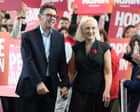
Within the ranks of the Liberal Democrats, a quiet rebellion has started to form. Backbench MPs, watching the economic pressures mount and listening to constituents who sound very much like Arthur, have broken rank. They are openly challenging their own leadership—specifically Ed Davey—over the party's official stance on the pension triple lock. It is a fracture that exposes a deeper, more uncomfortable truth about how modern political parties try to balance the books on the backs of the aging population.
The triple lock was never meant to be controversial. Introduced as a guarantee that state pensions would rise by inflation, average wage growth, or 2.5 percent—whichever was highest—it was designed to protect retirees from sliding into poverty. For years, it stood as a rare bipartisan sacred cow. Governments came and went, deficits ballooned and shrank, but the lock remained.
Until the math stopped working the way economists expected.
Post-pandemic inflation spikes and volatile wage rebounds created bizarre statistical anomalies. Suddenly, upholding the literal wording of the formula meant triggering massive, unexpected payouts that treasury officials panicked over. Politicians began to squirm. They whispered about sustainability. They floated ideas of reform, suspension, or outright replacement.
And that is where the ideological fault line cracks open.
Ed Davey and the party leadership have walked a careful, measured line. In the high-stakes game of national budgeting, caution is the default setting. Leaders look at macro data. They worry about bond markets, intergenerational equity, and the sheer velocity of public spending. From their vantage point, defending an inflexible formula in a shifting economic storm feels reckless.
But backbench MPs see something different when they walk down their local high streets. They see Arthur. They see constituents choosing between heating and eating. They argue that breaking a foundational promise to pensioners—regardless of the economic rationale—shatters the fragile trust between the state and its citizens.
Trust is a curious commodity. It takes decades to accumulate and minutes to spend.
Consider what happens when a government signals that a pension guarantee is negotiable. For a working professional fifty years away from retirement, the news is a distant abstraction. For someone living on the edge right now, it is an immediate tremor in the floorboards. It introduces a toxic element into daily life: dread.
The Liberal Democrat MPs pushing back against their leadership understand this visceral reality. Their dissent is not merely an internal party squabble or a tactical maneuver to capture headlines. It is a fundamental disagreement over what kind of society we are building. Is a safety net truly a safety net if it retracts the moment the weather turns bad?
The debate over the triple lock is often framed as a simple math problem. Economists draw graphs with intersecting lines. Pundits argue about tax burdens and GDP percentages. But numbers do not bleed. Numbers do not wear two sweaters in November.
When policy debates become purely technocratic, we risk forgetting the human payload of governance. Every percentage point shift in a pension formula translates directly into plates of food, medical visits, and the quiet dignity of independence for millions of older adults.
Arthur does not know what a fiscal headroom deficit is. He does not read the parliamentary sketches or follow the internal machinations of political parties. He only knows that last winter was harder than the one before it, and that the news on the radio keeps talking about whether older people are taking more than their fair share.
That narrative—the idea of generations in competition—is perhaps the most corrosive byproduct of the entire debate. It pits the young, struggling to pay skyrocketing rents and secure stable employment, against the old, clutching at a state pension that barely keeps pace with reality. It is a false dichotomy designed to distract from structural failures elsewhere in the economy.
The dissenting Lib Dem MPs are attempting, in their own imperfect political way, to reject that framing. They are insisting that a civilized society is judged by how it treats its most vulnerable, and that breaking faith with pensioners sets a dangerous precedent for every other social contract we rely upon.
The tea kettle whistles in Arthur's kitchen. He pours the hot water into a chipped mug, careful not to spill a drop. Every resource must be accounted for. Outside, the afternoon light fades early, pulling long, grey shadows across the pavement. The politicians in the capital will keep arguing. The memos will circulate. The press releases will be drafted and revised.
But back here, in the quiet spaces where policy meets flesh and bone, the stakes remain absolute. The numbers on the page are just ink until they touch a human life. And right now, the ink is running thin.