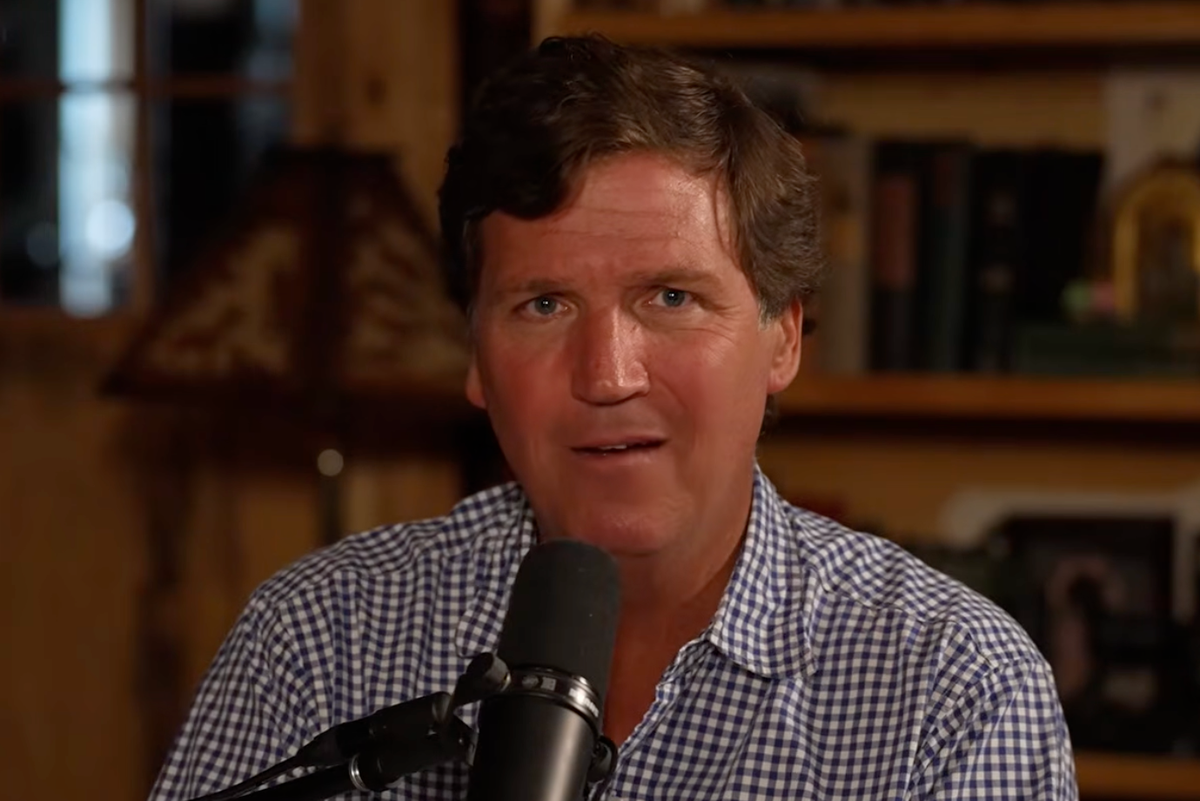
The air in a television studio is thin, recycled, and perpetually cold. Under the glare of the LEDs, the world outside feels like a distant rumor, a place viewed through the distorted lens of polling data and digital vitriol. But for a moment, the high-gloss veneer of political alliance cracked. It wasn’t a policy white paper or a legislative briefing that did it. It was the sound of a man who realized the person he staked his reputation on might have been looking past him the entire time.
Tucker Carlson sat in that artificial chill and voiced what many had whispered in private: the movement wasn't failing because of its enemies. It was failing because its leader had found a bigger mirror.
The tension between Carlson and Donald Trump isn't just a spat between two titans of the right. It is a fundamental autopsy of what happens when a nationalist movement loses its zip code. Carlson’s accusation—that Trump would "rather run the world" than fix the country—hits at the exact nerve ending where the American working class feels the most pain. It’s the feeling of being a second priority in your own home.
The Mirror and the Map
When Trump first descended that golden escalator, the pitch was intensely local. It was about the factory down the street, the border ten miles away, and the town square that had seen better days. It was a promise of a "closed system" where the American citizen was the only customer who mattered.
But power has a way of expanding the horizon until the immediate ground becomes a blur. Carlson’s critique centers on this drift. He paints a picture of a man who became more enamored with the global chessboard—the summits, the grand posturing with dictators, the thrill of being a protagonist in the history books—than with the grueling, unglamorous work of domestic repair.
Think of a father who spends every night at the community center fixing the neighborhood’s problems while his own roof is leaking. He gets the applause of the crowd. He feels like a hero. But when he comes home, his family is still cold, and the water is still dripping into the bucket.
The "world" is an intoxicating stage. It offers a scale of drama that a zoning dispute in Ohio or a fentanyl crisis in a New Hampshire suburb simply cannot match. For Carlson, Trump chose the stage over the household. He chose the "world" because the world is where the ego finds its greatest reflection.
The Invisible Stakes of Abandonment
To understand why this betrayal feels so visceral, you have to look at the people who didn't go to the rallies but felt the shift in their bones.
Consider a hypothetical mechanic in a town like Erie, Pennsylvania. Let's call him Jim. Jim doesn't care about NATO's spending targets. He doesn't care about the diplomatic nuances of the Abraham Accords. Jim voted for a promise that the weight of the federal government would be used as a shield for his specific way of life.
When the rhetoric shifts from "I am your voice" to "I am the leader of a global movement," Jim loses his shield.
Carlson’s rhetoric suggests that Trump’s failure wasn't a lack of effort, but a lack of focus. It is the tragedy of the populist who becomes a celebrity. The celebrity needs the global spotlight to stay bright; the populist needs to stay in the mud. By accusing Trump of wanting to "run the world," Carlson is effectively saying that Trump has joined the very "Globalist" class he once promised to dismantle. He has traded his work boots for a tuxedo, even if he’s still wearing the red hat.
The Architecture of a Falling Out
The relationship between a media kingmaker and a political titan is always a dance of mutual exploitation. For years, Carlson provided the intellectual scaffolding for Trump’s gut instincts. He turned "Build the Wall" into a sophisticated argument about national sovereignty and cultural cohesion. He was the translator for the MAGA movement, taking the chaotic energy of a Trump rally and refining it into a nightly sermon for millions.
But a translator eventually gets tired of repeating words they no longer believe are true.
The fracture didn't happen overnight. It was built on a series of missed opportunities. Carlson pointed to the lack of progress on infrastructure—the literal bones of the country. He pointed to the continuation of foreign entanglements that Trump had promised to end. Each time a missile was fired or a new trade deal was delayed, the gap between the promise and the reality widened.
The "human element" here is the specific type of heartbreak that comes from misplaced trust. It’s not the anger you feel toward an enemy. It’s the hollowed-out disappointment you feel toward a friend who promised to show up for your move and then texted you from a party across town.
Why the World is a Trap
Running the world is an elite hobby. It requires a language of abstraction. It deals in billions of dollars and millions of lives, numbers so large they cease to mean anything at the kitchen table.
Carlson’s indictment is that Trump fell for the trap of the "Great Man" theory. He started to believe that his personal relationships with world leaders were the primary engine of history. This is the ultimate seduction of the presidency. You enter the Oval Office wanting to fix the local post office, and you leave wondering how you’ll be remembered by the historians in London and Beijing.
The shift is subtle but deadly. It moves the focus from "What can I do for the person in the third row?" to "How do I look on the international stage?"
When Carlson says Trump failed the country, he isn't talking about GDP or stock market ticks. He is talking about a spiritual failure. The failure to stay grounded in the dirt of the American experience. He is accusing Trump of becoming a tourist in the lives of his own voters.
The Weight of the Aftermath
We are living in the debris of that realization. The populist movement is currently a ship without a compass, caught between a leader who is looking at the horizon and a base that is looking at the hole in the hull.
The stakes aren't just about the next election. They are about the viability of the idea that the "forgotten man" can ever truly be remembered once the person they elected enters the room where the cameras are always rolling.
Carlson’s words serve as a warning to any future movement. If you build a platform on the grievances of the local, you cannot sustain it with the rewards of the global. You cannot claim to represent the heartland while your eyes are fixed on the world’s capitals.
The silence that follows such a public break is deafening. It’s the sound of a million people wondering if they were just the background characters in someone else’s quest for a legacy.
Trump’s desire to "run the world" is the ultimate irony. In trying to be the man who could do everything, everywhere, he became the man who, in the eyes of his most influential advocate, did nothing where it mattered most. The country didn't need a world leader. It needed a caretaker. It needed someone to stay in the room when the lights went down and the cameras stopped clicking.
Instead, they got a man who looked at the map of the globe and forgot the names of the streets that led him to the map in the first place.



