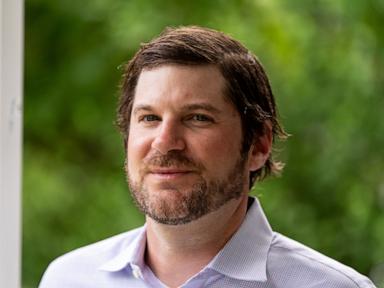
Brad Singleton spent thirty-two years of his life believing in a specific version of the American dream, one firmly rooted in the Republican platform. He is fifty years old, a personal trainer from Walford, Iowa, a man who understands the hard mechanics of effort and reward. When he looked at his country a few years back, he wanted what millions of his neighbors wanted: lower costs, steady ground, and a sense that someone at the top actually cared about the grocery bill.
He had his doubts. The chaos of the Capitol riot in early 2021 had shaken him. He remembers thinking the president at the time acted like a toddler throwing a fit over lost ground. Yet, by 2024, the pull of familiar promises and a desire for structural change led him to vote for Donald Trump a second time.
Regret did not take months to set in. It arrived almost immediately.
For Singleton, the turning point was not a single speech or a grand legislative debate. It was the crushing weight of a daily reality that felt entirely decoupled from the promises made on the campaign trail. The economy continued to pinch working-class families. A brewing conflict with Iran added a layer of global anxiety to an already volatile domestic existence. To Singleton, the grand populist covenant felt thoroughly broken. He realized he was looking at a government that seemed to serve millionaires while leaving the rest of the country to figure it out alone. So, he did something he had never done in his adult life: he changed his voter registration to Democratic.
Stories like Singleton’s are exactly why a massive, high-stakes political experiment is launching across the United States.
On a quiet Tuesday morning, American Bridge 21st Century, an organization traditionally known for its deep-dive opposition research during presidential cycles, decided to throw fifty million dollars into the midterm election ring. This is not just a standard media buy. It is a targeted, aggressive campaign designed to do something incredibly difficult: flip control of a heavily fortified Congress by wading directly into deeply conservative territory.
The money will flood more than a dozen critical House and Senate matchups. We are talking about places where the soil runs redder, where the political margins are razor-thin, and where Democrats have historically struggled to maintain a foothold. The strategy bypasses states like Maine or North Carolina for its Senate push, under the assumption that those battlegrounds will naturally attract plenty of cash. Instead, the group is pouring resources into unexpected Senate battlegrounds like Alaska, Iowa, Michigan, and Mississippi, while hunting for House seats across Colorado, Michigan, Ohio, Pennsylvania, and Texas.
But you cannot win those places with spreadsheets and national party platitudes. You win them by listening to people who feel politically homeless.
Consider Jill Kordick, a sixty-four-year-old retired health care administrator living in Norwalk, Iowa. She identifies as a moderate independent, the kind of voter who occupies the quiet, complicated center of American politics. For Kordick, the reality of a second Trump term was not a cue to tune out; it was an alarm bell. She started showing up. She began attending local political rallies and confronting lawmakers directly.
Yet, Kordick is realistic about the steep hill ahead. She knows how dug-in these districts are. The challenge, as she sees it, is not merely about changing minds through aggressive arguments. It is about creating a psychological off-ramp for people who feel deeply disillusioned but are terrified of admitting they made a mistake.
People need an invitation to the table. They need a way to vote differently without feeling humiliated by their past choices.
That insight is the driving force behind the new wave of political advertising hitting televisions, streaming networks, social media feeds, and radio stations. The group's leadership realized that traditional political messaging often misses the mark because it treats voters like algorithms rather than human beings. Last year, during an inauguration rally, Bradley Beychok, the co-founder of American Bridge, kept seeing a singular phrase plastered across signs and shirts: "Trump will fix it."
It was a profound promise made to working-class people. But when the reality of governance failed to match the slogan, a massive emotional vacuum opened.
The new fifty-million-dollar campaign aims to fill that vacuum, not with slick politicians, but with the raw, unvarnished testimony of people like Singleton and Kordick. The goal is to speak at a visceral level, focusing entirely on the lived economic experience of everyday people.
The financial steepness of this climb cannot be overstated. Democrats have found themselves lagging behind a massive Republican fundraising apparatus, further complicated by a grueling nationwide redistricting process that altered the electoral map over the past year. In a political system where geographic lines are drawn to protect incumbents, winning back the House and Senate requires an almost flawless execution of strategy.
The math of power in Washington is uncompromisingly tight, yet the emotional friction on the ground is where the real battle takes place. It is happening in local diners, on gym floors, and at kitchen tables where people are quietly recalculating their loyalties. The true test of this massive media gamble will not be measured in the sheer volume of advertisements broadcast into the heartland, but in whether those ads can successfully assure voters that it is entirely acceptable to change their minds.