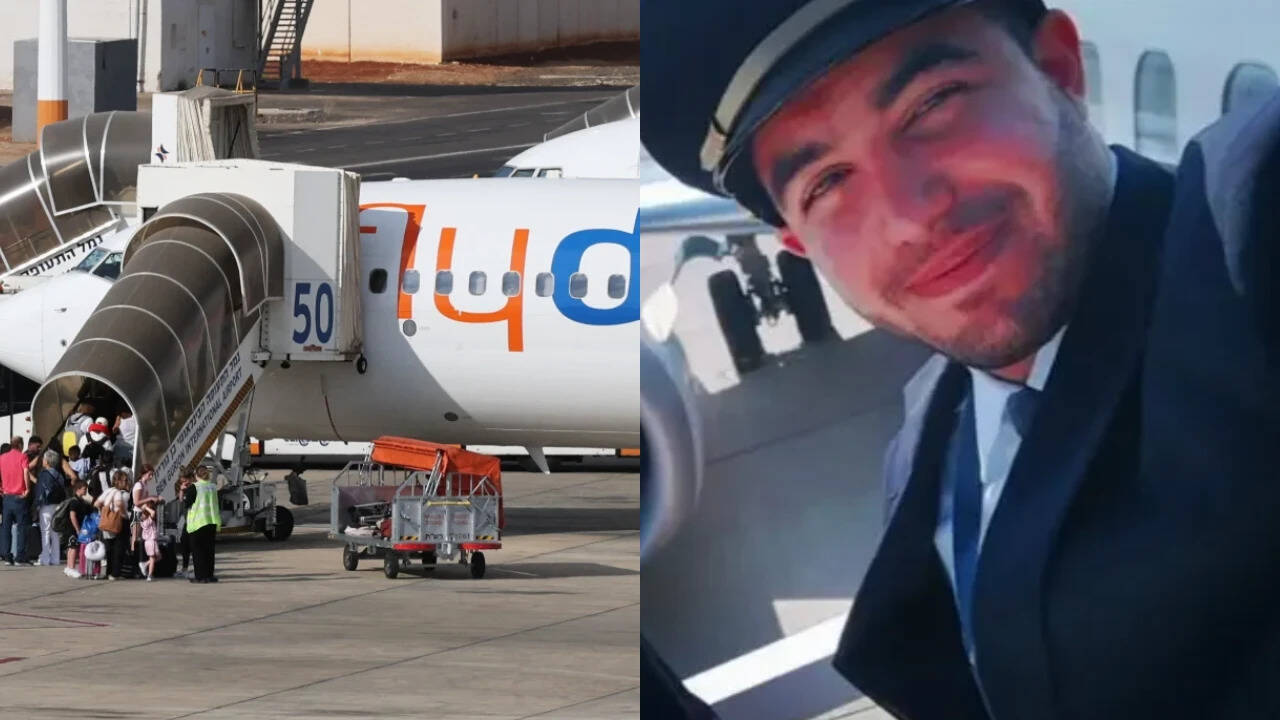
When a commercial flight turns into a desperate physical struggle at thirty-seven thousand feet, the illusion of automated airline security shatters entirely. Flight 1073 did not crash, but the horrifying cockpit assault aboard the Dubai-to-Tel Aviv route exposed a glaring operational vulnerability that aviation authorities have spent decades trying to ignore. Official findings indicate that the co-pilot acted alone during the violent mid-air attack on the flight deck, yet pinning the entire blame on an isolated bad actor avoids the structural questions that matter most to the flying public.
For years, commercial aviation has treated the reinforced cockpit door as an impenetrable fortress. After the structural changes implemented across global fleets following historical security lapses, the philosophy became absolute: keep unauthorized personnel out at all costs. But what happens when the threat originates from the inside? When the first officer turned an aviation crash axe against the captain while cruising over Saudi airspace, standard operating procedures failed to provide an immediate countermeasure. The physical architecture designed to protect the flight deck from external hijacking inadvertently transformed into a private containment cell for a targeted assault.
The anatomy of the intervention highlights how close the flight came to total catastrophe. Captain Smit Machchhar sustained severe wounds to his head and arms while blocking repeated blows before managing to trigger the door release, allowing deadheading crew members and passengers to rush the flight deck and subdue the first officer. Without the rare presence of off-duty pilots and trained professionals among the passengers, the narrative of Flight 1073 would likely read as an unmitigated disaster. Relying on passenger intervention to resolve a rogue flight crew member scenario is not a security strategy; it is a terrifying roll of the dice.
Investigators probing the background of the first officer uncovered warning signs that stretch back prior to his employment. Digital footprints featuring extremist imagery and documented shifts in radical ideology point toward a failure in background screening protocols. Traditional aviation vetting relies heavily on initial employment checks, criminal history databases, and standard psychological evaluations during hiring. Yet these systems are notoriously sluggish at capturing ideological radicalization or sudden psychological deterioration occurring years after a pilot receives their credentials.
Airlines operate on the assumption that professional self-preservation will naturally deter pilot-mediated suicide or violence. That premise is fundamentally flawed. When an individual becomes ideologically detached from personal survival, standard deterrence mechanisms evaporate. The financial and operational pressures placed on commercial flight crews—including grueling scheduling patterns, fatigue, and minimal psychological touchpoints between major medical renewals—create blind spots that monitoring software simply cannot track.
Fixing this vulnerability requires an uncomfortable overhaul of how airlines monitor flight deck dynamics. Continuous psychological evaluation models, real-time peer reporting incentives that bypass corporate bureaucracy, and modified physical security overrides are long overdue. If a captain can be locked inside a reinforced compartment with an aggressor holding an emergency tool, the two-person flight deck rule requires immediate revision. Introducing electronic remote-monitoring systems or mandatory multi-person presence protocols during critical phases of flight might slow down operations, but absolute security is an illusion anyway.
The aviation industry prefers quiet adjustments over public transparency. Yet sweeping this incident under the rug as the isolated aberration of a troubled individual ignores the systemic cracks in pilot vetting and flight deck design. Until regulatory bodies confront the reality of internal threats with the same rigor applied to external ones, every passenger stepping onto a commercial jet remains vulnerable to the person sitting in the right seat.