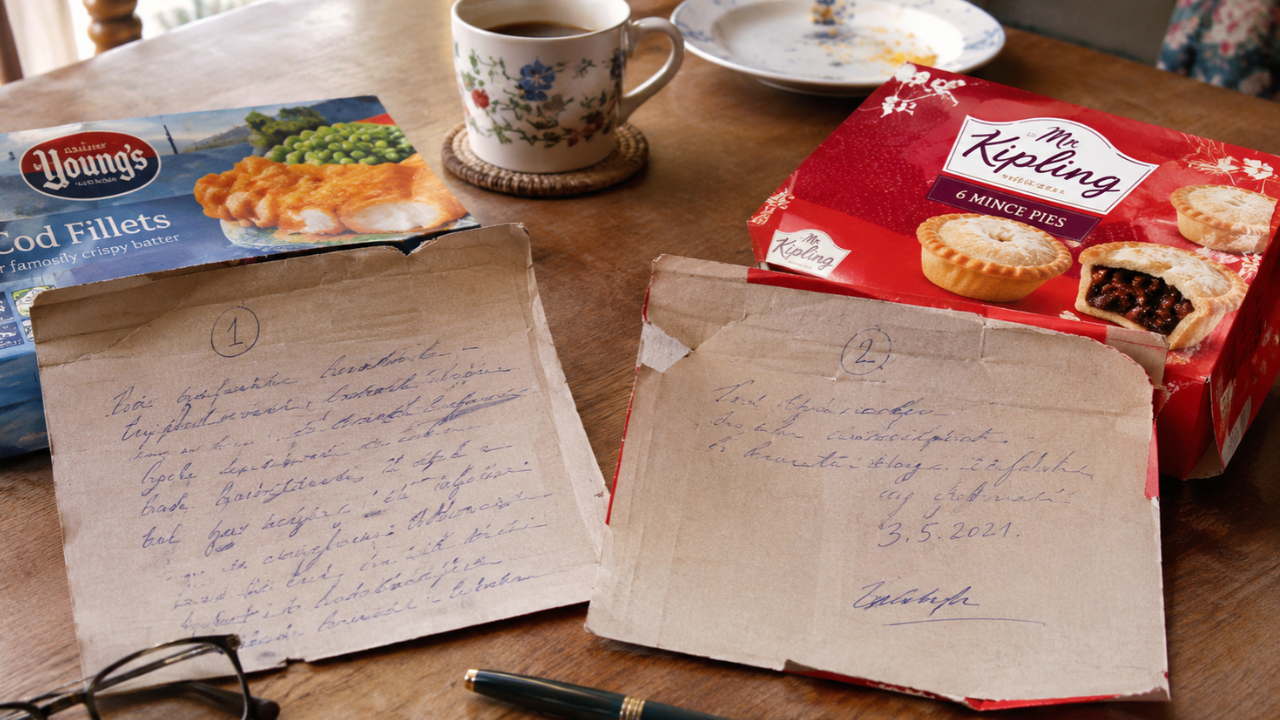
Most people assume you need a leather-bound folder, a stuffy solicitor's office, and thick cream parchment to leave behind a fortune. You don't. In fact, a High Court judge in England once ruled that a man's £180,000 estate could legally pass to a diabetes charity based on two separate pieces of cardboard packaging—specifically, a frozen fish box and a mince pie packet.
It sounds like a pub quiz myth. Honestly, when you first hear about Malcolm Chenery's final wishes, your brain immediately jumps to fraud or family feuds. Yet the High Court of England and Wales looked at the torn cardboard, examined the ink, checked the signatures, and gave it the full weight of British probate law. In similar news, take a look at: Private Aviation Risk Profiles and Learjet Crash Mechanics.
Understanding why this bizarre document survived a courtroom challenge exposes a massive blind spot in how everyday people think about inheritance. The law cares infinitely more about strict technical rituals than it does about expensive stationery.
What Actually Happened With Malcolm Chenery's Cardboard Will
Malcolm Chenery passed away without leaving behind a traditional typed document from a high-street law firm. Instead, his executors found his last testament split across two pieces of everyday kitchen rubbish—the back of a Young's frozen fish box and a Mr Kipling mince pie packet. The Washington Post has also covered this important issue in great detail.
Through those two scraps of packaging, Chenery left his entire £180,000 estate to Diabetes UK.
You might wonder why on earth anyone would split a legal directive across two grocery boxes. Probate lawyers see this kind of thing more often than you'd think. People run out of room on the first piece of cardboard, grab whatever else is sitting on the kitchen counter, and keep writing. Because the two pieces of packaging clearly belonged together and expressed a single, continuous intention, the court didn't throw them out for looking messy.
The judge at the High Court ruled the cardboard will completely valid. Diabetes UK received the money, and Chenery's wishes were honored down to the last penny.
The Strict Legal Rules Behind Weird Wills in England and Wales
People get obsessed with what a will is written on, completely missing the actual legal hurdles that destroy estates every single week. Under Section 9 of the Wills Act 1837—a piece of Victorian legislation that still governs inheritance in England and Wales today—the law doesn't mention paper quality once.
You could theoretically write your will on a beer mat, a bedroom wall, or a takeaway menu. The surface doesn't matter. What matters is whether you hit four non-negotiable checkboxes.
- It must be in writing. Spoken promises over Sunday lunch mean zero in probate court.
- You have to sign it. Or someone else has to sign it in your presence and at your direction, making it unmistakable that you intended to give effect to the document.
- Two witnesses must watch you sign. Both witnesses need to be physically present at the exact same time when your pen hits the cardboard, paper, or napkin.
- Those two witnesses must also sign. They have to add their own signatures in your presence after watching you sign yours.
Malcolm Chenery nailed every single one of those Victorian requirements on his mince pie and fish boxes. Because two witnesses watched him sign the packaging and then added their own signatures, the High Court had no legal reason to reject it. Had he written the exact same words on gold-leaf parchment without a second witness in the room, the entire thing would have been declared worthless.
Why Homemade Wills Usually End Up in Probate Nightmares
Before you start eyeing up your recycling bin to save £300 on legal fees, pause for a second. Chenery's case made headlines precisely because it was an exception that actually worked. Most DIY wills end up burning thousands of pounds in legal disputes.
When someone drafts their own wishes on scrap cardboard or a £15 post-office form, they almost always trip over hidden traps that a qualified solicitor spots in thirty seconds.
The Two-Piece Problem
Splitting a will across two separate objects—like a fish box and a mince pie packet—creates massive legal risk. If the two pieces aren't physically stapled or permanently attached, a grieving relative or skeptical judge might argue that the second piece was written later, forged, or never meant to be part of the final version. Chenery's legal team had to prove to the High Court that both pieces of cardboard formed one cohesive testamentary document. That kind of proof requires formal court hearings, witness statements, and legal bills that eat straight into the estate.
Witness Disqualification Traps
Even if you get two neighbors to sign your mince pie box, you can accidentally wipe out someone's inheritance with one signature. Under Section 15 of the Wills Act 1837, if a witness—or the spouse or civil partner of a witness—is named as a beneficiary in the will, their gift becomes completely void. The will itself stays valid, so the rest of the estate gets distributed, while the witness gets nothing. People ruin family inheritances every year by asking their son-in-law or niece to witness a quick signature at the kitchen table.
Ambiguous Wording
Everyday English is terrible for legal precision. If you write "I leave my money to my kids," does that include stepchildren? Does "money" mean just your current account, or does it include your ISA, premium bonds, and the cash stuffed inside a biscuit tin? Without clear definitions and a named executor who actually knows what they're doing, families end up paying barristers £400 an hour to argue over what a dead relative meant by a single adjective.
Famous Weird Wills That Actually Held Up in Court
Malcolm Chenery sits in some pretty wild company. British and Commonwealth legal history is packed with unconventional documents that judges grudgingly accepted because the underlying formalities were solid.
One of the most famous examples comes from Saskatchewan, Canada, in 1948. A farmer named Cecil George Harris got pinned under his own tractor in a remote field. Knowing he wouldn't survive until help arrived, he pulled out his pocketknife and scratched a brief message into the tractor's fender: "In case I die in this mess I leave all to the wife. Cecil Geo. Harris."
Rescuers found him hours later, and he died in hospital the next day. Because Saskatchewan law allowed "holograph" wills—wills written entirely in the deceased's own handwriting without witnesses—the court accepted the scratched metal fender as a valid legal document. That actual tractor fender still sits on display at the University of Saskatchewan College of Law today.
Closer to home, English courts have dealt with wills written on eggshells, nurse's petticoats, and cigarette packets. During the First World War, soldiers in the trenches routinely wrote informal wills inside their paybooks. Under Section 11 of the Wills Act 1837, soldiers on active military service are exempt from the usual witness rules, meaning a scribbled note on a scrap of ration paper could legally pass on an entire family farm.
What You Should Do Right Now to Protect Your Estate
Stories like the £180,000 mince pie will make great pub trivia, yet they highlight a real danger. Around half of adults in the UK don't have a valid will at all. When you die without one, the strict rules of intestacy kick in—meaning the government decides who gets your house, your savings, and your possessions, regardless of what you actually wanted.
If you own a home, have kids, live with an unmarried partner, or care where your savings go, stop leaving things to chance.
- Book a proper will-writing appointment. Use a solicitor regulated by the Solicitors Regulation Authority (SRA) or a reputable will writer registered with the Society of Will Writers. If your finances are straightforward, it usually costs between £150 and £400.
- Pick your witnesses carefully. Never ask anyone who stands to inherit from you—or anyone married to someone who stands to inherit—to act as a witness. Neighbors, coworkers, or friends who aren't mentioned in the document are ideal.
- Name an actual executor. Someone has to gather your assets, pay off any debts, deal with HM Revenue & Customs, and distribute what's left. Tell that person where the original signed document is stored.
- Keep the original spotless. Don't staple new notes to it, don't write corrections in the margin with a biro, and don't attach paperclips that leave rust marks. Any physical alteration after signing raises immediate red flags at the Probate Registry.
Skip the frozen fish box. Spend an afternoon getting a clean, properly witnessed document signed and stored safely so your family never has to hire a High Court judge just to read your final wishes.