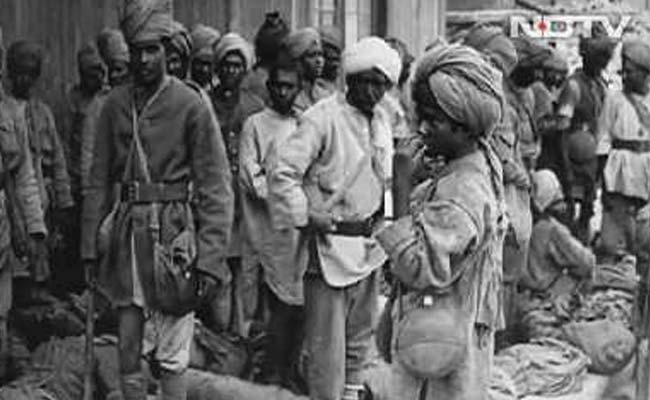
History isn't just written by the victors. It's often heavily edited by bean-counters and bureaucrats. For over a century, a massive chunk of the human cost of the First World War remained completely hidden in plain sight. We aren't talking about a minor clerical error here. We're talking about 9,909 soldiers from pre-Partition India who gave their lives during the conflict but were systematically denied official recognition by the British government.
A massive five-year international research effort called the Punjab Registers Project finally shattered this silence. The Commonwealth War Graves Commission added these 9,909 missing names back into its official casualty database. This marks the single largest addition to their war records since the aftermath of the Second World War. If you ever doubted how colonial administrative decisions could wipe out the legacy of thousands of families, this is your proof.
The Colonial Policy That Erased Thousands
How do nearly ten thousand soldiers just vanish from official military commemorations? It wasn't an accident. It was institutional design.
During the First World War, more than 1.4 million men from the British Indian Army served across global battlefronts. In fact, one in every six soldiers fighting for the British Empire came from the Indian subcontinent. Nearly half a million of those recruits came from the Punjab region alone, spanning Sikh, Muslim, Hindu, and Christian communities.
The problem lies in where these specific 9,909 men died. Research led by the commission’s official historian, Dr. George Hay, revealed a harsh truth. Most of these missing casualties didn't die on the muddy banks of the Somme or in the trenches of Gallipoli. They died of injuries, illnesses, or exhaustion in non-operational zones back home within India.
Under explicit rulings made by the British Indian colonial government at the time, soldiers who died in these non-battlefield zones were denied war graves status. Because they didn't die in active combat theatres abroad, the colonial administration decided their names weren't worth sharing with the imperial Imperial War Graves Commission. They were scrubbed from the official record of sacrifice before the ink was even dry.
Sifting Through the Ruins of Lahore Museum
Unturning a century-old bureaucratic injustice takes more than good intentions. It takes grueling archival detective work.
The breakthrough came from a fragile, handwritten collection of recruitment registers preserved inside the Lahore Museum in Pakistan. These records contain the names and service details of roughly 320,000 Punjabi recruits who signed up to fight.
To find the missing dead, a team led by the University of Greenwich, the UK Punjab Heritage Association, and the commission deployed a mix of human grit and data science. A PhD researcher named George Williams joined forces with 19 global volunteers, many of whom had personal ancestral links to the registers. They manually cross-referenced 15,935 recorded deaths against 74,000 existing Indian Army records.
Supported by computer-assisted analysis, the team spot-checked discrepancies and ran verification loops with modern Indian Army specialists. The breakdown of the newly recovered names tells a vivid story of the diverse force that Punjab sent to war. Roughly 40% of the newly recognized soldiers were Muslims, 25% were Sikhs, and 25% were Hindus.
Moving Past the European Lens of War History
For decades, mainstream histories of the First World War focused overwhelmingly on the European western front. When India was mentioned, it was usually a footnote. This discovery exposes how deeply flawed that narrow view really is.
The families of these men didn't forget, even if the empire did. For generations, descendants carried the oral histories of grandfathers and great-grandfathers who went to war and never returned, yet had no official grave, no entry in a database, and no public acknowledgment.
Take the case of Dr. Inder Singh Palahey, a dentist living in Leicester. For years, he searched for information about his great-grandfather, Kesar Singh. Finding his name restored to the global history books brought a profound sense of closure. Another descendant, Manjinder Nagra, only discovered her great-grandfather Jagat Singh’s inclusion while attending an annual memorial service in Brighton. For these families, this isn't an academic exercise in bookkeeping. It's the restoration of their personal identity and family legacy.
This massive undertaking is part of a broader Non-Commemoration Programme launched in 2021. The initiative targets historical inequalities in how casualties were recorded across Africa, the Middle East, and Asia. So far, the program has unearthed more than 20,000 uncommemorated names.
The next step is turning these digital entries into physical reality. The commission is currently coordinating with Commonwealth governments to design and construct a physical memorial that honors these 9,909 individual soldiers by name.
If you suspect your own ancestors served in the British Indian Army during this era, don't assume the history books have it right. You can actively search the newly updated database on the official Commonwealth War Graves Commission website. Look into community led projects like the UK Punjab Heritage Association to learn how to read old service registers. History is fluid, and sometimes, it takes over a hundred years to finally get the record straight.


