Every autumn, Western punditry suffers from a collective bout of geopolitical hysteria. When leaders of the expanded bloc gather for annual photo ops, editorial boards across London and Washington hyperventilate. They frame the event as an existential crusade to overthrow the dollar, upend international law, and install an authoritarian global order.
This lazy consensus misses the point entirely.
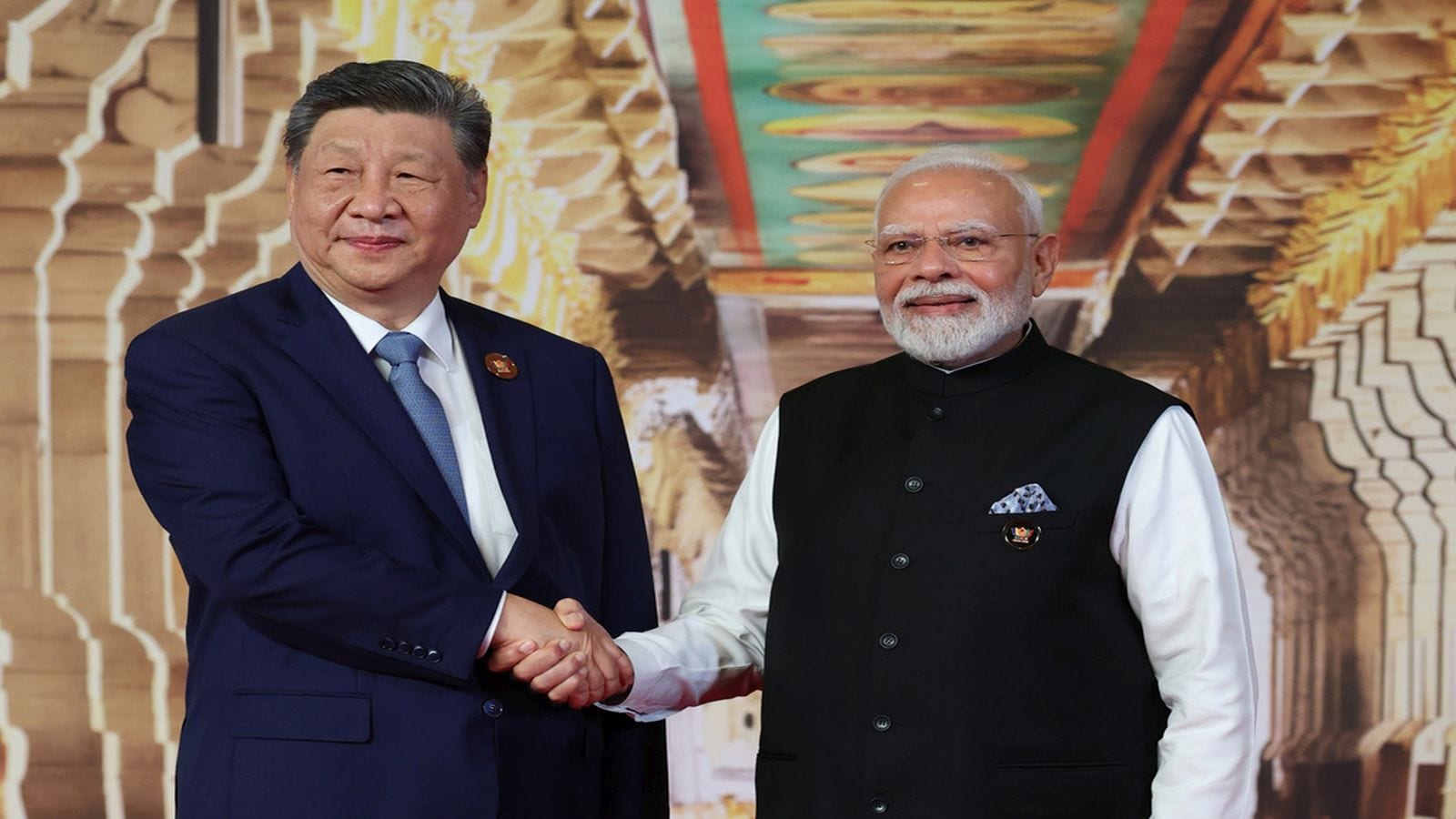
Chinese President Xi Jinping’s latest grand declarations at the summit in New Delhi—urging the grouping to act as a pioneer in peace, technological innovation, and global governance—are routinely misread by foreign policy commentators. Analysts look at the rhetoric and project their own Cold War anxieties onto a group that is far too fragmented to act as a monolithic empire.
The bloc is not a unified anti-Western military alliance. It is a loose, chaotic bazaar of competing national interests.
The Fiction of De-Dollarization
Let us address the most persistent fairy tale in modern finance: the imminent death of the greenback engineered by the summit's signatories. Financial journalists love to warn that central banks in the Global South are dumping dollars to trade in local currencies.
The data tells a starkly different story.
Look at bilateral trade mechanics between heavyweights inside the coalition. India prefers paying for discounted crude oil in local currency units when possible, but Russian suppliers quickly realize they are accumulating mountains of rupees they cannot easily spend on global markets, forcing them back into Western financial assets or complex third-party workarounds. Structural trade imbalances cannot be wished away by political communiques.
A currency requires deep, liquid capital markets, unrestricted convertibility, and immense institutional trust. None of the member states possess a financial ecosystem that can rival Wall Street or the City of London without locking down capital controls that terrify foreign investors.
When leaders sign declarations calling for fairer financial architectures, they are not executing a master plan to destroy the global economy. They are hedging their bets against unilateral sanctions while quietly keeping their foreign reserves safely parked in Western instruments.
Governance Reform as a Safety Valve, Not a Wrecking Ball
Another common misconception is that pushing for multipolarity means constructing an entirely alternative international legal framework. When Delhi and Beijing demand swift expansion and reform of the United Nations Security Council, Western critics treat it as a hostile takeover attempt.
Imagine a corporate board where the founding members refuse to hand out voting shares to newer, high-growth divisions generating most of the revenue. Eventually, those neglected divisions stop showing up to meetings and start building their own conference rooms.
That is what is actually happening. The grouping functions less like a revolutionary vanguard and more like a massive lobbying organization for the developing world. The International Monetary Fund and the World Bank are structurally frozen in a 1945 power dynamic. By demanding representation, these emerging economies are not trying to burn down global governance; they are demanding a bigger chair at a table they have no intention of leaving.
The New Delhi Declaration emphasizes multilateralism, sustainable development, and trade equity precisely because these nations rely heavily on the existing global trade architecture to lift millions out of poverty. They want the system to work for them, not against them. Protectionism and trade wars initiated by traditional Western powers create immediate shocks that hurt developing nations, which explains why opposition to unilateral tariffs remains a rare point of total consensus among them.
The Internal Contradictions No One Mentions
If you want to understand why the bloc will never evolve into a cohesive anti-Western bloc, look at its internal friction points.
India and China share a heavily militarized Himalayan border and are locked in a silent struggle for regional hegemony across South Asia. Egypt and Ethiopia have a perpetual hydrological cold war over Nile water rights. Iran and Gulf monarchies maintain deep-seated regional rivalries that require intense diplomatic bandwidth just to keep them in the same room.
Expecting these nations to coordinate a unified global strategy on peace and security is pure fantasy. When Xi Jinping calls on members to act as peacemakers in West Asia, it is a diplomatic play for influence, not a sign of synchronized geopolitical execution. Each capital pursues its own transactional foreign policy, partnering with Washington one day and signing infrastructure deals in Beijing the next.
The Real Value Proposition
Stop asking whether this coalition is going to replace Western hegemony. That is the wrong question entirely.
The real question is how traditional superpowers will adapt to a multipolar reality where regional powers refuse to take binary sides. The summit matters not because it is building a new world order from scratch, but because it exposes the deep structural decay of the old one.
The writing is on the wall. Western capitals can continue to dismiss these annual gatherings as hollow talk shops filled with authoritarian figures, or they can recognize that the Global South’s demand for agency is permanent. The future of global governance will not be written in Washington or Beijing alone; it will be negotiated out in the messy, contradictory open market of modern international diplomacy.