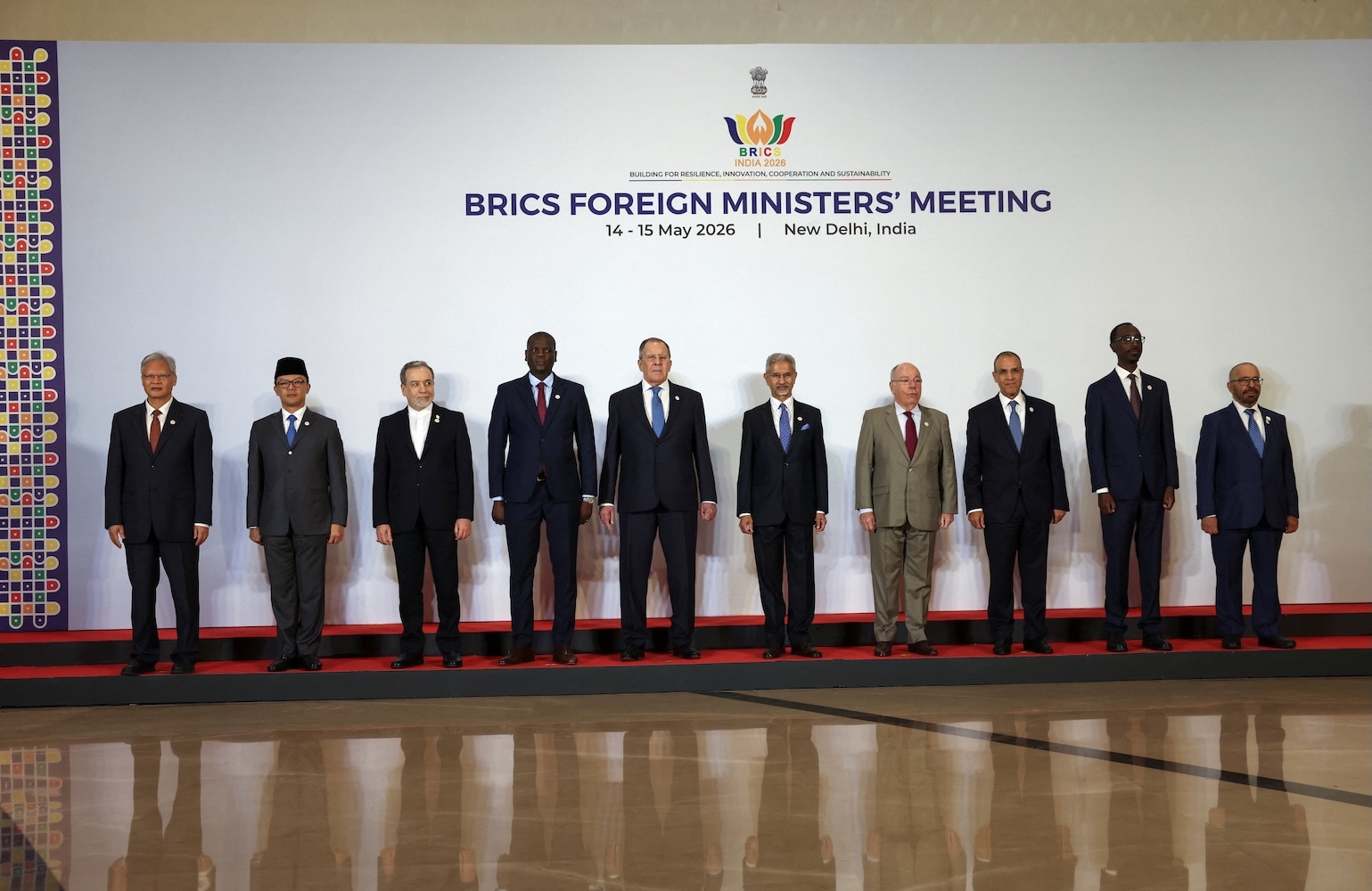
Mainstream financial media is clutching its collective pearls because Iran blocked a joint communique at the latest BRICS meeting, forcing India to put out a watered-down "Chair’s Statement" instead. The consensus narrative is already hardening: Look at the dysfunction. BRICS is a fractured bloc that cannot agree on basic geopolitics. It is a toothless tiger.
This analysis is completely wrong. It fundamentally misunderstands the mechanics of modern economic statecraft. For an alternative look, consider: this related article.
The Western press treats a canceled joint statement like a failed marriage. In reality, the lack of a consensus statement is proof that BRICS is doing exactly what it was designed to do: operate as a cold-blooded, transactional clearinghouse rather than a performative ideological alliance.
The Myth of the "Unified Bloc"
Western commentators love to compare BRICS to the G7 or NATO. They look for shared values, harmonized foreign policies, and neatly typed communiques signed by smiling heads of state. When they do not find them, they assume the project is failing. Further reporting regarding this has been published by TIME.
I have spent years analyzing emerging market capital flows and sovereign debt negotiations. If there is one thing I have learned, it is that the West routinely projects its own bureaucratic desires onto multipolar institutions. The G7 needs ideological conformity because its currency dominance relies on a unified front to enforce sanctions and maintain the hegemony of the US dollar.
BRICS does not need conformity. It is an acronym, not an empire.
When Iran throws a wrench into a joint statement—likely over language regarding regional conflicts or sanctions—it is not a sign of systemic collapse. It is a sign of a hyper-realistic arena where member states refuse to trade their hard national interests for the sake of a PR victory.
Consider the raw friction between India and China. They have active border disputes in the Himalayas. If BRICS required total alignment to function, the group would have dissolved a decade ago. Instead, it expanded. Why? Because the value of the network lies in financial infrastructure, not diplomatic poetry.
De-Dollarization Happens in Ledger Books Not Press Releases
Let us address the "People Also Ask" question that inevitably pops up after every one of these summits: Can BRICS create a common currency to challenge the dollar?
The premise of the question is flawed. It assumes a challenge to the dollar requires a Euro-style political union and a unified central bank. That is twentieth-century thinking.
The real threat to dollar dominance does not come from a flashy, gold-backed BRICS currency announced at a press conference. It comes from the unsexy, quiet plumbing of bilateral trade settlement systems.
- China and Russia already settle the vast majority of their bilateral trade in Yuan and Rubles.
- India and the UAE have completed oil transactions using local currencies, bypassing the SWIFT network entirely.
- Iran provides a massive energy corridor that operates entirely outside the Western financial perimeter.
Imagine a scenario where a global logistics hub switches its freight invoicing from USD to a mix of local currencies. No one gives a speech. No joint statement is issued. The media ignores it because it looks like a boring accounting adjustment. Yet, billions of dollars in liquidity leave the US financial system permanently.
That is how de-dollarization happens. It is a death by a thousand cuts, executed via bilateral ledgers. Whether Tehran and New Delhi agree on the specific wording of a human rights clause in a ceremonial document is completely irrelevant to the underlying flow of oil, gold, and central bank reserves.
India’s Strategic Genius (And the Chair's Statement Pivot)
When India issued a "Chair’s Statement" instead of a joint communique, the press framed it as a desperate damage-control maneuver by New Delhi.
It was actually a masterclass in strategic flexibility.
India is playing a delicate, high-stakes game. It is a core member of BRICS, but it is also a member of the Quad alongside the United States, Japan, and Australia. New Delhi’s primary geopolitical objective is to prevent BRICS from becoming an explicitly anti-Western, China-dominated bloc, while simultaneously securing cheap energy imports from Russia and Iran to fuel its domestic growth.
By issuing a Chair’s Statement, India accomplished three things:
- It maintained its neutrality and refused to be dragged into Iran's specific geopolitical grievances.
- It kept the actual working groups—the New Development Bank, the data-sharing initiatives, the customs agreements—moving forward without delay.
- It signaled to Washington that India remains an independent actor that will not be bullied into a rigid anti-Western coalition by Beijing or Tehran.
This is what economic statecraft looks like in a multipolar world. It is messy. It is non-linear. It prioritizes national survival over institutional harmony.
The downside to this contrarian view? It means we cannot look at a single document to judge the health of the global shift in power. It requires digging into bilateral trade data, tracking central bank gold purchases, and monitoring alternative payment architecture. It is exhausting work, which is why the mainstream media prefers to just read a press release, see that Iran objected, and declare the whole thing a failure.
Stop Looking at the Stage, Watch the Plumbing
The obsession with joint statements is a relic of an era when global politics was run entirely by Western-led institutions that prized the illusion of consensus above all else.
BRICS is a trade network of necessity. Russia needs markets for its sanctioned commodities. China needs secure energy supply lines that the US Navy cannot easily blockade. India needs capital and resources to sustain its massive population. Iran needs an economic lifeline.
They do not need to like each other. They do not need to agree on regional borders. They certainly do not need to sign a shared piece of paper to validate their existence to Western hedge funds and political scientists.
The next time you see a headline screaming about divisions within the global south or a blocked summit statement, ignore the noise. Look at the shipping lanes. Look at the gold vaults. Look at the digital ledger systems being built across Eurasia.
The consensus wants you to believe that a disagreement over words means the underlying economic shift has stopped. Do not buy into the lazy narrative. The real work of dismantling the old financial order is happening precisely because these countries are pragmatic enough to disagree on everything else while still trading in the dark.