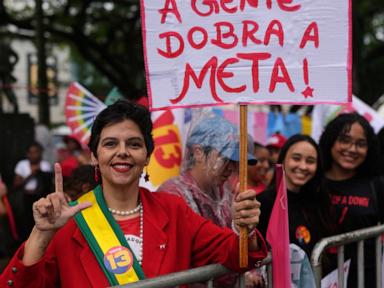
Meta denies bias. Critics scream bias. A Brazilian electoral court rules. Everyone goes back to their corners.
That is the entire script of the lazy consensus surrounding allegations of anti-Lula political bias on Meta platforms in Brazil. Read the standard wire coverage and you get a tidy he-said, she-said drama: partisan activists point to viral posts or takedowns, Brazilian judicial authorities pressure platforms over election integrity and disinformation, and Meta issues a sanitized corporate statement insisting its systems are neutral and automated.
It makes for an easy headline. It is also a distraction from how modern political influence actually works on social feeds.
The real issue is not whether Meta has a secret war room plotting against President Luiz Inácio Lula da Silva or secretly anointing his opponents. The real issue is that ranking algorithms do not have ideology; they have incentives. When outrage, fear, and tribal identity outperform calm policy debate on a feed, any political camp that masters emotional escalation gets more oxygen—while any platform trying to govern a 200-million-person democracy through blunt moderation rules creates collateral damage that looks like censorship to one side and recklessness to the other.
The Lazy Consensus Around "Anti-Lula Bias"
Conventional media framing treats platform bias like a rigged referee in a football match. Either the ref is blowing the whistle unfairly against one team, or the ref is clean and the losing side is whining.
Both halves of that binary miss the machinery on the field.
In trust-and-safety and platform governance work, I have watched organizations burn millions of dollars chasing phantom conspiracies when the culprit was a poorly calibrated classifier or an engagement loop. A takedown that hits a pro-government creator during a heated election cycle often gets framed immediately as political suppression. A post from the opposition that survives a sweep gets framed as favoritism. Sometimes human reviewers make sloppy calls under tight deadlines. Sometimes automated classifiers over-trigger on keywords related to elections, health, or institutional trust.
Calling every asymmetric outcome "political bias" confuses intent with emergent behavior. A recommendation system trained to predict the probability that a user will like, comment, share, or dwell on content does not wake up with an opinion about Brazilian politics. It optimizes for behavioral signals. If angry voters in São Paulo or Belo Horizonte comment three times faster on posts attacking a politician than on posts praising a municipal infrastructure bill, the distribution curve bends toward conflict.
At the same time, Brazilian courts and electoral authorities have operated in an unusually aggressive regulatory posture compared with many other jurisdictions. Courts have issued sweeping orders targeting disinformation, threats to democratic institutions, and coordinated campaigns, backed by heavy fines and threats of platform suspension. When a company faces severe legal and financial exposure in a major market, its risk tolerance shifts. Defensive compliance can look heavy-handed to users and lawmakers alike, even when it stems from legal liability rather than partisan loyalty.
Definitions Matter Before You Throw Stones
Half of the noise in these disputes comes from sloppy vocabulary. People toss around "bias," "censorship," and "neutrality" as if they mean one exact thing. They do not.
- Partisan intent means human decision-makers or engineered rules deliberately tilt visibility to help or hurt a specific candidate, party, or movement.
- Asymmetric impact means a neutral rule or ranking objective lands harder on one group than another because of how different groups post, organize, or react.
- Content moderation means removing, labeling, or demoting material that violates platform terms or legal orders.
- Algorithmic curation means deciding which permissible posts rise to the top of someone's feed while billions of other permissible posts sit near the bottom.
Conflating curation with censorship is one of the costliest mistakes in public debate. If a post stays up, a campaign may still claim "shadowbanning" or suppressed reach whenever engagement dips. Conversely, if a post is removed under a court order or a hate/misinformation policy, supporters call it political persecution even when the underlying claim violated established rules.
Political communication scholars like Cass Sunstein and communications researchers studying Latin American digital campaigns have spent years documenting how high-polarization environments amplify grievances. When trust in institutions is already fractured, any friction between a platform and a political camp gets read through a zero-sum lens. Every algorithmic tweak looks like a thumb on the scale.
Imagine a Scenario Where Every Post Is "Neutral"
Thought experiment: Imagine a scenario where Meta turns off all political ranking boosts and applies identical enforcement thresholds across every party in Brazil for ninety days.
What happens next? You would still see sharp disparities in who goes viral. Why? Because political reach is a two-sided equation: supply and demand. One coalition might have more decentralized creators flooding short-form video formats, while another relies more heavily on institutional announcements, legacy media clips, or slower-moving organizing messages. A flat distribution rule does not equalize organizational skill, meme velocity, or emotional resonance.
Even more telling: in a polarized electorate, two partisans can look at the exact same feed and draw opposite conclusions. One sees "too much government criticism." The other sees "too much pro-government spin." Neutrality in engineering does not guarantee perceived fairness in politics.
Answering the Questions People Actually Search
When a story like this breaks, search engines fill up with predictable questions. Most of them start from a shaky premise.
Is Meta actually biased against Lula in Brazil?
There is no credible public evidence proving a coordinated, top-down anti-Lula agenda baked into Meta's systems, just as critics have repeatedly argued the opposite in other cycles—claiming platforms favored conservative or anti-establishment voices. That is the structural bind of big tech: whichever side feels squeezed accuses the platform of tilting toward the rival.
The better question is not "Is Meta secretly anti-Lula?" The better question is: "Which incentives in Meta's ranking and enforcement systems reward outrage and punish nuance during an election?"
Why do Brazilian electoral courts clash with social media companies?
Brazilian electoral and supreme court justices have treated unchecked online disinformation and attacks on voting systems as an existential threat to democratic stability. Rather than waiting passively for voluntary industry self-regulation, courts have leaned on aggressive enforcement, rapid takedown orders, and strict accountability for platforms operating in Brazil.
From the judicial perspective, letting viral falsehoods run unchecked during a tight race inflicts damage that cannot be undone after votes are cast. From a civil-liberties and operational perspective, broad judicial orders and steep penalties risk pushing platforms toward over-removal to stay safe, creating friction over free expression and due process.
How can political leaders and citizens get honest information online?
Stop treating a social media feed like a civic newspaper. A feed is a shopping mall of attention, not a public square designed for balanced deliberation.
For campaigns, communicators, and citizens who actually want clarity instead of rage-bait, here is what works better:
- Audit distribution, not anecdotes. One viral screenshot or one disputed takedown proves very little. Look at systematic reach patterns, appeal outcomes, and policy transparency reports over time.
- Build direct channels you control. Relying solely on algorithmic reach leaves any messenger vulnerable to sudden ranking shifts or policy changes. Direct lists, official portals, and independent verification give audiences a baseline outside the feed.
- Separate bad rules from bad motives. If a moderation policy is vague or overbroad, push for clearer rules and faster appeals—don't automatically invent a grand conspiracy when incompetence or risk-aversion explains the outcome cleanly.
- Reward receipts over reaction. Before sharing a clip or a claim about bias or election fraud, check primary sources, court filings, and full context. Outrage travels fastest when people skip verification.
The Downside of Looking Past Bias
There is a real risk in telling people to stop focusing on political bias claims. If you dismiss every accusation of bias as a distraction, you can miss genuine blind spots.
Algorithms trained on historical engagement can inherit skewed patterns. Human moderation teams can misread local political slang, satire, or regional context. Legal compliance teams can play it overly safe in ways that quietly mute legitimate political speech. Pretending platform mechanics are above scrutiny is just as lazy as crying conspiracy at every bump in reach.
The fix is not ignoring accountability. The fix is demanding the right kind of accountability: transparent appeal data, clear standards for court-ordered removals, independent research access, and honest conversation about how engagement-driven feeds warp political incentives.
The Courtroom Ruling Isn't the Finish Line
A court ruling or a corporate denial settles a legal moment, not the underlying tension. Brazil's fight over platforms, courts, and political speech is a stress test of what happens when hyper-polarized politics collides with engagement-maximization software under fierce judicial pressure.
Stop arguing about whether the machine loves or hates a candidate. Start fixing a system that profits from making citizens despise each other.



