The fluorescent lights of an airport secondary inspection room hum at a frequency that seems designed to rattle the fillings in your teeth.
There are no windows. There is only the rhythmic, indifferent clack of a customs officer’s keyboard and the cold, laminated table against your forearms. If you have ever sat in one of those rooms—watching your life get distilled into a series of passport stamps, bank statements, and text messages scrolled through by a stranger—you know the specific brand of quiet terror it produces. Time stops moving forward and starts pooling around your ankles.
Now, picture a twenty-something doctoral candidate from Princeton University sitting in that exact chair. Let us call him Wei, though his real name matters far less than what he represents: a human bridge caught mid-collapse. He has spent years in New Jersey laboratories, surviving on lukewarm coffee and the shared language of physics and computation, believing—as young scientists are taught to believe—that equations belong to everyone. Then comes the tap on the shoulder at the border. The phone is confiscated. The visa is scrutinized under the harsh glare of national security directives. Suddenly, the young researcher is no longer a scholar; he is a geopolitical variable.
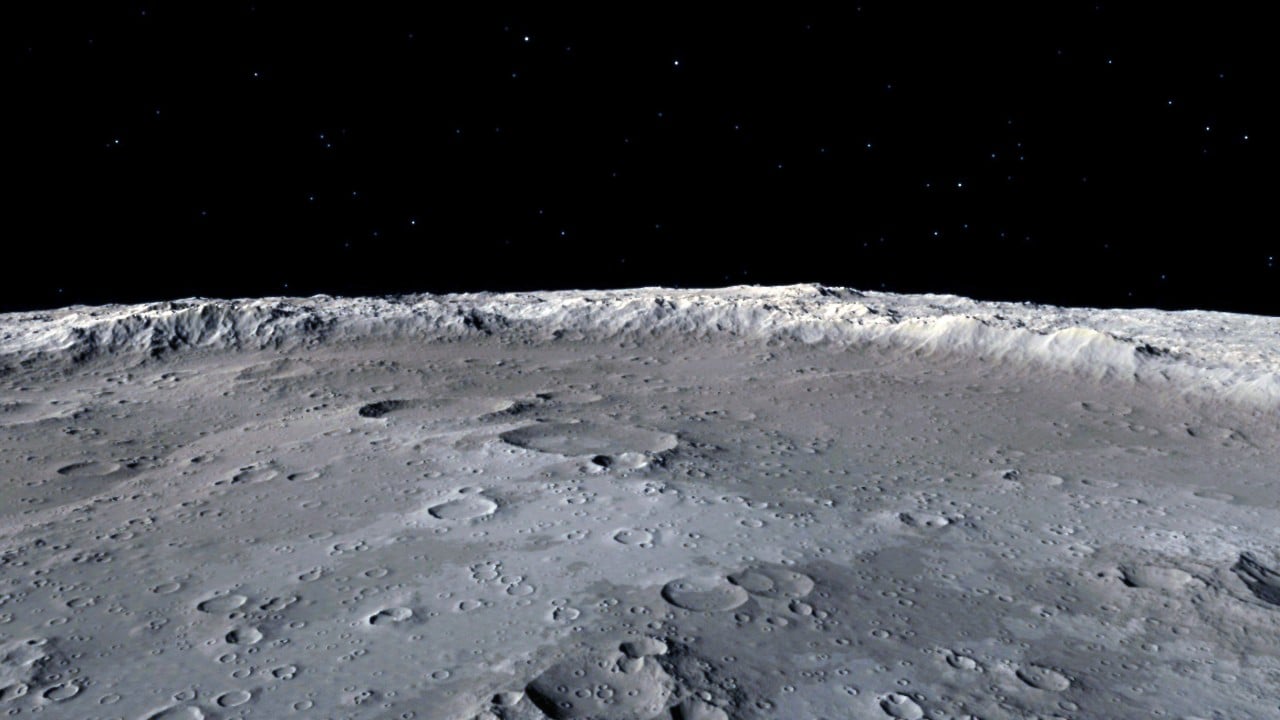
Across the Pacific, thousands of miles away from that windowless room and roughly two hundred and fifty thousand miles straight up, another group of engineers is looking at a very different kind of frontier. In Beijing, planners at the China Aerospace Science and Technology Corporation and allied research institutes are laying down a multi-decade blueprint not just to visit the moon and near-Earth asteroids, but to mine them. Water ice locked in shadowed lunar craters. Platinum-group metals drifting through the dark on chunks of primordial rock. Helium-3 embedded in lunar regolith.
On a standard weekend news digest, these two developments sit side by side as bullet points—quick hits of geopolitical friction to skim over Sunday morning coffee before moving on to the sports page. One is a story about immigration enforcement and campus anxiety; the other is a story about space exploration and long-term industrial strategy.
That separation is an illusion.
Look closer, and you realize these are not two separate stories at all. They are the two halves of the exact same tectonic shift: the end of the borderless scientific commons and the beginning of an era where human talent and off-world resources are treated as strategic munitions.
The Invisible Wall in the Laboratory
To understand why a Princeton student gets detained at an American port of entry, you have to understand how deeply the ground has shifted beneath academic research over the past decade.
For thirty years after the Cold War, the operating assumption of Western universities was straightforward: bring the brightest minds from everywhere, put them in the same labs, and let the resulting breakthroughs lift the entire world. I remember walking the halls of engineering departments in the early 2010s, where Mandarin, Hindi, German, and English blended into a single, seamless dialect of whiteboards and circuit diagrams. Nobody asked where your funding came from three years ago, and nobody checked whether your undergraduate alma mater appeared on a defense ministry watchlist.
Then came the awakening—and with it, the overcorrection.
Policy makers in Washington began pointing to documented cases of intellectual property theft, undisclosed dual-affiliation appointments, and state-backed talent recruitment programs designed to siphon dual-use research back to Beijing. The threat was real. Technologies like artificial intelligence, quantum computing, and hypersonic propulsion do not wear uniforms; the same algorithm that optimizes a commercial delivery route can guide a missile, and the same material science that improves a satellite solar array can harden a military sensor.
In response, the United States erected a series of overlapping defensive perimeters. Executive orders restricted visas for graduate students tied to universities with links to China’s military-civil fusion strategy. Customs and Border Protection agents gained wider latitude to question, detain, and turn away students carrying valid academic credentials.
Here is where the human cost collides with national strategy.
A border agent is trained to look for risk, not nuance. When a student studies aerospace engineering, robotics, or advanced materials at an Ivy League institution, their research proposal reads like a glossary of national security trigger words. It does not matter if the student’s actual day-to-day life consists of debugging Python scripts until two in the morning and worrying about rent. Under the lens of heightened scrutiny, potential becomes suspicion.
Imagine spending four years building a dissertation, leaving your family behind, paying thousands of dollars in tuition and fees, only to be told at an airport terminal that your access to your own laboratory has been revoked—not because you committed a crime, but because of the passport in your pocket and the equations in your head.
The chilling effect ripples outward immediately. Chinese students begin turning down offers from American institutions, opting instead for labs in Europe, Singapore, or back home. American principal investigators watch critical research projects stall because the specialized graduate students trained to run the experiments are stuck in visa administrative processing purgatory. In trying to lock the doors against espionage, we risk boarding up the windows through which discovery enters.
What Lies Beneath the Regolith
While Washington builds walls around its laboratories, Beijing is building roads into the solar system.
Consider what happens next when a nation decides it will no longer depend on fragile terrestrial supply chains or Western academic goodwill. It looks upward. China’s space mining road map—sketched out across technical papers, state media briefings, and long-range engineering targets stretching toward 2045 and beyond—sounds like science fiction until you look at the hardware already on the launchpad.
To grasp why anyone would spend tens of billions of dollars trying to extract minerals from a barren rock in the vacuum of space, think of the California Gold Rush, but strip away the romanticism and replace it with ruthless industrial logistics.
In the nineteenth century, miners did not cross continents for gold alone; they needed timber, water, and iron along the way so they wouldn't have to haul every single nail and barrel from New York. Space exploration faces the exact same tyranny of physics, known as the rocket equation. Launching a single kilogram of mass out of Earth’s gravity well costs thousands of dollars and burns staggering amounts of propellant. If you want to build a permanent presence on the Moon, send crews to Mars, or construct massive solar power satellites in orbit, hauling every drop of water and every sheet of metal up from Earth is financial suicide.
Water is the oil of the twenty-first-century cosmos.
Locked inside the permanently shadowed craters at the lunar poles are millions of tons of water ice. If you can mine that ice, melt it, and split it using solar-powered electrolysis into hydrogen and oxygen, you no longer have just drinking water for astronauts. You have rocket propellant. You have turned the Moon into an orbital gas station.
Beyond water lies the mineral wealth of near-Earth asteroids—remnants from the birth of the solar system that never coalesced into planets. A single metallic asteroid a few hundred meters wide can contain more platinum, cobalt, and nickel than has ever been mined in human history. On Earth, rare earth elements and battery metals are the lifeblood of clean energy, smartphones, and fighter jets—and their supply chains are already weaponized through export controls and tariffs.
China’s road map breaks this monumental ambition down into methodical, engineering-driven phases:
- Prospecting and Resource Mapping: Using robotic orbiters and landers—building directly on the Chang’e lunar missions and the Tianwen asteroid probes—to assay exactly where the richest deposits of water ice and metals sit.
- In-Situ Resource Utilization: Testing autonomous drills, thermal extractors, and 3D printers in low-gravity, extreme-temperature environments where lunar dust acts like microscopic shards of glass that shred mechanical seals.
- Orbital Processing and Transport: Developing reusable heavy-lift rockets and nuclear-electric space tugs capable of moving raw or refined materials between the Moon, Lagrangian points, and low-Earth orbit.
The brilliance of the strategy is that it does not require an immediate, miraculous breakthrough. It treats space mining as an infrastructure project—the celestial equivalent of high-speed rail networks and deep-water ports.
The Collision of Two Worlds
At first glance, a detained student in New Jersey and an autonomous drill on the Moon occupy entirely different universes. Look at the connective tissue between them, however, and the picture sharpens into focus.
Space mining is not merely an aerospace challenge; it is an artificial intelligence challenge, a robotics challenge, a materials science challenge, and a sensor fusion challenge. An autonomous harvester operating on an asteroid thirty million miles from Earth cannot wait twenty minutes for a radio signal from mission control in Beijing to tell it how to avoid a boulder. It has to think, adapt, and repair itself on the fly.
Where are the foundational algorithms for autonomous robotics, computer vision, and advanced materials refined and published? In the exact academic ecosystems—places like Princeton, MIT, Stanford, Tsinghua, and the Chinese Academy of Sciences—that are now caught in the geopolitical crossfire.
This is the paradox tearing modern science apart.
Every major technological leap of the past century relied on cross-pollination. The mathematics behind modern radar and satellite communications emerged from international conferences where rivals argued over chalkboards. Even during the height of the Space Race, American and Soviet scientists quietly read each other’s published journals, testing their own assumptions against the breakthroughs of the other side.
Today, we are witnessing a deliberate decoupling of the human intellect.
On one side, Western governments view unrestricted academic openness as a one-way valve that drains taxpayer-funded innovation into the hands of a strategic competitor. And frankly, they are not imagining the danger. When state-directed strategies explicitly blur the line between civilian university labs and military modernization, democracies cannot afford to be naive. Ignoring the risk does not make it vanish; it simply hands the advantage to whoever plays by fewer rules.
On the other side, blunt-force border enforcement treats every young researcher as a potential covert operative. It mistakes the person for the state. When fear dictates immigration policy, the casualty is not just one student’s ruined semester—it is the slow erosion of the very openness that made American universities magnets for global genius in the first place.
Meanwhile, Beijing’s space planners are betting that state-directed patience, massive capital allocation, and a growing domestic pool of STEM graduates will allow them to outbuild and outlast Western hesitation. They do not need access to American labs if they can construct an entire parallel ecosystem—from terrestrial rare-earth refineries to lunar propellant depots—that answers only to them.
What We Lose When the Sky Closes
I think back to that hypothetical student, Wei, sitting under the hum of the airport lights, waiting to hear whether his years of work will end with a stamp of admission or a one-way ticket back across the ocean.
We are terrible at measuring what never happens. We can count the number of visas denied, the number of patents filed, the tonnage of rockets launched into orbit, and the billions allocated to lunar infrastructure. Those numbers fit neatly into weekend news roundups and congressional briefings.
What we cannot count are the conversations that never take place in campus coffee shops at midnight. We cannot quantify the breakthrough in radiation shielding or autonomous navigation that dies in the cradle because the two minds meant to spark it were separated by an ocean and a watchlist.
And we are equally blind to what happens if the governance of space is decided by default rather than by design. The Outer Space Treaty of 1967 declared that celestial bodies are the province of all humankind, prohibiting national appropriation by claim of sovereignty. Yet treaties written in the era of slide rules and disposable capsules have no clear answers for commercial mining rights, safety zones around lunar ice craters, or orbital traffic control.
Whoever gets there first with the heavy machinery will write the rules of the road simply by occupying the terrain.
If the nations capable of reaching the stars cannot even trust one another enough to let twenty-four-year-old graduate students study physics in peace, what kind of world are we preparing to export beyond the atmosphere?
The border between nations used to be a line drawn in dirt and ink on a map. Now it runs through airport interrogation rooms, across fiber-optic cables, and straight up into the dust of the Moon—where the silence is absolute, and the footprints we leave behind will stay frozen for a million years.