Let us dispense with the polite fiction immediately.
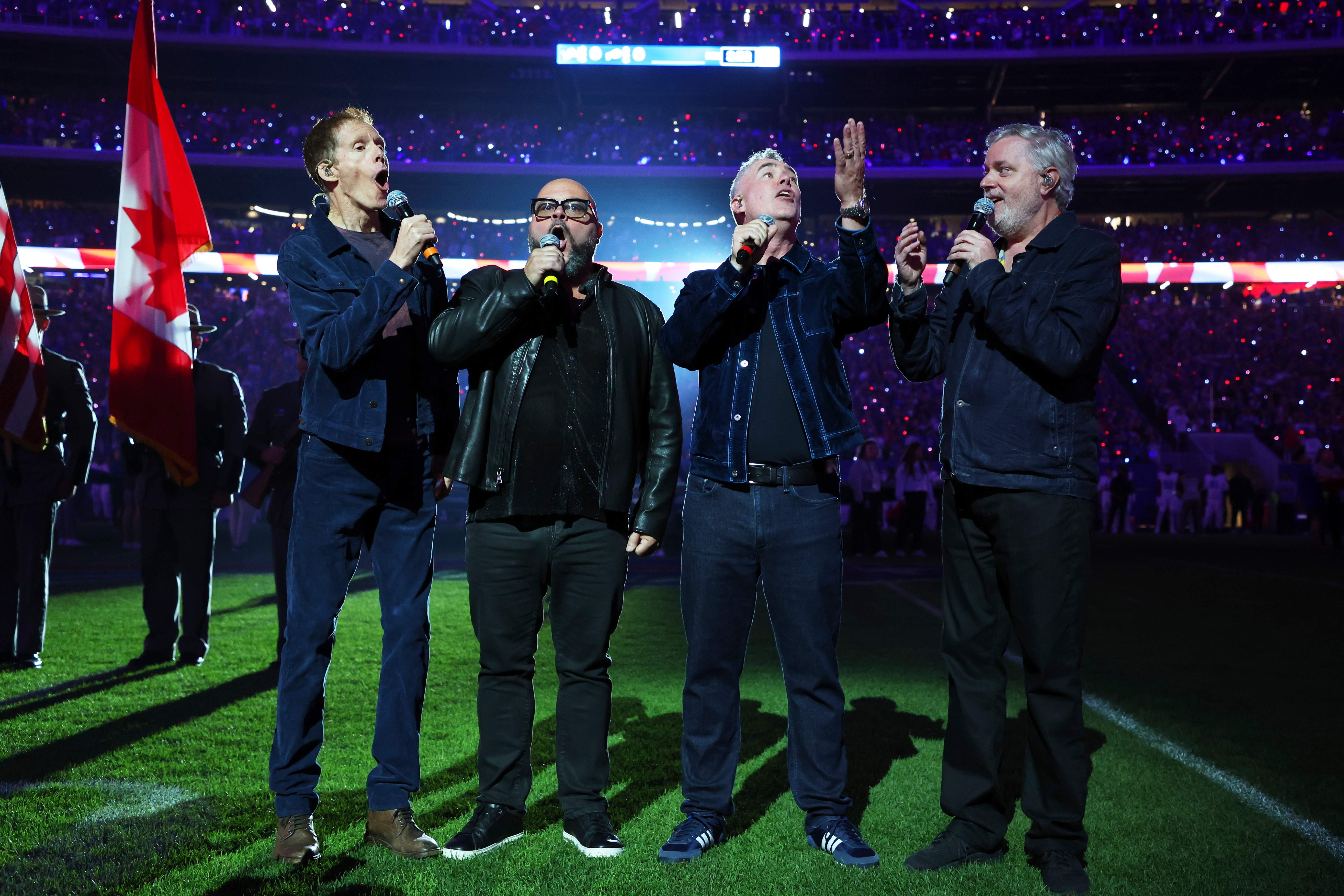
When the Buffalo Bills trot out Barenaked Ladies to belt out "O Canada" for a packed house at their shiny new multibillion-dollar concrete monolith, the entire stadium will erupt in polite, algorithmic nostalgia. Everyone will sway. Everyone will smile. Everyone will pretend that a mid-90s alt-rock band best known for a novelty track about fried chicken and chinchillas is the absolute pinnacle of cross-border cultural synergy. If you liked this article, you should check out: this related article.
It is safe. It is predictable. It is aggressively mediocre. And it completely misunderstands why sports entertainment in the twenty-first century actually succeeds.
I have spent two decades watching executive suites panic the moment they have to spend nine figures on a venue opening. They default to the cultural equivalent of beige wallpaper. They want a band that your uncle remembers from his college roommate’s burnt CD collection because nobody in the boardroom wants to sign off on a booking that might alienate a single season-ticket holder from an adjacent zip code. For another angle on this story, see the recent update from Bleacher Report.
That isn't event production. That is institutional risk aversion disguised as patriotism.
The Geography of Nostalgia Is Failing You
Let us look at the mechanics of what happens when you drop a heritage act into a brand-new stadium.
The rationale goes like this: a new stadium costs an astronomical sum. You need to fill fifty-plus thousand seats. To fill those seats across diverse demographics, you anchor the entertainment to something universally digestible. Barenaked Ladies check every box. They are Canadian (a nice nod to the massive regional fanbase just across the Niagara River), they have a recognizable catalog, and they won't say anything controversial on a live microphone.
It is a statistical masterpiece of non-offense. But it ignores the psychological shift of the modern stadiumgoer.
People do not shell out four figures for PSLs and premium club seating to hear a 1998 radio hit through stadium acoustics designed to bounce sound waves into a concrete abyss. They are there for scale. They are there for spectacle. They are there for an electric current that makes the hair on their arms stand up.
When you book a heritage pop-rock act to christen a cathedral of modern athletics, you are setting the energetic baseline to "medium." You are telling the crowd that this multi-billion-dollar investment is essentially a glorified county fair with better plumbing.
The Buffalo Factor Deserves Better
Buffalo is not a suburb of Toronto, despite what downtown real estate developers like to whisper to institutional investors. Buffalo has a distinct, bruised, fiercely proud identity that was forged in industrial grit, snowdrifts, and four consecutive Super Bowl heartbreaks.
When you build a new stadium in Orchard Park, you are not just pouring concrete; you are anchoring the cultural psyche of Western New York for the next fifty years.
Handing the keys to the opening night anthem to a Canadian heritage act as a polite nod to international neighbors is a missed opportunity of staggering proportions. Where is the local pride? Where is the friction? Where is the artist who actually matches the visceral, manic energy of the Bills Mafia?
If you want to open a stadium that feels alive, you do not hire a band that makes you want to put on a fleece vest and drink lukewarm chamomile tea. You hire an artist who reflects the actual teeth of the city. You lean into the local hardcore scene, the rust-belt hip-hop underground, or you commission a massive brass arrangement from local jazz institutions.
Instead, we get "One Week." Again. For the ten-thousandth time.
The Economics of Safe Failures
Let us admit the dirty secret of stadium booking: executives do not get fired for hiring Barenaked Ladies.
That is the entire mechanism. The music industry operates on a matrix of defensible mediocrity. If you book an underground hyperpop artist or a cutting-edge regional act and half the luxury suite holders clutch their pearls, you have a PR problem on your hands. If you book a safe 90s staple, nobody complains. The corporate sponsors nod approvingly. The local paper writes a breezy three-paragraph puff piece.
Risk management has entirely replaced cultural curation.
But look at what happens to the energy in the room. By the time the national anthems conclude and the actual kickoff happens, the crowd has been lulled into a state of pleasant complacency. You have to spend the entire first quarter artificially pumping up the crowd with stadium-organ clips just to wake them back up from the acoustic sedative you just administered.
What Actually Works
If you are going to spend millions on pre-game pageantry for a landmark venue, stop treating entertainment as a corporate liability checkbox.
Treat it as an acoustic weapon.
- Match the grit of the region. If your fanbase is known for body-slamming through folding tables in parking lots, do not pair them with soft adult-alternative pop. Match the tempo of the city.
- Prioritize spatial audio over legacy status. A massive stadium is an acoustic disaster zone. Guitars and polite vocal harmonies get swallowed by the lower bowl. You need percussion, brass, and sheer sonic volume that cuts through eighty thousand screaming fans without needing three soundchecks.
- Embrace cultural friction. Great live moments happen when an artist feels slightly dangerous, not when they sound exactly like their studio tracks from twenty-five years ago.
The Bills' new stadium is an architectural marvel. It deserves an opening night anthem that sounds like the future, not a scheduled nostalgia trip designed to offend nobody and inspire nothing.
Stop settling for the musical equivalent of a corporate handshake.